


Highlights
Double Side Locker Room Bench Selection Guide

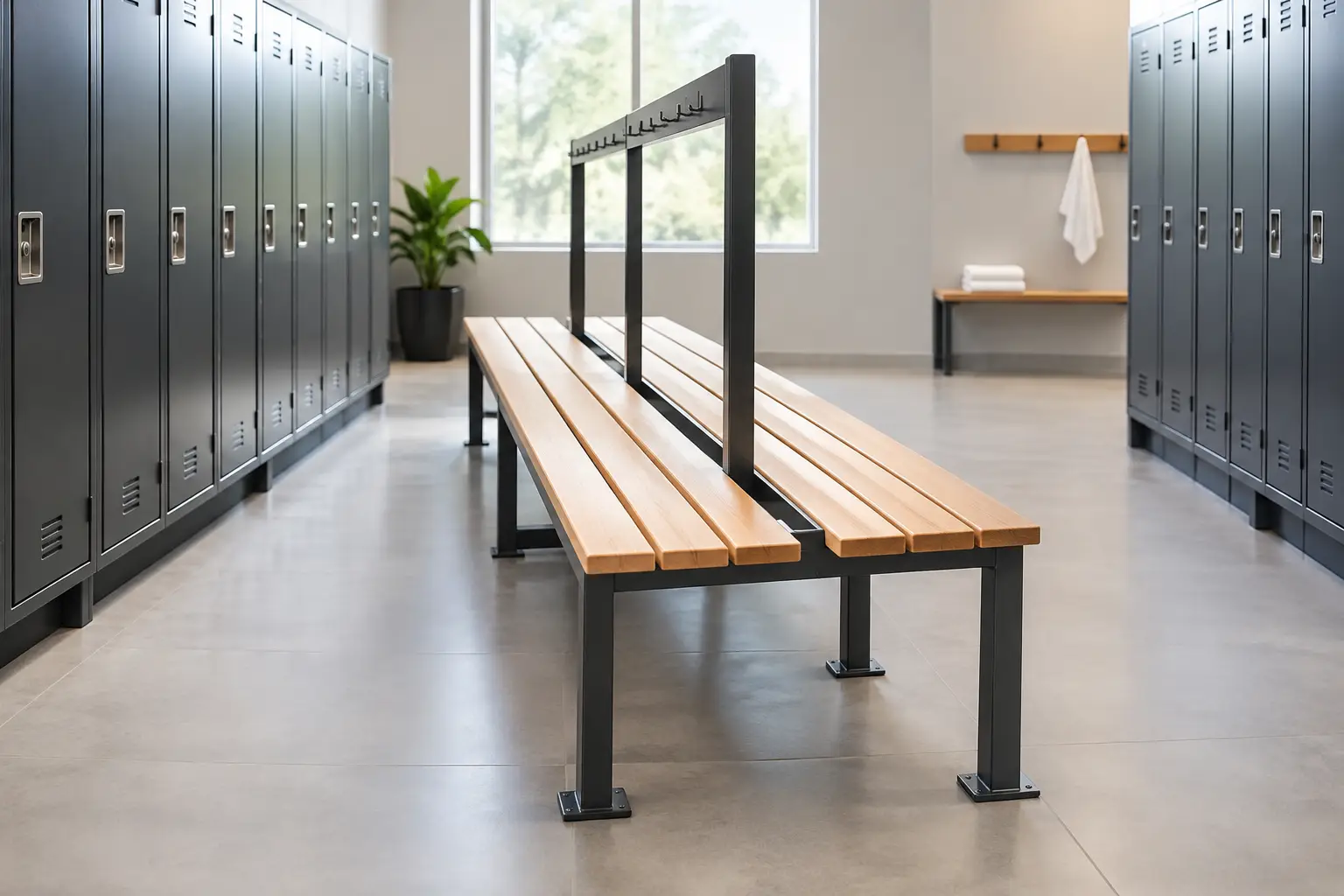
A changing room becomes inefficient quickly when people have nowhere practical to sit, change footwear, place bags, or wait for access to lockers. A double side locker room bench addresses all four needs in one central fixture. Positioned between locker banks or in an open changing area, it provides two usable seating sides while helping facility managers make better use of available floor space.
For commercial facilities, the bench is not a minor finishing item. It affects traffic flow, cleaning routines, user comfort, and the long-term appearance of the room. The right specification must suit the number of users, the locker layout, the expected load, and the conditions of the site.
Why Choose a Double Side Locker Room Bench?
A double-sided bench provides seating on both sides of a shared frame. This makes it particularly effective in locker rooms with a central aisle, where a single-sided wall bench would leave valuable space unused. Instead of placing two separate benches back-to-back, buyers can install one integrated unit with a stable central structure.
The main advantage is capacity. A properly sized double-sided design can seat more users within the same floor area, helping reduce congestion during shift changes, class transitions, or peak gym hours. In industrial sites, this can shorten the time employees spend waiting for a place to change. In schools and sports facilities, it gives groups a clear place to organize before and after activities.
There is also a maintenance benefit. A metal-framed bench with clear access beneath the seating surface is easier for cleaning teams to sweep and inspect than crowded arrangements made from multiple individual units. Fewer separate items also mean fewer components to move out of alignment over time.
Start With the Room Layout
Bench selection should begin with the plan of the room, not with a standard product size. Measure the available length, aisle width, door swings, locker doors, and routes used by cleaning carts or maintenance staff. A bench that technically fits can still create a bottleneck if users cannot open lockers or pass through the room comfortably.
A central double-sided locker room bench works best where there is sufficient circulation on both outer sides. Users should be able to sit and stand without blocking locker access. In high-traffic facilities, wider aisles are generally worth the additional floor area because they reduce collisions and make the room easier to supervise.
Consider how people enter and leave the space. If users arrive in groups at shift start or after a sports session, seating must support a short, intense peak rather than average occupancy. A facility with 40 lockers may not require seating for all 40 users at once, but it should accommodate the realistic number of people changing simultaneously.
Length, Depth, and Seating Capacity
Bench length determines how many users can sit comfortably. The appropriate allowance per person depends on the facility and expected duration of use. A workplace changing room may function well with more compact seating, while a sports locker room often benefits from more personal space for bags and equipment.
Depth matters as much as length. The seat should be deep enough for stable, comfortable use without making the overall unit too wide for the aisle. When both sides are occupied, the full footprint must include seated users, not just the bench frame itself.
For larger projects, modular bench sections can offer a practical solution. They allow buyers to create long continuous runs while simplifying transport, installation, and future reconfiguration. This is especially useful when a facility has several rooms with different dimensions.
Choose Materials for the Actual Operating Conditions
Locker room benches are exposed to repeated impact, moisture, footwear, bags, cleaning chemicals, and constant user movement. Light-duty furniture may look acceptable at installation but can loosen, chip, or become unstable under daily commercial use. Material selection should reflect the real environment.
A heavy-duty steel frame provides reliable structural support for high-use spaces. Steel construction is well suited to workplaces, schools, leisure centers, and institutional changing rooms because it resists deformation and supports frequent use. Powder-coated metal components add another practical layer of protection against scratches and normal wear.
The seating surface requires a separate decision. Wood slats can provide a warm, familiar appearance and are often preferred in fitness, education, and sports settings. They need appropriate finishing and regular inspection in humid spaces. Compact laminate or similar moisture-resistant surfaces may be more suitable where wet clothing, poolside conditions, or frequent washdowns are expected.
Metal seating can be effective in certain industrial applications, particularly when easy cleaning and high durability are the priority. However, it should be designed with user comfort, drainage requirements, and edge safety in mind. The best material is not universal. It depends on moisture exposure, cleaning methods, user expectations, and the visual standard required for the facility.
Structural Details That Affect Service Life
Commercial buyers should look beyond the overall dimensions and examine how the bench is built. The frame should use adequately sized metal profiles, secure joints, and stable leg positioning to prevent movement during use. On a double-sided bench, the central support structure carries loads from both directions, so it must be designed for consistent balance and strength.
Leveling feet are valuable where floors are uneven. They help prevent rocking, reduce stress on joints, and improve the user experience. In areas with frequent washdown, raised feet can also create clearance for water and debris to move underneath the unit.
Rounded corners, protected edges, and smooth weld finishing are practical safety requirements. These details reduce the risk of clothing snags and make benches easier to clean. Where benches are fixed in public or high-traffic areas, floor anchoring may be appropriate. Anchoring improves stability and helps keep room layouts consistent, though it reduces flexibility if the space is later redesigned.
Add Storage Without Creating Clutter
A double side locker room bench can do more than provide a place to sit. Depending on the project, it may include integrated shoe racks, lower shelving, bag storage, or hooks. These additions are useful when users need temporary access to personal items without placing them on the floor.
Shoe storage beneath the seat is a common choice for workplaces and schools. It helps keep changing areas cleaner and improves aisle clearance. Open lower racks are simple to inspect and clean, while enclosed storage may offer a tidier appearance but can collect dirt and require more maintenance.
Overhead or central hook rails can support coats, towels, or uniforms where lockers are limited. Their use should be planned carefully. Hooks can increase storage capacity, but they may interfere with sightlines or create crowding if installed in a narrow room.
When benches are paired with metal lockers, the dimensions and finishes should be coordinated. Matching heights, colors, and material quality create a more organized installation and make future expansion easier. Loxmet can support this type of project with standard metal storage products and custom fabrication where a site requires specific sizes or configurations.
Specify for Cleaning and Hygiene
Cleaning requirements should influence the bench design from the beginning. Locker rooms in factories, healthcare support areas, gyms, and schools all need surfaces that tolerate frequent cleaning. Designs with inaccessible gaps, exposed unfinished material, or low clearance underneath can add unnecessary work for facility teams.
Choose surfaces that can be wiped down easily and frames that do not trap moisture. If cleaning involves disinfectants, confirm that the coating and seat material are compatible with the products used on site. Repeated chemical exposure can damage unsuitable finishes even when the bench is structurally strong.
Ventilation is also relevant. Open-frame designs allow air to circulate around footwear and bags, which can help reduce odor and moisture buildup. This is particularly useful in changing rooms used by employees in protective clothing, athletes, or users arriving from wet outdoor conditions.
Procurement Questions to Ask Before Ordering
Before approving a double-sided bench, procurement teams should confirm the required dimensions, seating capacity, frame material, surface finish, and installation method. They should also establish whether the bench will be freestanding or anchored, whether it needs shoe storage or hooks, and how it will be delivered into the building.
Ask the supplier about load expectations, coating quality, lead time, packaging, and replacement part availability. For multi-site projects, consistency matters. A bench specification that can be supplied repeatedly helps maintain the same standard as facilities expand or are refurbished.
Custom production can be valuable when standard sizes do not match the room plan. A manufacturer may adjust bench length, frame color, seat material, storage features, or mounting details to suit the project. Customization should solve a defined operational issue, not add complexity without a clear benefit.
A well-specified bench keeps changing rooms orderly during their busiest moments. Select one that fits the traffic pattern, stands up to the cleaning routine, and supports the locker system around it for years of dependable daily use.