


Highlights
Custom Metal Storage Cabinets for Business Use

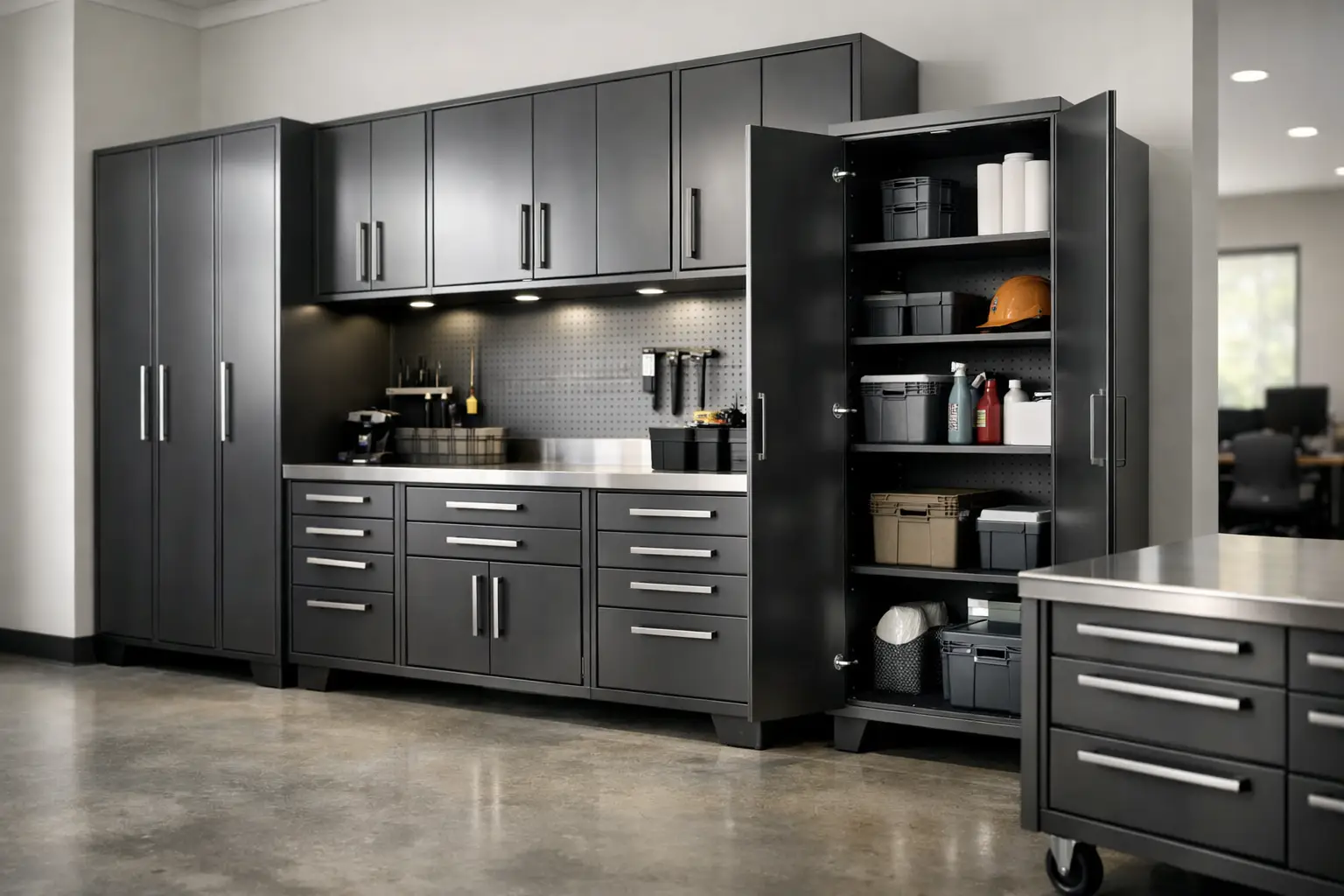
A standard cabinet looks fine on paper until it reaches the floor. Then the door swing blocks a walkway, shelf spacing does not match stored items, ventilation is missing, and the lock type does not meet site policy. That is where custom metal storage cabinets become a practical purchasing decision, not a design preference.
For procurement teams, facility managers, and distributors, the question is rarely whether metal storage is needed. The real question is whether a standard product will actually support the way the site operates. In many projects, it will. In others, the cost of forcing a standard cabinet into a non-standard environment shows up later in wasted space, safety issues, user frustration, or premature replacement.
When custom metal storage cabinets make sense
Custom production is most valuable when the storage requirement is tied to a specific workflow, compliance need, or building constraint. A factory may need segregated compartments for PPE and personal items. A school may need charging access and controlled cable routing. An office archive room may need dimensions that fit an existing wall recess without sacrificing aisle clearance.
In these cases, a cabinet is not just a box with shelves. It is part of a working system. The cabinet has to support access patterns, item sizes, security levels, cleaning routines, and the physical limits of the site. If one of those factors is ignored, the product may still arrive on time and look correct, but it will not perform well.
That is why many business buyers treat custom metal storage cabinets as an operational tool. They are built to match the real environment rather than asking the environment to adapt around them.
What can be customized in a metal cabinet
Customization does not always mean a fully new product from scratch. In many commercial projects, the most useful changes are targeted. Dimensions are the obvious starting point, especially where floor plans are tight or ceiling heights vary. Width, depth, and height adjustments can improve capacity while keeping circulation safe and efficient.
Internal configuration matters just as much. Shelf quantity, shelf load capacity, compartment divisions, hanging rails, document trays, and pull-out sections all affect day-to-day usability. A cabinet storing boxed inventory needs a different interior than one used for staff uniforms, tablets, cleaning materials, or maintenance tools.
Door style is another major factor. Hinged doors are common, but they are not always the best option in narrow corridors or compact workrooms. Perforated doors may be required for airflow. Solid doors may be preferred for visual control and dust protection. Transparent panels can help where quick item visibility matters.
Locking systems also vary by use case. Some sites want simple keyed access. Others need master key structures, padlock compatibility, electronic locking, or user-assigned access control. There is no universal best option. The right choice depends on how many users need access, how often access changes, and how sensitive the stored contents are.
Surface finish, color, labeling, and identification details are often treated as minor decisions, but they affect maintenance and usability. In multi-user environments, a cabinet that is clearly labeled and easy to clean reduces errors and supports faster adoption.
The trade-off between standard and custom
Not every buyer needs a custom cabinet. Standard products remain the right choice for many applications, especially when requirements are straightforward and lead time is the main priority. If a facility needs general-purpose office filing, staff lockers, or basic utility storage in a common size, a standard model can be the most efficient route.
The trade-off is flexibility. Standard cabinets are faster to specify because the decisions are already made. Custom cabinets take more planning because details must be confirmed early. That extra effort can be worthwhile when the operational savings are clear, but it is still a real consideration.
Budget works the same way. A custom product may cost more per unit than a standard catalog item, depending on the level of modification. At the same time, it can reduce the hidden costs of poor fit, underused space, add-on accessories, or replacement caused by unsuitable design. For project buyers, the better comparison is total value over service life, not just the initial unit price.
How to specify custom metal storage cabinets correctly
Most cabinet problems start before production. They begin with incomplete specifications. Buyers know what they want to store, but they may not document how those items are accessed, who uses them, or what limits exist on site.
A better starting point is to define the application in practical terms. What will be stored, and what are the largest and heaviest items? Is ventilation required? Does the cabinet need to support charging, chemical segregation, document security, or personal storage? Will users access it occasionally or throughout the day?
Then look at the room itself. Measure not only the available footprint, but also door openings, ceiling clearances, wall obstructions, and circulation space. A cabinet that technically fits the room may still fail if doors cannot open fully or if nearby equipment blocks access.
It also helps to define the service environment. Industrial areas may require heavier-duty construction, reinforced shelves, and finishes suitable for tougher use. Administrative spaces may prioritize cleaner lines, quieter operation, and document organization. Wet or high-humidity settings may need additional attention to coating performance and ventilation.
The more precise the specification, the better the result. Good custom manufacturing depends on clear inputs.
Common business applications
The strongest case for custom cabinets usually appears in specialized settings. In industrial facilities, storage often has to separate tools, consumables, PPE, and employee belongings while standing up to constant use. In healthcare and laboratory environments, departments may need defined compartments, controlled access, and storage layouts that support hygiene protocols.
In offices, custom cabinets are often less about heavy-duty use and more about space planning. Built-to-size metal cabinets can improve wall utilization, keep documents secure, and create a cleaner storage system in back-office areas. In schools, gyms, and staff changing areas, the need may center on user separation, ventilation, and durable lock options.
Technology storage is another growing category. Devices, batteries, and shared equipment often require cable access, charging integration, and compartment layouts that standard cabinets do not always provide.
Why material quality still matters in a custom project
Customization solves fit problems. It does not compensate for weak construction. A custom cabinet built from poor materials or inconsistent fabrication will still disappoint, even if the dimensions are perfect.
That is why buyers should evaluate steel thickness, weld quality, door rigidity, hinge performance, coating quality, and shelf load ratings as carefully as they review the custom features. Heavy-use environments are unforgiving. Doors sag, shelves bend, and finishes fail when the product is not built for commercial demand.
For distributors and project buyers, manufacturer capability matters as much as the product itself. A supplier should be able to handle repeat production, maintain dimensional consistency, and communicate clearly during approval and delivery. Custom work is only valuable when the production process is stable.
Working with a manufacturer on custom metal storage cabinets
The best custom projects are collaborative but efficient. Buyers do not need endless design rounds. They need a manufacturer that understands commercial storage, asks the right questions early, and translates requirements into a cabinet that can be produced reliably.
That usually means sharing basic use-case information first, then confirming dimensions, internal layout, lock choice, color, and any special features. Drawings or approval documents should be clear enough to avoid assumptions. If the project includes multiple product categories, such as lockers, shelving, and office cabinets, working with one manufacturer can also simplify procurement and finish consistency.
For businesses that need both standard models and custom fabrication, this blended approach is often the most practical. It keeps common items fast and cost-effective while allowing tailored solutions where they create measurable value. Manufacturers such as Loxmet support this model by combining a broad standard range with custom metal production for project-specific requirements.
Custom storage works best when it solves a real operational problem. If the cabinet improves safety, saves floor space, supports workflow, or meets a requirement that a standard unit cannot, the decision is usually straightforward. Start with the site, define the use, and let the cabinet follow the job.