


Highlights
Choosing a Charging Locker for Schools

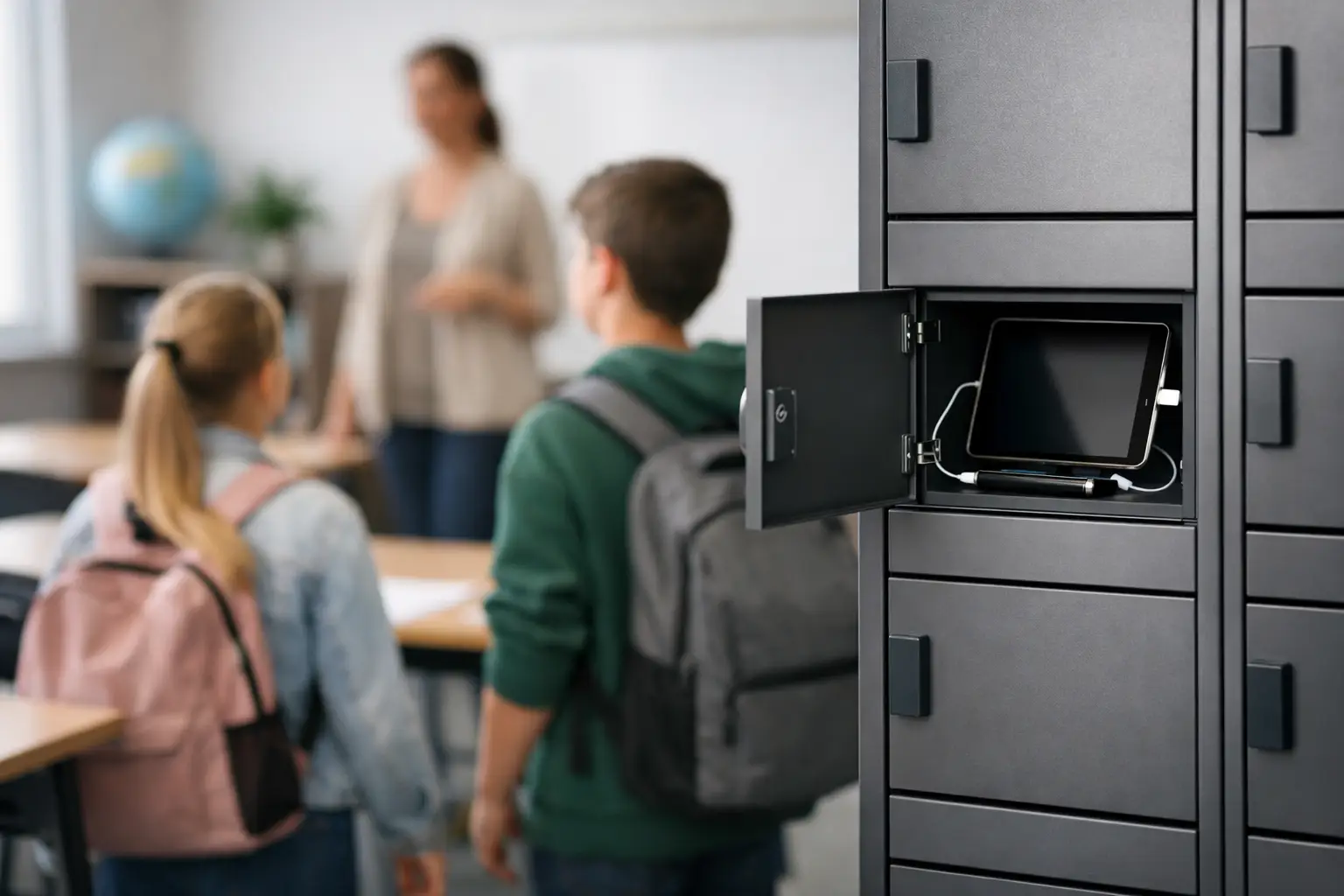
A dead Chromebook at 10:15 a.m. can disrupt more than one class. In schools that rely on shared devices, 1:1 programs, or managed student phone storage, the right charging locker for schools is not just a storage unit. It is part of the daily operating system.
School buyers usually start with a simple goal: keep devices secure and charged. The challenge is that school environments are hard on equipment. Students use lockers repeatedly throughout the day, cables get pulled, doors get slammed, and demand changes as programs expand. That is why charging locker selection should be treated as a facilities decision, not an accessory purchase.
What a charging locker for schools needs to do
A school charging locker has to solve several problems at once. It must store devices securely, support organized charging, and stand up to constant use. In practice, that means build quality matters as much as charging capacity.
Many buyers focus first on the number of compartments. Capacity is important, but it is only one part of the specification. A 10-door unit with poor cable management or weak hinges can create more maintenance work than it saves. A well-designed metal charging locker, on the other hand, gives staff predictable device handling and reduces the daily friction around student technology.
The best fit depends on how devices are assigned. If students use individually assigned tablets or laptops, compartment-based lockers make sense because each device has a designated location. If the school manages a shared device pool, larger bays or grouped charging compartments may be more practical. For phone control during exams or class hours, smaller individual compartments with clear numbering often work better than mixed-use charging cabinets.
Security and supervision matter as much as charging
In schools, security is rarely just about theft. It is also about accountability. Administrators need to know where devices are stored, who has access, and whether the system supports controlled handoff between staff and students.
That affects locking choices. A simple key lock may suit some staff-managed spaces, especially where a single supervisor controls access. In other settings, individual compartment locks can help assign responsibility by student, classroom, or device ID. There is no single right answer. The right lock depends on who opens the unit, how often, and whether access is centralized or distributed.
Visibility is another practical factor. In high-traffic areas, a charging locker should support orderly use without encouraging tampering. Numbered doors, consistent compartment sizing, and a layout that prevents cable interference all help. These are small details, but in a school setting they reduce confusion and save staff time.
Why metal construction is usually the better long-term choice
Schools buy for long service life. That changes the value calculation. A lower purchase price can look attractive at first, but if the unit loosens, dents, or fails under repeated daily use, replacement and maintenance costs rise quickly.
Metal charging lockers are often better suited to institutional use because they provide structural strength, stable door alignment, and better resistance to impact. This matters in corridors, IT rooms, staff offices, libraries, and multi-use spaces where equipment is moved, bumped, or used by different age groups.
Powder-coated steel also supports easier cleaning and a more professional appearance over time. In schools, appearance is not just cosmetic. A storage system that remains orderly and intact communicates control. That matters for staff, students, and visiting stakeholders.
For procurement teams, the real question is not whether a unit works on day one. It is whether it will still perform after years of repeated opening, charging, and supervision.
Charging locker for schools: capacity, device size, and power setup
Capacity planning should start with the actual device mix, not a rough estimate. Schools often use more than one device category at the same time: Chromebooks in classrooms, tablets in shared carts, and phones in exam or restricted-use environments. A charging locker that fits one device perfectly may be inefficient for another.
Compartment dimensions need to match device size with cases included. This is a common oversight. Protective cases, keyboards, and sleeves can change the required internal space enough to create daily handling problems. If users have to force devices into place, damage risk increases and charging consistency drops.
Power configuration also deserves attention. Some lockers are best for direct plug-in charging with integrated sockets, while others are configured around USB charging needs. The right option depends on the school’s device standardization. If the school operates a mixed fleet, flexibility becomes more valuable than tight device-specific layouts.
Cable routing should be simple and protected. Internal cable clutter leads to unplugged devices, damaged connectors, and unnecessary support calls. A good charging locker keeps cables organized, separated, and easy to manage during both initial setup and ongoing use.
Ventilation is another specification that should not be treated as optional. Devices generate heat while charging, especially when multiple units are stored in enclosed spaces. Proper airflow supports safer operation and helps preserve battery health over time.
Placement changes the specification
Where the locker will be installed has a direct effect on the right design. A unit placed in a supervised IT office can prioritize density and staff access. A locker installed in a hallway or shared learning space may need stronger door construction, cleaner presentation, and tighter access control.
Wall-adjacent placement, available power supply, and traffic flow all affect what works in practice. So does user age. Elementary schools may require simpler handling and stronger teacher control, while high schools often need compartment systems that support faster individual access.
It is also worth thinking about how the program may grow. Many schools begin with a limited deployment, then expand once digital learning use increases. In that case, modular planning or matching future units to the same product family can make expansion easier and keep the site visually consistent.
Customization is often what makes the project work
Standard products cover many school needs, but not all. Some projects require specific compartment sizes, different locking arrangements, color choices, numbering systems, or dimensions tailored to available space. That is where manufacturing flexibility matters.
For institutional buyers, customization is not about appearance alone. It is often the difference between a product that fits the operation and one that creates workarounds. If the school needs a charging locker integrated into an existing storage layout, sized for a narrow corridor, or configured for a specific device program, custom metal fabrication can solve those issues before installation.
This is also important for distributors and project buyers who are managing multiple education sites. A manufacturing partner that can deliver both standard ranges and project-specific modifications reduces sourcing complexity. It keeps procurement more efficient and makes product consistency easier across campuses or contracts.
What buyers should ask before placing an order
The most useful questions are practical. What devices will be stored, and with what accessories? Who will access the locker each day? How many charging cycles will it handle in a normal week? Will it sit in a supervised room or a public corridor? Is the school buying for one room or planning a larger rollout?
Those answers shape the right specification more than generic product labels do. They also help buyers compare suppliers in a more meaningful way. A charging locker is not just a cabinet with outlets. It is a controlled-use storage system. The supplier should be able to discuss materials, door construction, ventilation, cable management, lock options, and customization without vague claims.
For buyers managing longer-term facility standards, warranty and production reliability also matter. The strongest product offer is one backed by dependable manufacturing, clear specifications, and the ability to supply repeat orders when expansion is needed.
At Loxmet, that is the lens we bring to charging storage – durable metal construction, practical configuration, and production flexibility for real operational environments.
A school charging locker should make the day easier for staff and more reliable for students. If it does that consistently, it becomes more than furniture. It becomes part of the infrastructure that keeps learning moving.