


Highlights
Army Lockers for Secure, Heavy-Duty Storage

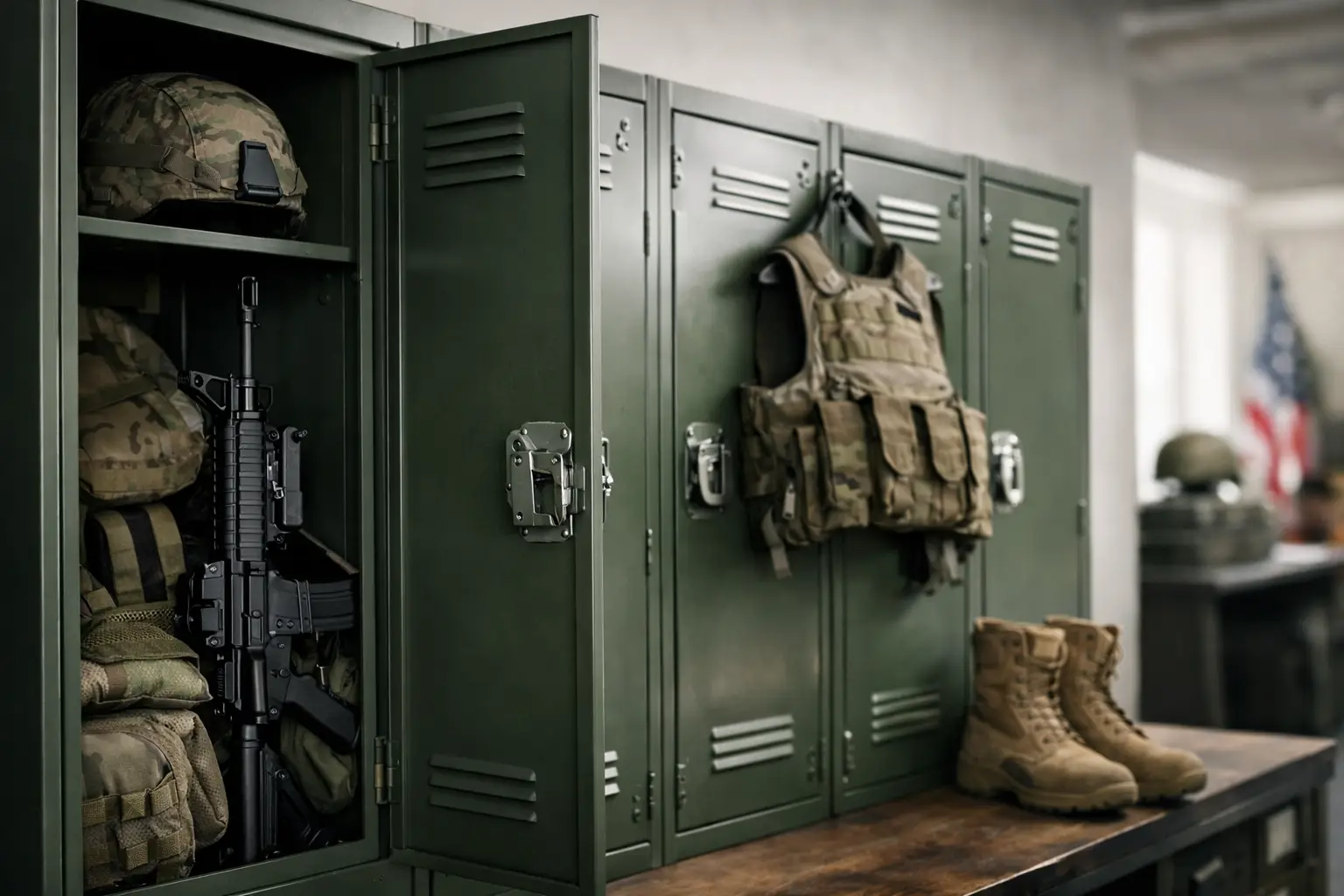
In a high-use facility, storage failure shows up fast. Doors sag, hinges loosen, paint chips, and shared spaces become harder to manage. That is why army lockers remain a practical reference point for buyers who need disciplined, durable storage in military bases, training centers, industrial sites, emergency services buildings, and staff facilities with similar demands.
Army-style locker systems are built around function first. They need to handle daily use, support secure personal storage, and keep order in environments where traffic is constant and downtime is expensive. For procurement teams and facility managers, the real question is not whether a locker looks strong. It is whether the product specification matches the way the space actually operates.
What army lockers are designed to do
Army lockers are not just standard lockers with a different label. The term usually refers to metal locker units designed for disciplined environments where users need secure storage for uniforms, personal items, equipment, and sometimes separated clean and dirty gear. The design priority is reliability under repeated use.
In practical terms, that means stronger steel construction, reinforced doors, stable frames, dependable locking options, and interior layouts that support organized storage rather than simple item dumping. In some projects, buyers also need sloping tops for easier cleaning, ventilation for airflow, or compartment separation for better hygiene control.
The right specification depends on the site. A military changing area, a police operations room, and an industrial plant locker room may all ask for an army locker format, but the details can vary. One site may prioritize compact footprint and high user capacity. Another may need larger compartments for uniforms, boots, and protective equipment.
Key features that matter in army lockers
If the lockers are going into a demanding environment, material thickness and structural integrity should be the first checkpoints. Thin-gauge metal may reduce upfront cost, but it can create problems later through door flex, frame distortion, and shorter service life. Buyers managing large installations usually find that stronger construction provides better value over time.
Door design matters just as much. Frequent use puts stress on hinges, lock areas, and door edges. Reinforced doors help reduce warping and improve security. A well-built locker should open and close cleanly over years of use, not just during installation week.
Ventilation is another factor that gets overlooked until odor and moisture become a facility issue. Army lockers often store clothing, uniforms, and work gear for long periods. Proper airflow supports hygiene and reduces trapped moisture, especially in humid environments or spaces where gear is used daily.
Locking systems should be chosen based on how the site is managed. Padlock hasps are common because they are simple and flexible. Built-in cam locks can make sense for controlled user assignments. In higher-security settings, buyers may request master-key systems or other access control options. There is no single best answer here. It depends on whether users are permanent, rotating, or temporary.
Choosing the right army locker layout
Layout is where many projects succeed or fail. A locker that is durable but poorly sized for the user group will still create operational friction.
Full-height compartments are often the preferred format when users need to hang uniforms or store larger personal items. They support cleaner organization and reduce the tendency to overload shelves. For facilities with limited space and high user numbers, multi-door configurations can improve capacity, but they work best when the storage need is light and compact.
Internal fittings also deserve attention. A hanging rail, shelf, divider, or hook arrangement can change how well the locker performs in practice. If employees or personnel need to separate clean uniforms from used clothing, internal division becomes more than a convenience. It becomes part of the operating standard.
Bench integration may also be worth considering in locker room projects. In changing areas, benches improve flow and user comfort, and when designed as part of the overall system, they create a more efficient footprint. Buyers planning larger installations should evaluate the full room layout rather than specifying lockers in isolation.
Where army lockers fit outside military settings
The term army lockers naturally points to defense and training facilities, but the same product logic applies in many civilian environments. Any site that demands secure, hard-wearing, and orderly storage can benefit from this locker type.
Industrial plants often need durable staff lockers for shift workers handling uniforms, PPE, and personal belongings. Fire and rescue buildings need practical storage that can stand up to constant access and hard use. Transportation depots, logistics centers, correctional facilities, and utility operations also tend to favor stronger metal locker systems over lighter-duty alternatives.
Educational and vocational institutions can have similar requirements, particularly where uniforms, tools, or specialist gear are part of daily activity. The common thread is not the sector name. It is the operating pressure placed on the storage system.
Standard product or custom army lockers
For many buyers, a standard army locker model is the fastest and most cost-effective route. If the dimensions, door configuration, and locking format already meet the site requirement, standard production can simplify lead times and budgeting.
Custom production becomes valuable when the space or use case is more specific. A project may need non-standard widths, extra-tall units, internal separation, special ventilation patterns, specific colors, number plate systems, or integration with benches and sloping tops. In some environments, buyers also need locker banks configured around wall constraints, access routes, or cleaning requirements.
This is where working with a manufacturer rather than a reseller can make a real difference. Customization is not only about changing dimensions. It is about matching the product to the operating condition, so the installation performs correctly after handover.
What procurement teams should ask before buying
A locker quote can look competitive on paper while hiding compromises in steel thickness, coating quality, door strength, or hardware. Commercial buyers should ask direct questions early.
Start with construction details. What steel specification is being used? Are doors reinforced? How are the hinges fixed? What is the load expectation for shelves or rails? Then move to finish and durability. Powder coating quality, surface preparation, and corrosion resistance all matter, especially in humid or demanding facilities.
It is also worth checking how the lockers are delivered. Fully assembled products can save installation time but affect freight and access planning. Knock-down construction can support shipping efficiency, but only if the assembly quality remains dependable. Again, there is no universal best option. The project conditions decide it.
Warranty and supply continuity should also be part of the discussion. Large organizations and distributors are not just buying a batch of lockers. They are often buying into a long-term product line that may need expansion, repeat orders, or matching units later.
Why durability is the real cost factor
Low purchase price can be attractive, especially on large-volume tenders. But army lockers are usually selected for environments where replacement and repair are disruptive. A unit that dents easily, loses alignment, or requires early maintenance can cost far more over its service life than a stronger product with a slightly higher initial price.
Durability affects more than maintenance budgets. It also affects user behavior and facility standards. When lockers work properly, people use them properly. When doors stick, locks fail, or compartments feel inadequate, order declines quickly.
That is why experienced buyers look beyond appearance. They evaluate whether the locker system will still perform after years of opening, closing, loading, cleaning, and reassignment.
Army lockers as part of a wider storage plan
Locker procurement works best when it is treated as part of a broader facility storage plan. Personal storage, PPE storage, charging solutions, shelving, and secure cabinets often need to work together in the same site. A fragmented approach can create layout inefficiency and inconsistent quality across the project.
For distributors and project buyers, there is also a commercial advantage in consolidating these categories with a capable metal furniture manufacturer. It simplifies sourcing, supports consistency in finish and specification, and makes future expansion easier. For this reason, many international buyers prefer supply partners that can handle both standard locker production and custom metal fabrication. Loxmet operates in that space with a product range built for demanding commercial use.
The best army lockers are not defined by military styling or heavy visual design. They are defined by fit for purpose. If the steel is right, the structure is stable, the layout matches the user, and the manufacturer can deliver consistently, the lockers will do their job for years. That is what matters when storage is part of daily operations, not a background detail.