


Highlights
Secure Document Cabinet Solutions That Work

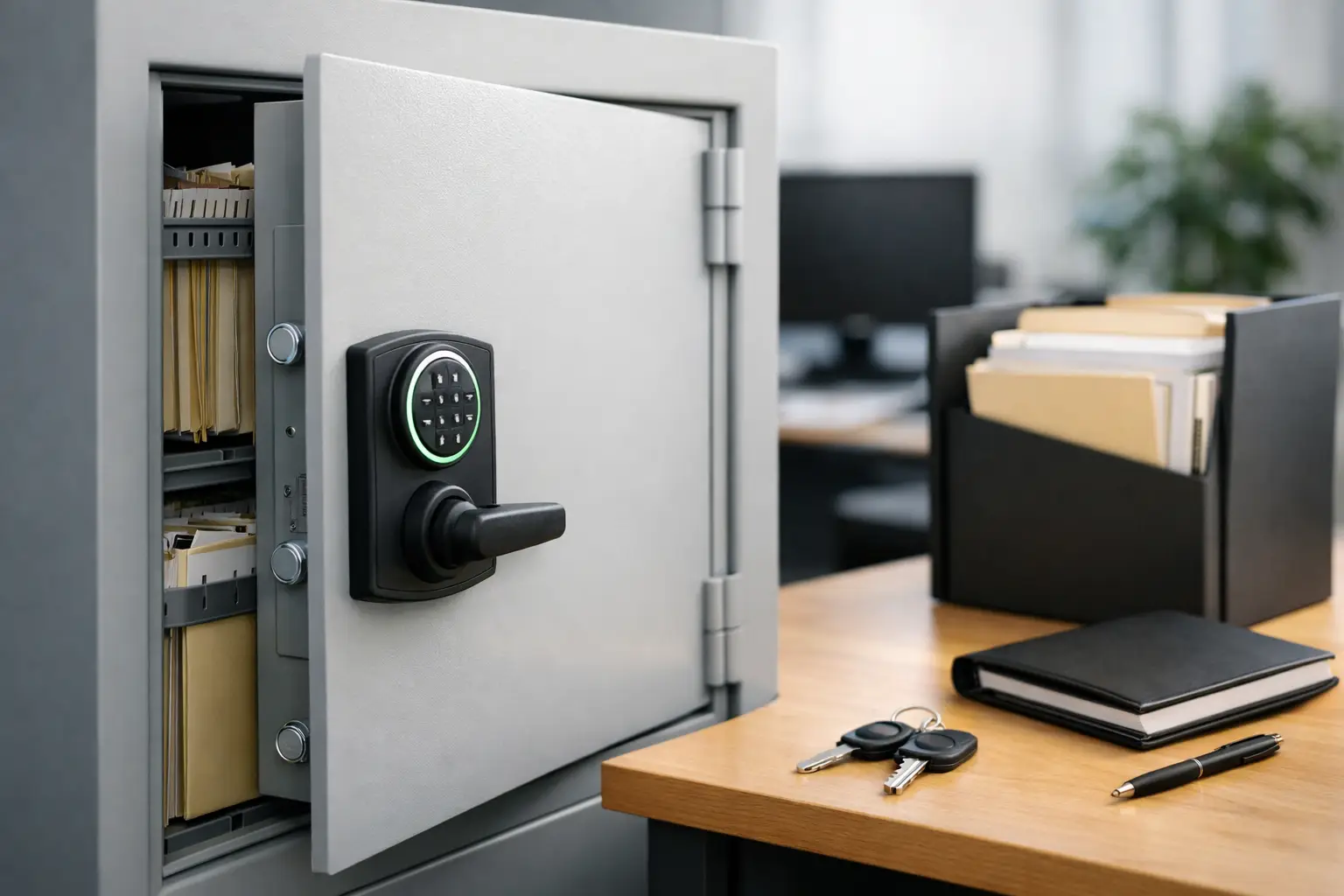
One missing personnel file, one exposed contract, or one unlocked drawer during a compliance audit can create more than an administrative problem. Secure document cabinet solutions are not just about storing paper. They are part of risk control, workflow discipline, and day-to-day operational reliability.
For procurement teams, facility managers, and commercial buyers, the question is rarely whether secure storage is needed. The real question is what type of cabinet will actually hold up under daily use, match the sensitivity of the documents inside, and fit the space without slowing staff down. That is where product selection matters.
What secure document cabinet solutions need to do
A document cabinet has one basic job: keep records protected and accessible to authorized users. In practice, that job is more demanding. The cabinet must resist forced access, maintain structure over years of opening and closing, and support organized storage so documents are not technically secure but practically lost.
In offices, schools, healthcare sites, factories, and administrative departments, document storage often includes employee records, contracts, compliance files, finance documents, visitor logs, medical paperwork, and operational plans. Not all of these require the same level of control. Some need simple lockable storage. Others require stricter key management, restricted departmental access, or compartmentalized filing by team, function, or confidentiality level.
That is why secure document cabinet solutions should be evaluated as operational equipment, not decorative office furniture. Material strength, lock type, shelf or drawer configuration, and cabinet stability all affect real performance.
Why metal cabinets remain the practical choice
For commercial use, metal remains the most dependable cabinet material for document security. It offers better resistance to impact, wear, and tampering than lighter construction options, and it performs more consistently in high-use environments.
A well-built steel cabinet also supports a longer service life. Doors stay aligned, locking points remain reliable, and shelves or drawers can carry dense paper loads without early deformation. That matters because archived files are heavy. A cabinet that looks adequate on paper but flexes under full load will create issues quickly.
Metal cabinets also make more sense for organizations standardizing across multiple sites. They are easier to specify, easier to maintain, and better suited to institutional or industrial settings where durability is expected. For distributors and project buyers, this is especially relevant because the same product line can often be used across offices, staff rooms, records areas, and back-of-house storage.
Choosing the right cabinet configuration
The best secure document cabinet solutions depend on how records are used. There is no single format that fits every workplace.
Shelved cabinets are a strong option for boxed files, binders, archive folders, and mixed document storage. They work well where teams need visual access to categories and where document sizes vary. Adjustable shelves add flexibility, especially in administrative departments where storage needs change over time.
Drawer-based filing cabinets are better when frequent retrieval is part of the workflow. Personnel offices, finance teams, and reception-admin functions often benefit from drawers because files can be arranged more systematically and accessed faster. The trade-off is that drawer systems need to be built for repeated movement under load. Weak slides or thin steel will show wear quickly.
Swing-door cabinets are often preferred where full visibility of contents is useful and floor space allows door clearance. Sliding-door options can be more efficient in tighter layouts, although they may provide a different user experience depending on filing density.
In some projects, a hybrid approach is the best answer. Daily-access documents may stay in active filing units, while long-term records move to larger lockable archive cabinets in restricted areas. This reduces strain on the most-used units and helps maintain better control over older files.
Security features that matter in real use
Not every lockable cabinet provides the same level of protection. Buyers should look beyond the word secure and focus on how the cabinet will actually be used.
The lock system is the first point to assess. Standard key locks may be suitable for departmental access where a few authorized staff members manage documents. They are simple, cost-effective, and easy to implement at scale. However, they also require disciplined key control. If keys circulate loosely, the cabinet is only as secure as the process around it.
For higher-control environments, central locking systems, master key arrangements, or upgraded lock formats may make more sense. The right choice depends on how many users need access, how often access changes, and whether the site already has a broader physical security plan.
Cabinet body construction matters just as much as the lock. Reinforced doors, concealed or protected hinges, stable frames, and tight manufacturing tolerances all improve resistance to tampering. A cabinet with a decent lock but weak door structure creates a false sense of security.
It is also worth considering visibility. In some settings, solid steel doors are preferable because they keep contents fully concealed. In others, controlled visibility may help with fast document identification. This is less about security in theory and more about balancing confidentiality with workflow.
Space planning and access control
Document security is affected by cabinet placement as much as cabinet design. A strong cabinet placed in an uncontrolled corridor is not a secure storage strategy.
Administrative offices often need cabinets close to staff workstations for efficiency. That works when access is limited by room control. In shared spaces, it is usually better to place sensitive records in offices, records rooms, or managed back-office areas with clear access boundaries.
Cabinet dimensions should also match the room layout. Buyers sometimes focus on storage volume alone and overlook door swing, retrieval clearance, and circulation paths. In compact offices, this can create daily friction. A cabinet that blocks movement or forces awkward access habits will be misused, left open, or underutilized.
For larger projects, standardizing cabinet sizes can simplify planning and replacement. For custom-fit environments, made-to-measure dimensions may be the better route, especially when wall lengths, alcoves, or departmental layouts create constraints. This is where a manufacturer with custom metal fabrication capability can add real value.
Secure document cabinet solutions for different sectors
Different industries handle document security in different ways. The cabinet should reflect the operating environment, not just the file type.
In corporate offices, document cabinets are often used for HR files, contracts, and finance records. Appearance matters to some degree, but performance still comes first. Buyers usually need a balance of professional presentation, lockable storage, and efficient file organization.
In schools and universities, administrative records, student files, and staff documentation require controlled access. Cabinets may be used heavily by multiple users across long terms, so durability is a bigger factor than many buyers expect.
In healthcare settings, confidentiality is stricter and workflows can be faster. Cabinets need dependable locks, organized layouts, and finishes that suit controlled institutional environments. Ease of cleaning may also matter depending on placement.
In industrial facilities, records storage is often overlooked until audits or operational issues expose the gap. Production records, safety documents, maintenance logs, and compliance files need the same level of protection as office paperwork, but the cabinet itself must often tolerate harsher conditions.
What buyers should ask before placing an order
A good cabinet specification starts with a few practical questions. What documents will be stored, who needs access, how often will they be retrieved, and where will the cabinet be installed? Those answers shape the right product more reliably than broad marketing claims.
It is also smart to ask about steel thickness, load capacity, lock options, internal configuration, finish quality, and lead time. For project buyers, consistency across batches matters. For distributors, repeatability matters even more. The product that arrives six months later should match the product already installed.
Warranty coverage is another useful signal. It does not replace specification review, but it does indicate how confidently a manufacturer stands behind long-term performance.
For many buyers, standard models will cover the requirement well. For others, customization is the better commercial decision. If files are oversized, if access zones are unusual, or if cabinet dimensions must match an existing fit-out, custom production can reduce compromise and improve site efficiency. That is often the difference between buying storage and buying the right storage.
Loxmet approaches this category from a manufacturing perspective: durable steel construction, practical configurations, and the flexibility to support both standard orders and project-specific requirements.
The best secure storage products do not demand attention after installation. They do their job every day, protect what matters, and keep administrative work moving without interruption. That is what secure document cabinet solutions should deliver.