


Highlights
Choosing the Right Workwear Locker

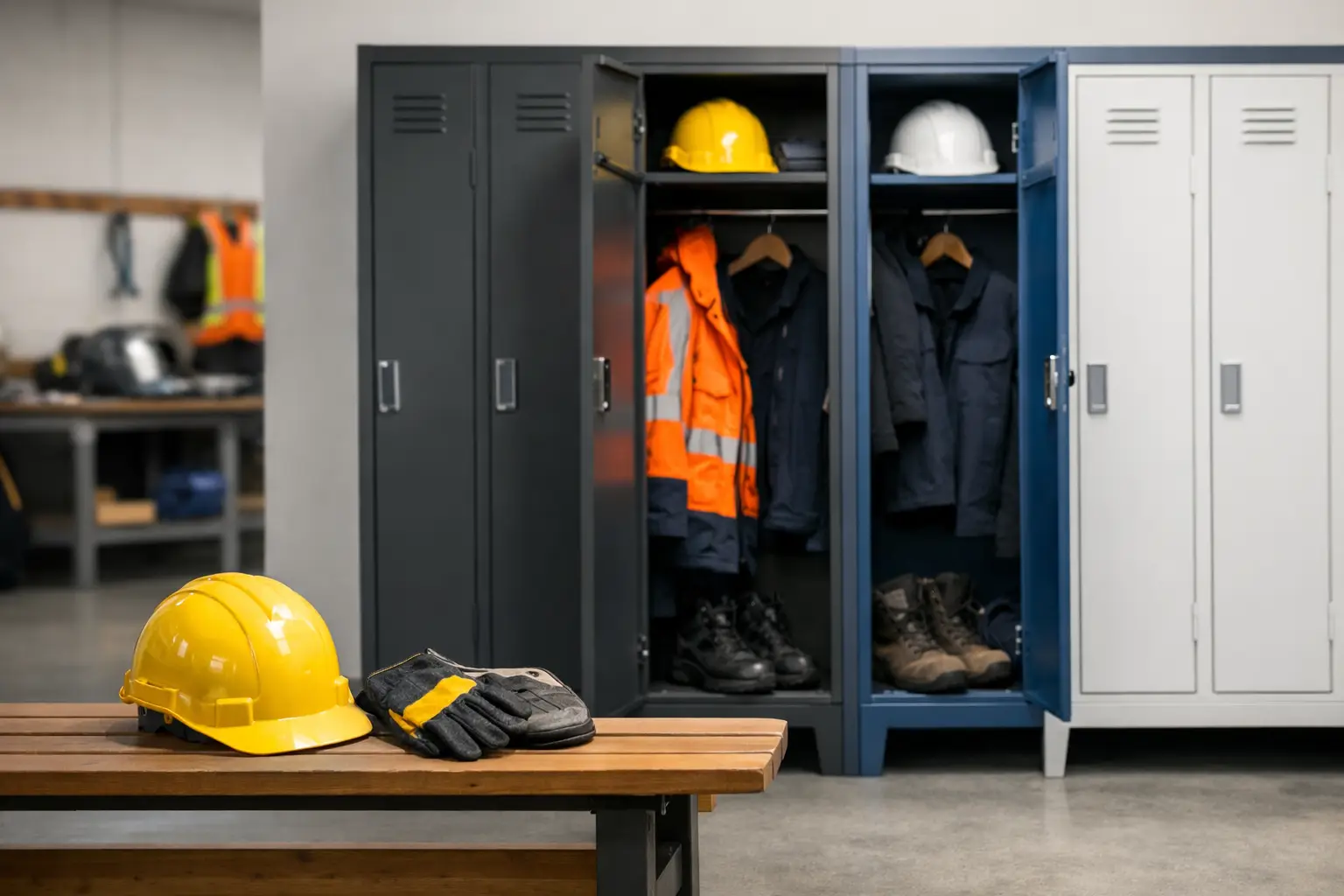
A workwear locker is rarely a simple storage box. In factories, warehouses, food processing sites, hospitals, and service facilities, it directly affects hygiene, shift changes, security, and how efficiently people move through the day. When lockers are undersized, poorly ventilated, or not matched to the job, the problem shows up fast – cluttered changing areas, damaged garments, and avoidable delays.
For business buyers, the right specification matters more than the lowest purchase price. A locker that fits the workflow, the garments, and the environment will usually cost less over its service life than a cheaper unit that creates maintenance issues or needs early replacement. That is why workwear storage should be treated as an operational decision, not just a furniture purchase.
What a workwear locker needs to do
The first question is not color, door style, or even compartment count. It is function. A workwear locker needs to store uniforms, PPE, boots, and personal items in a way that supports the actual workplace routine. In some facilities, that means clean and dirty garments must be separated. In others, the priority is ventilation because clothing is damp at the end of a shift. In high-traffic operations, speed matters most – employees need fast access without bottlenecks in the locker room.
This is where standard office storage stops being relevant. Workwear is bulkier, heavier, and more likely to carry moisture, dust, or contamination. A locker used for industrial clothing must handle repeated daily use, impact, and cleaning. It also has to remain easy to manage for supervisors and facility teams.
A good specification starts with a clear picture of what workers actually store. Lightweight uniforms require a different internal layout than coveralls, high-visibility outerwear, hard hats, and safety boots. If buyers skip this step, they often end up with compartments that look adequate on paper but fail in real use.
Workwear locker sizes and internal layout
Size is where many projects go right or wrong. A narrow compartment can be enough for folded garments in light-duty settings, but it will struggle in industrial environments where users need hanging space and room for boots or helmets. Height also matters. Long garments should not be crammed into short compartments where they crease, drag, or trap moisture.
Internal layout should follow the dressing routine. Many buyers benefit from lockers with a hanging rail and top shelf, because this keeps garments off the floor while leaving room for smaller personal items. In tougher environments, a lower section for footwear makes daily use more practical and reduces mess in common areas.
For some operations, split-compartment or Z-style configurations improve space efficiency. These can increase capacity in compact locker rooms, but there is a trade-off. They are excellent when users store lighter gear and floor space is limited, yet they may not be the best option for bulky workwear. Full-length compartments usually offer better usability for heavy garments and layered PPE.
Why ventilation matters in a workwear locker
Ventilation is not a minor feature. It has a direct effect on hygiene, odor control, and garment condition. If employees store damp uniforms, jackets, or boots in an enclosed metal compartment with poor airflow, the result is predictable. Moisture lingers, odors build up, and the locker interior becomes harder to maintain.
Well-designed air slots or perforated sections improve circulation without compromising security. The right level of ventilation depends on the site. Dry office-adjacent changing rooms need less airflow than industrial sites, transportation depots, or utility operations where clothing is exposed to weather and physical work.
There is a balance to strike. Too much open perforation may not suit every setting, particularly where visual privacy or dust control is important. That is why buyers should assess the environment rather than assume one ventilation pattern works everywhere.
Clean and dirty separation
In many sectors, one compartment is not enough. Food production, healthcare, pharmaceuticals, and certain industrial sites often require separation between clean and used garments. This can be for hygiene, compliance, or simple operational discipline.
A workwear locker with divided internal sections helps reduce cross-contamination and keeps routines consistent. Employees know where fresh uniforms belong and where worn items should be placed. That sounds basic, but in busy facilities, clear physical separation usually works better than relying on signage alone.
This is also one area where custom fabrication can add value. Some projects need dual-door arrangements, internal dividers, sloping tops, or specific compartment ratios to fit site procedures. Standard products cover many requirements, but regulated environments often need a more tailored solution.
Material strength and long-term durability
Workwear lockers are used hard. Doors are opened constantly, hinges take repeated stress, and internal surfaces are exposed to abrasion from boots, tools, and hardware on garments. For that reason, material quality should be judged by long-term performance, not by appearance alone.
Powder-coated steel remains a strong choice for most commercial and industrial applications because it provides durability, impact resistance, and straightforward maintenance. The gauge of the steel, the quality of the welds, the door reinforcement, and the lock housing all contribute to service life. These details matter more in a high-use locker room than decorative features ever will.
Buyers should also consider how the lockers will be cleaned. Smooth surfaces, durable finishes, and practical base designs make maintenance easier for facility teams. In wet or demanding environments, specification should account for corrosion resistance and cleaning frequency from the start.
Security options and user management
Locking choice affects both security and administration. A basic key lock may suit some facilities, especially where assigned lockers remain with the same user long term. In other settings, padlock compatibility offers flexibility and reduces key management for employers. Coin return, hasp, and digital options may also fit depending on the site model.
The best choice depends on turnover, supervision, and user behavior. Temporary staff facilities, gyms, and multi-shift operations often need a different approach than a stable manufacturing team with permanent assignment. There is no single best lock for every project, but there is usually a best fit for the way the site operates.
It is also worth thinking about access after hours, lost key procedures, and replacement costs. Procurement teams often compare lock types based on unit price, but the easier comparison is total management effort over time.
Space planning for locker rooms and changing areas
A good workwear locker can still underperform if the room layout is poor. Buyers should plan around user flow, not just product dimensions. People need enough space to open doors, change safely, and move through the room during peak shift times. If rows are too tight, congestion becomes part of daily operations.
Bench integration, aisle width, and end-of-row access all affect usability. So does the number of users arriving at once. A locker room serving 20 people per hour needs a different layout than one handling 200 during a shift change. Capacity planning should reflect peak demand rather than average usage.
This is often where an experienced manufacturer adds practical value. Product range matters, but so does the ability to support broader storage planning with compatible benches, cabinets, and room configurations.
Standard products or custom workwear locker design
For many buyers, standard locker models are the fastest and most cost-effective route. They simplify specification, reduce lead times, and work well when site needs are straightforward. This is particularly useful for distributors, contractors, and procurement teams managing repeat projects across multiple facilities.
Custom production becomes more relevant when the environment has unusual dimensions, specific compliance needs, mixed garment storage, or branding and finish requirements. It also makes sense when one project needs to combine lockers with other metal storage systems under a consistent specification.
Loxmet works well in this space because many commercial buyers need both options – dependable standard products for speed and custom fabrication when the site cannot compromise on layout or function.
How to evaluate suppliers
A locker is a long-life asset, so supplier selection matters. Buyers should look beyond catalog images and ask practical questions about steel quality, finish, lock options, warranty, production flexibility, and delivery reliability. If the project spans multiple product categories, it also helps to work with a manufacturer that can supply coordinated storage solutions rather than isolated items.
For international buyers and distributors, consistency is critical. The supplier should be able to maintain build quality across repeat orders and adapt when project requirements change. Fast delivery is useful, but only when the product arrives fit for purpose.
The right workwear locker supports order, hygiene, and daily efficiency without asking for constant attention. When the specification matches the site, it becomes one less thing operations teams need to worry about – and that is usually the clearest sign of a good buying decision.