


Highlights
How Do I Choose the Right Locker Size?

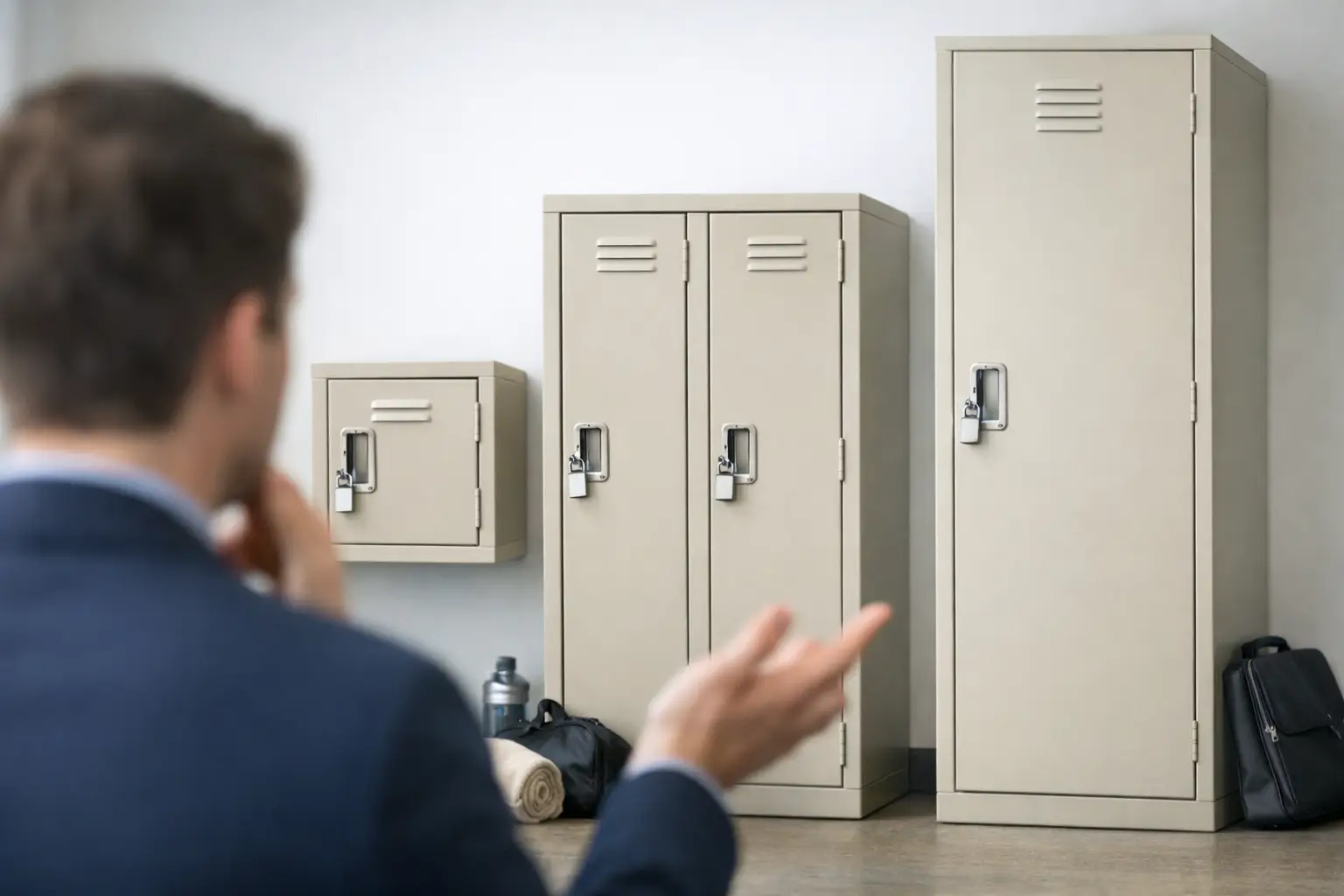
A locker plan usually looks simple until the first layout review. Then the real questions start. Will staff store only personal items, or full uniforms and boots? Do shifts overlap? Is floor space tight? If you are asking, how do I choose the right locker size for my workplace, the right answer starts with use before dimensions.
Locker size is not just a product choice. It affects capacity, user satisfaction, cleaning access, traffic flow, and the total cost of a fit-out. A locker that is too small creates clutter and complaints. A locker that is too large reduces the number of users you can serve and wastes valuable square footage. For procurement teams and facility managers, the goal is practical fit – enough space for the user, efficient use of the room, and durable construction suited to the site.
How do I choose the right locker size for my workplace?
Start with four factors: what needs to be stored, how many people need access, how often lockers are used, and how much floor space is available. These four variables determine whether you need compact day-use lockers, full-height employee lockers, charging lockers, or a mixed configuration.
In most workplaces, locker size decisions fall into three broad use cases. The first is personal item storage for offices, schools, and shared staff areas. The second is uniform and PPE storage for industrial, healthcare, and service environments. The third is specialist storage for devices, tools, or controlled materials. Each use case points to different internal dimensions, door formats, and compartment counts.
A common mistake is choosing based only on external measurements. Buyers often focus on fitting a wall length, but internal usability matters more. A narrow locker bank may maximize capacity on paper, yet fail in practice if users cannot fit shoes, bags, folded garments, or helmets.
Start with what users actually store
The fastest way to narrow locker sizes is to define the contents. For office staff, a smaller compartment may be enough if the main need is a handbag, backpack, lunch container, phone, and personal items. In a warehouse or factory, that same compartment may be far too small if workers need to store high-visibility clothing, heavy boots, gloves, hard hats, and spare layers.
For clean workplace environments, half-height or multi-door lockers can be efficient. They support personal storage without taking the footprint of a full changing-room locker. In operational settings where employees change clothing on site, full-height lockers usually make more sense because hanging space becomes important.
This is where trade-offs matter. More compartments increase user capacity, but each compartment becomes smaller. That works well for low-bulk storage and short dwell times. It works poorly when users need to store winter gear, PPE, or larger personal bags.
Office and light commercial settings
In offices, call centers, educational facilities, and front-of-house environments, the right size is often driven by bag storage and shared use. If people are not changing clothes at work, compact lockers can save significant space. Multi-tier lockers often perform well here because they allow more users per wall while still providing secure storage.
The key question is whether employees need daily assigned lockers or occasional touchdown storage. Assigned use usually justifies slightly larger compartments because people accumulate more items over time. Day-use storage can often be smaller and denser.
Industrial, healthcare, and PPE use
In industrial workplaces, size decisions should be stricter. Workers may need room for uniforms, separate clean and dirty items, boots, face shields, gloves, or lockers with divided sections. In healthcare and controlled environments, separation of garments or personal and work items can be part of the specification, not just a preference.
In these cases, locker height alone is not enough. Internal arrangement matters. A locker with a hanging rail, shelf, or split compartment may outperform a larger empty compartment because it supports organized storage and safer use.
Measure the room, not just the wall
Once use is clear, the next step is spatial planning. Floor space is not only about how many lockers can line a wall. You also need to consider door swing, aisle width, bench placement, cleaning access, and traffic at shift changes.
A locker room that looks efficient on a drawing can become congested if two rows open into a narrow aisle or if users are changing at the same time. This matters in factories, gyms, staff rooms, and schools where peak access happens in short windows.
If space is limited, narrower lockers or tiered units may be the right decision, but only if the stored items fit comfortably. Another option is to combine different locker sizes in one installation. Larger units can be assigned to specific roles while smaller units serve office staff or visitors. This mixed approach often improves room efficiency without over-specifying every locker.
Think about future headcount
Many buyers size a locker project around current staff numbers and then run short within a year. If your workplace is growing, allow for expansion from the start. That may mean selecting a layout with modular banks, leaving planned wall space, or using configurations that can be extended later.
This is especially relevant for distributors, multi-site operators, and project buyers managing phased installations. A locker system should not solve only today’s count. It should support growth without forcing a full redesign.
Choose locker depth and width based on behavior
Height gets most of the attention, but width and depth often decide whether a locker feels usable. A tall compartment with insufficient depth may not accept a backpack or folded jacket comfortably. A locker with adequate depth but very limited width may still be frustrating if users need to place shoes beside a bag or hang a coat properly.
That is why the right size depends on behavior as much as dimensions. Ask simple questions. Do users carry laptops? Do they bring meals in cooler bags? Do they change shoes? Do they store bulky winterwear for several months each year? These details shape the correct specification.
For device-heavy environments, charging function may be more important than extra garment space. For industrial teams, reinforced doors and practical internal fittings may matter more than compact appearance. For wet areas, ventilation and corrosion-resistant finishes may affect the selection alongside size.
Don’t separate size from locker type
A workplace locker is part of an operational system, not a standalone box. The right size should be chosen together with the right product type. Personal storage lockers, charging lockers, PPE lockers, clean-dirty lockers, and staff changing lockers are built for different demands.
For example, a business may think it needs larger lockers when the real need is a different configuration. If employees must separate personal clothing from workwear, a divided locker may solve the issue better than simply increasing dimensions. If devices are the main storage item, a charging locker with smaller secure compartments may be the better use of floor space.
This is where a manufacturer with both standard ranges and custom fabrication can add value. Some projects fit common dimensions perfectly. Others need specific heights, compartment counts, sloping tops, ventilation patterns, or internal accessories to match the workplace.
Ask these questions before you specify
Before you request quotes or approve drawings, confirm a few practical points with your team. How many users need lockers at the same time? What are the largest items they will store? Will lockers be assigned or shared? Do users change clothing on site? Is there a compliance or hygiene requirement for separation? Will the room support future expansion?
These questions prevent overbuying and underbuying. They also help suppliers recommend the right range faster, which matters on projects where lead time and installation schedules are tight.
The best locker size is the one that fits the operation
There is no single standard that suits every workplace. A compact office hub, a school corridor, a production floor, and a healthcare changing area all demand different locker sizes because they support different behaviors. The best choice balances user needs, room efficiency, and long-term durability.
At Loxmet, projects often work best when buyers start with usage patterns rather than product assumptions. That approach leads to better sizing, smoother installation planning, and fewer compromises after delivery.
If you are comparing options, think less about the biggest locker you can fit and more about the right locker your team will actually use well. That is usually where the smartest storage decision begins.