


Highlights
Z Shape Locker Benefits for Busy Facilities

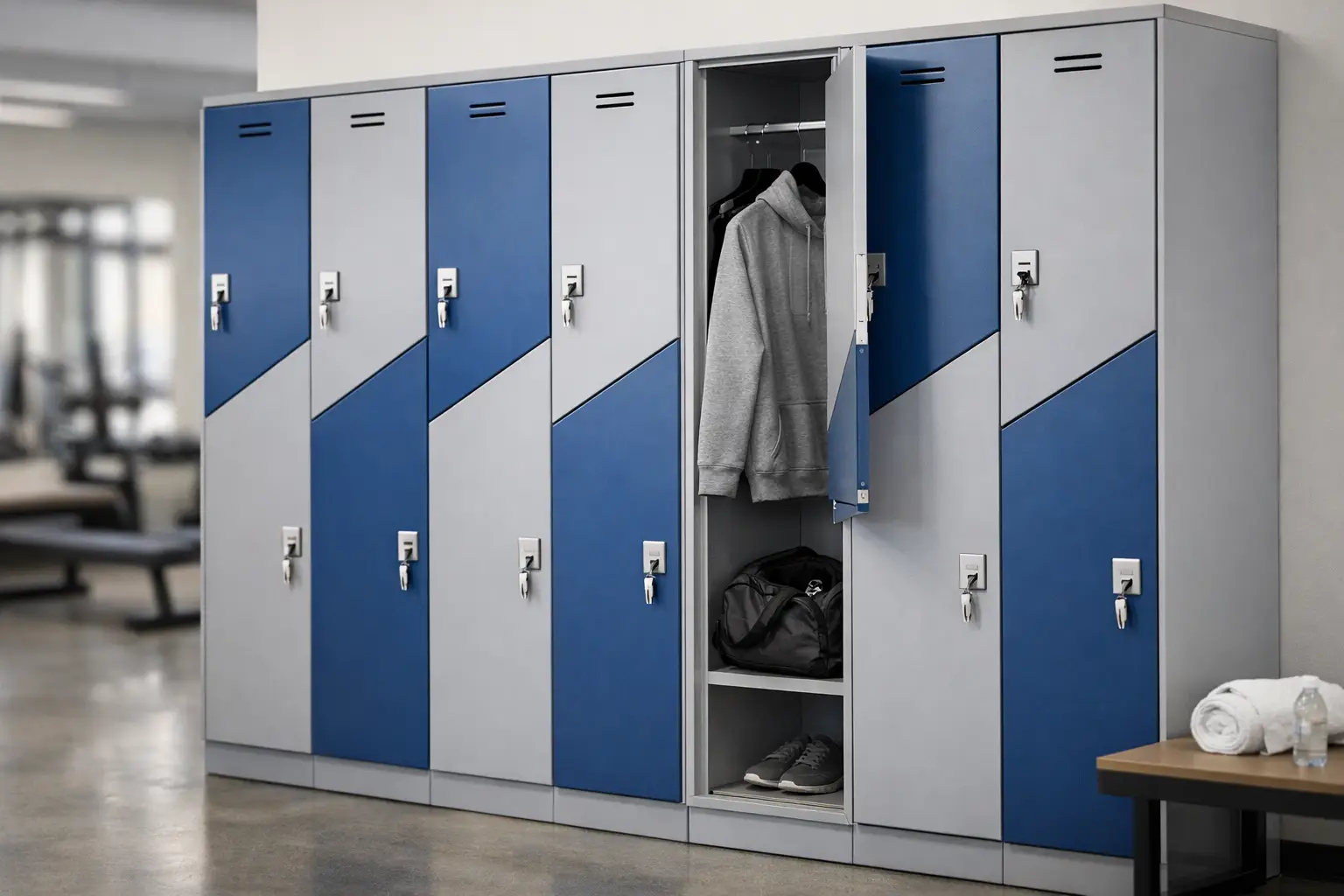
When floor space is tight but users still need full-height storage, the z shape locker becomes a practical answer. It is built to increase locker capacity without forcing each user into a small cube that cannot handle uniforms, bags, shoes, or personal gear. For procurement teams and facility planners, that balance matters because locker rooms are rarely oversized, and storage demand usually grows faster than available space.
What makes a z shape locker different
A z shape locker uses an interlocking compartment layout that lets two users share the vertical footprint of one standard full-height locker column. Instead of splitting a unit into two small box compartments, the internal shape gives each user a section for hanging garments and a separate area for shoes, helmets, bags, or folded items. The result is higher density storage with better usability than many conventional multi-tier locker formats.
This is why the format is common in staff changing rooms, factories, warehouses, fitness facilities, schools, and transport hubs. In each of these environments, users often need more than a simple shelf. They need to hang a jacket or workwear, keep footwear separate, and access belongings quickly during shift changes or peak traffic periods.
Why buyers choose a z shape locker
The main reason is space efficiency, but that is only part of the decision. A z shape locker also solves a functional problem. Many facilities want to increase the number of users per room without lowering the storage standard for each person.
With a standard single-door locker, each user gets generous vertical space, but the room fills quickly. With small compartment lockers, capacity goes up, but practicality drops. Long garments crease, PPE gets compressed, and users start storing items outside the locker. A z shape locker sits between those two extremes. It raises user capacity while preserving useful internal height.
For commercial buyers, that can improve room planning from the start. It can also reduce the need for future expansion when headcount rises. In a busy facility, avoiding one more row of lockers can free up circulation space, improve compliance with access routes, and make cleaning easier.
Best use cases for z shape locker installations
A z shape locker performs best where users carry a mix of clothing and personal items. Industrial workplaces are a strong fit because staff often need to store uniforms, jackets, lunch bags, and work shoes in one secure unit. Schools and training centers also benefit because students need a locker that handles both books and outerwear without taking up too much wall space.
Gyms and sports facilities often choose this format for the same reason. Members want enough room for clothing and footwear, but operators need to maximize locker count per square foot. In employee welfare areas, the format works well when a business needs a clean, organized locker room that supports shift turnover without crowding.
Healthcare and PPE environments can also benefit, though the exact specification matters more. In those cases, buyers may need sloping tops for hygiene, ventilation patterns suited to daily use, and internal fittings that support clothing separation.
Space planning trade-offs
The z shape locker is efficient, but it is not automatically the right choice for every site. If users need to store bulky equipment, large backpacks, tool cases, or wide winter garments, a full single-door locker may still be the better fit. If the goal is only to store small personal items, a compartment locker can provide even higher density.
This is where layout planning matters. A locker room should not be designed around unit count alone. Door swing, aisle width, bench placement, user traffic, and cleaning access all affect whether the final installation works well. A high-capacity room that feels congested is not an efficient room.
Buyers should also consider user profile. A school, a manufacturing plant, and a wellness facility may all use z lockers, but they do not need the same dimensions, locking options, or door configuration. Product selection should reflect actual use, not just category labels.
Key specifications that affect performance
Not all z lockers are built to the same standard. For business buyers, the basic shape is only the starting point. The real performance comes from construction details.
Steel thickness affects rigidity, resistance to dents, and long-term door alignment. Reinforced doors are important in high-traffic areas where lockers are opened and closed many times a day. Ventilation slots matter because they help control odor and moisture buildup, especially in changing rooms and sports environments.
Lock compatibility is another major factor. Some facilities need simple hasp locking for padlocks. Others require cam locks, master key systems, or digital access. The right option depends on user turnover, security policy, and how much administrative control the site requires.
Internal features should be reviewed closely. A coat hook, shelf, label holder, or divider can make the locker much more useful in practice. Powder coating also deserves attention. In humid or demanding environments, finish quality directly affects product life and appearance.
Choosing the right z shape locker for commercial projects
The best buying decision usually starts with four practical questions: who will use the locker, what will they store, how many users must fit in the room, and what level of durability is needed over time.
If the installation is for an industrial locker room, heavy-duty construction should lead the specification. If the site is a school or public facility, ease of maintenance and reliable locking may be equally important. If the project is for a distributor or contractor serving multiple end users, product consistency and fast replenishment become critical.
Dimension planning should be handled early. Width, depth, and height all change the user experience. A shallow locker may save floor space, but it can limit garment storage. A wider unit improves capacity but may reduce total locker count. There is no universal best option. The right balance depends on site conditions and user needs.
For larger tenders, sample evaluation is often worth the time. Door feel, weld quality, coating finish, and assembly method reveal more than a catalog image ever can.
Customization matters more than many buyers expect
Standard products cover many projects, but locker rooms often have site-specific requirements. That is where customization adds value. Color selection can support branding or zoning. Sloping tops can improve hygiene and reduce dust collection. Perforation patterns can be adjusted for ventilation needs. Lock preparation can be tailored to the access method already used in the facility.
In some projects, buyers also need mixed layouts, such as z lockers combined with single-door units, benches, or PPE storage. Working with a manufacturer that can adapt dimensions and features helps avoid forcing the whole room into a one-size-fits-all product plan. For procurement teams, that reduces compromise and often improves the total result.
This is one reason many commercial buyers prefer a manufacturing partner instead of a reseller-only source. A manufacturer can usually offer better control over production details, finish quality, and repeat orders across phased projects.
Durability and lifecycle value
A locker purchase should be judged over years, not just at delivery. In active workplaces, lockers take repeated impact from footwear, bags, metal tools, and daily use. Weak doors, thin steel, and poor coating quality tend to show problems early. Hinges loosen, doors misalign, surfaces chip, and replacement costs start to rise.
A well-made z shape locker should maintain structure, function, and finish under regular use. That matters for operating cost, but it also affects how a facility looks and runs. Damaged lockers create complaints, increase maintenance time, and reflect poorly on the site itself.
For distributors and project buyers, consistent product quality also protects reputation. If a locker system performs well over the long term, it supports repeat business and lowers service issues after installation.
Procurement considerations beyond the product
Commercial buyers rarely choose on product design alone. Lead time, packaging, minimum order flexibility, production capacity, and communication all shape the final supplier decision. A strong product from an unreliable supplier can still create project delays.
For this reason, it makes sense to evaluate whether the supplier can support both standard orders and project-specific needs. Loxmet serves this part of the market with a manufacturing approach built around durable metal storage, practical customization, and dependable supply for business buyers.
A z shape locker is a straightforward product, but choosing the right one has a direct effect on room efficiency, user satisfaction, and lifecycle cost. When the specification matches the environment, it becomes one of the most effective ways to increase capacity without giving up everyday usability. The smart move is to treat it as part of a working facility plan, not just another line item.