


Highlights
Custom Metal Fabrication Guide for Buyers

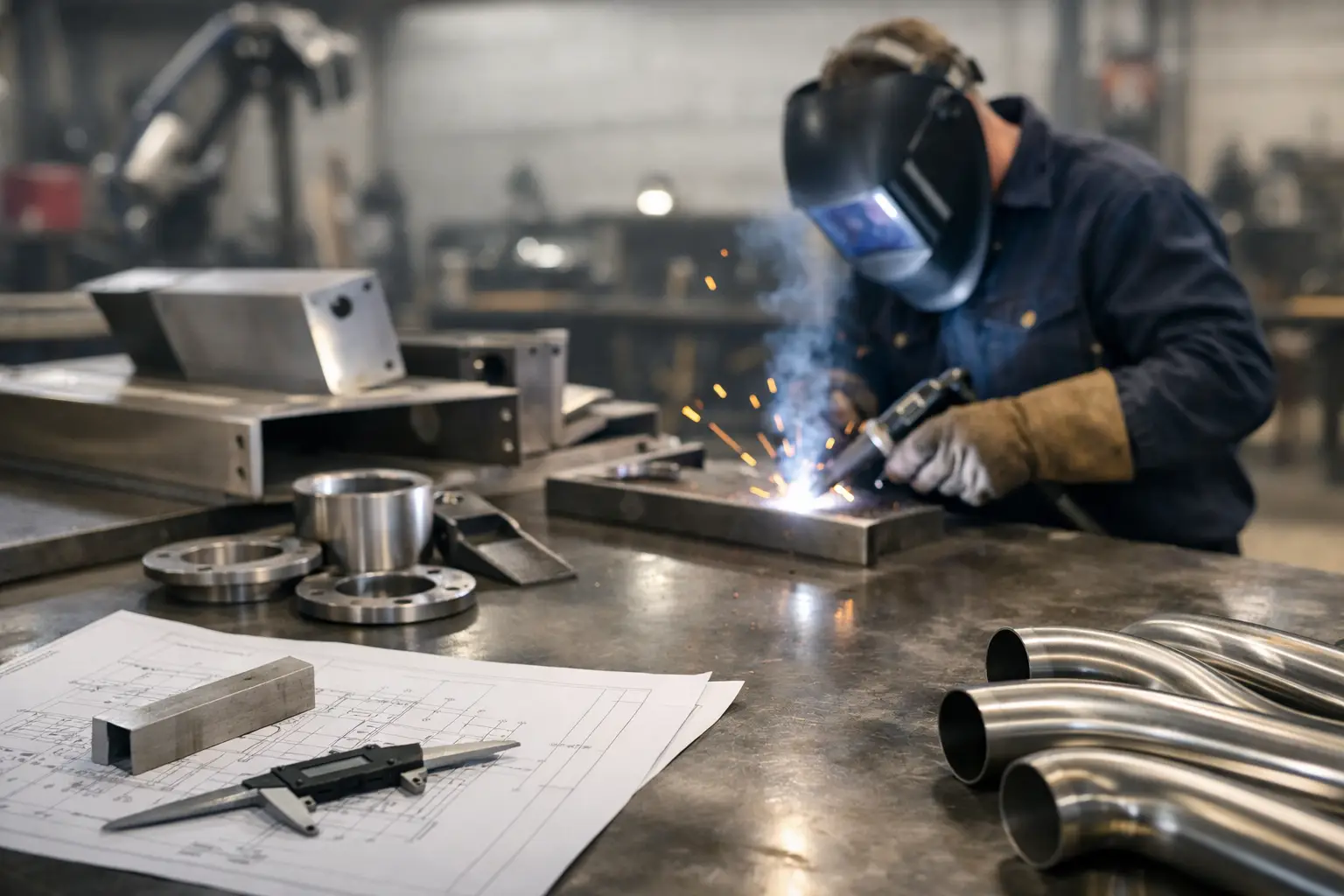
A storage project usually goes off track long before production starts. The most common cause is not poor manufacturing. It is an incomplete brief. This custom metal fabrication guide is built for buyers who need durable, practical products that fit real workplaces, real users, and real operating conditions.
For procurement teams, facility managers, and distributors, custom metal fabrication is not about changing a color or adding a logo. It is about matching a product to a specific use case. A locker may need integrated charging, reinforced doors, sloped tops, ventilation, and a master key system. A cabinet may need chemical resistance, spill containment, or adjusted shelf loads. Those details affect pricing, lead time, compliance, and long-term performance.
What a custom metal fabrication guide should help you decide
The right project starts with one question: what problem must the product solve? That sounds obvious, but many requests begin with dimensions and finish while leaving out the application. In practice, use case comes first. A charging locker for a school, a PPE locker for an industrial site, and a document cabinet for an office may all look similar on paper, yet require different steel thicknesses, locking systems, airflow, cable routing, and internal layouts.
A useful custom metal fabrication guide should help you define the operating environment, user behavior, load requirements, and maintenance expectations before drawings are finalized. It should also help you separate must-have specifications from optional preferences. That distinction matters because every added feature affects production complexity.
When buyers are clear about priorities, manufacturers can offer better engineering advice. In some cases, a fully custom unit is the right answer. In others, modifying a standard product saves time and cost without compromising function.
Start with the application, not the drawing
A drawing is necessary, but it is not the whole specification. Good fabrication planning begins with where the product will be used, how often it will be used, and who will use it. A locker in a corporate office has different wear patterns than one in a gym, factory, or school. A chemical storage cabinet has different safety requirements than a general utility cabinet.
That is why buyers should describe the environment in practical terms. Is the unit exposed to moisture, dust, or harsh cleaning chemicals? Will users store personal belongings, tools, electronics, or regulated materials? Does the product need to support frequent access by many users, or occasional access by authorized staff only? These answers influence material selection, reinforcements, finish choice, and lock configuration.
For project buyers managing multiple spaces, standardization is also worth discussing early. It may be better to use one cabinet platform with several internal configurations than to approve several completely different bodies. That approach can simplify ordering, reduce spare part variation, and improve long-term replacement planning.
Material selection is about performance, not preference
Steel is often chosen because it is strong, stable, and suited to heavy-duty use. But not all steel products perform the same way. Sheet thickness, forming quality, welding consistency, and coating system all affect durability.
Thicker steel generally improves rigidity and impact resistance, but it also increases weight and cost. For some applications, that trade-off is justified. For others, intelligent reinforcement delivers the required strength without adding unnecessary mass. The best option depends on the product type, expected load, and installation conditions.
Finish selection deserves equal attention. Powder coating is common for commercial storage products because it provides a durable and cleanable surface. Still, the finish should match the environment. Humid areas, industrial settings, and high-contact public spaces may require a different coating specification than a low-traffic office.
If hygiene, corrosion resistance, or chemical exposure is part of the project, that should be stated early. It is much easier to engineer for those requirements before production than to address failures later.
The specifications that prevent expensive revisions
Many fabrication delays come from missing technical details rather than factory capacity. Buyers can reduce risk by confirming a short group of practical specifications before approving production.
Dimensions are the starting point, but external size alone is not enough. Internal clearances, shelf depth, door swing, ventilation openings, cable access, plinth or leg height, wall fixing points, and load ratings all matter. If a cabinet must fit binders, helmets, laptops, cleaning supplies, or charging hardware, that should be tied to measurable internal requirements.
Locking is another area where vague requests create problems. Saying a unit should be secure is not specific enough. The manufacturer needs to know whether the project requires keyed locks, digital locks, padlock hasps, master key access, or compartment-level access control. In shared environments, key management and replacement procedures should also be considered.
For buyers working on schools, industrial changing rooms, healthcare areas, or staff facilities, compliance and safety details should be reviewed alongside product specs. Fire behavior, ventilation needs, anti-tip measures, and safe storage requirements may affect the design from the start.
Lead time depends on complexity more than quantity
Many buyers assume quantity is the main factor behind lead time. In custom work, complexity often matters more. A straightforward modification to a standard locker body may move quickly through production. A fully custom assembly with special tooling, multiple lock types, cable integration, and non-standard packaging can take longer even at lower volume.
This is why early technical alignment is so valuable. When the design intent is clear, the manufacturer can confirm whether the request fits existing production methods or requires additional engineering steps. That distinction affects scheduling, cost control, and delivery reliability.
There is also a practical balance between customization and repeatability. If a project is likely to be reordered, the buyer should think beyond the first shipment. A design that is highly specific but difficult to repeat may not be the best commercial choice. Often the stronger long-term decision is a controlled custom variation based on proven production standards.
How to evaluate a fabrication partner
Buyers do not just need a factory. They need a supplier that can translate functional requirements into manufacturable products. That means asking different questions than you would for a simple catalog purchase.
First, look at category experience. A manufacturer that already produces lockers, cabinets, shelving, benches, or bunk beds for commercial environments will usually spot practical issues faster than a general metal shop. They understand door alignment, load distribution, airflow, assembly efficiency, and the abuse that workplace products face over time.
Second, review the balance between standard production and custom capability. This matters because many projects do not require a completely blank-sheet design. A partner with a broad standard range can often adapt existing models efficiently, which improves speed and cost control.
Third, ask how drawings, samples, approvals, and change requests are handled. The process should be clear. If revisions are poorly controlled, small misunderstandings can become large delays.
For international buyers, consistency is as important as price. Reliable packaging, export readiness, documentation accuracy, and stable quality across repeat orders are part of the value. Loxmet serves this type of buyer by combining standard heavy-duty storage production with project-based customization for specific operational requirements.
Common mistakes in custom metal fabrication projects
The first mistake is treating customization as a visual decision instead of a functional one. Color and branding matter, but they should come after structure, access, and durability are defined.
The second is under-specifying the environment. A cabinet that works well in a dry back office may fail early in a humid locker room or industrial washdown area.
The third is over-customizing. Buyers sometimes request unique dimensions or features for every room or department when a modular approach would perform just as well. That increases cost and slows future reordering.
The fourth is approving a design without thinking about installation and service. Delivery access, assembly method, leveling, anchoring, spare locks, and replacement parts should not be afterthoughts.
A practical way to move from idea to order
The strongest projects usually follow a simple path. Define the application. Confirm critical dimensions and load needs. Select materials and finish based on the environment. Clarify lock type, internal configuration, and installation constraints. Then review the design for repeatability, not just first-order fit.
If the project is part of a larger facility rollout, it also helps to group requirements into standard and variable elements. Keep the cabinet body, door format, and finish consistent where possible. Customize only what directly supports the use case, such as compartment layout, accessories, or access control. That approach usually gives buyers a better result commercially and operationally.
Custom metal fabrication works best when it is treated as a manufacturing decision, not just a purchasing decision. The better the brief, the better the product. And when the product fits the space, the users, and the workload from day one, the value shows up long after delivery.