


Highlights
Choosing the Right Cleaners Cupboard

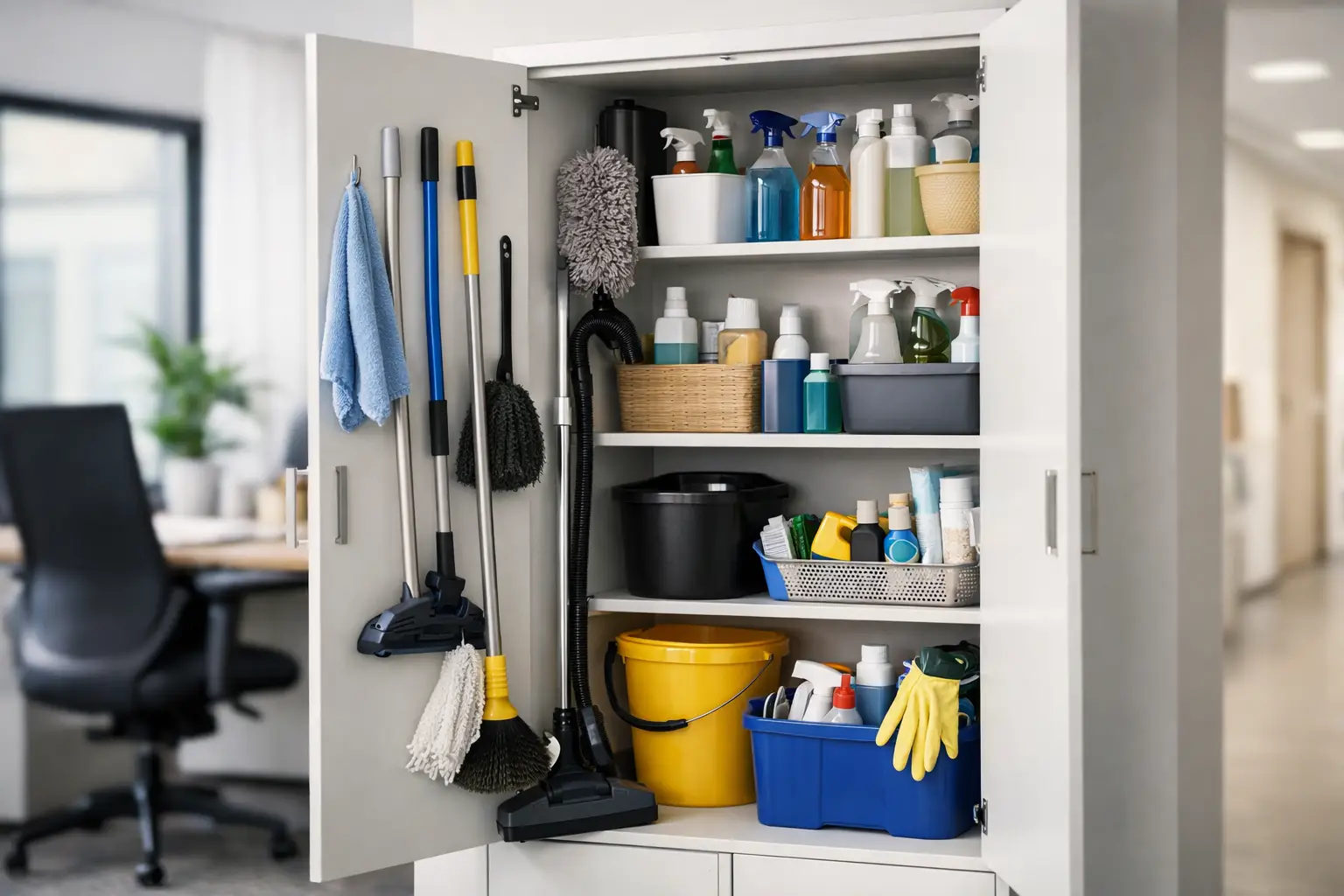
A cleaners cupboard is rarely the item that gets attention during a facility fit-out, but it often becomes one of the hardest-working storage units in the building. When mops, chemicals, paper goods, buckets, and janitorial tools are stored badly, teams lose time, compliance risks increase, and cleaning standards slip. In commercial environments, that turns a simple cabinet decision into an operational one.
For procurement teams, facility managers, and commercial project buyers, the main question is not whether a cleaners cupboard is needed. It is which specification will hold up under daily use, fit the cleaning routine, and support safe storage over the long term. The right choice depends on the site, the cleaning method, and the type of products being stored.
What a cleaners cupboard needs to do
In practice, a cleaners cupboard has to solve three problems at once. It needs to keep cleaning equipment organized, separate wet and dry items where possible, and restrict access to chemicals or supplies that should not be left exposed in open utility areas.
That sounds straightforward, but usage varies widely. A school janitorial team may need space for long-handled tools, bulk tissue stock, and daily-use detergents. A healthcare site may require tighter control over chemical products and a storage layout that supports stricter cleaning protocols. An office building may prioritize compact dimensions because every service area is under pressure.
This is why a basic cabinet and a well-planned cleaners cupboard are not the same thing. One stores items. The other supports workflow.
Cleaners cupboard sizes and layout decisions
The first sizing mistake is buying based only on wall space. In commercial use, internal layout matters just as much as external dimensions.
A cleaners cupboard usually needs vertical clearance for mops, brooms, and handles. If shelves run full width from top to bottom, the unit can become inefficient very quickly. Buyers often get better results from a split interior, with one side left open for long tools and the other fitted with adjustable shelving for bottles, gloves, cloths, and consumables.
Height is useful, but door access is equally important. In narrow service corridors or compact utility rooms, a deep cabinet with wide-swing doors may be harder to use than a slimmer unit with a more practical footprint. It depends on the room and the traffic around it.
Bulk storage is another variable. If the cupboard will hold reserve stock such as toilet paper, hand towels, trash liners, and refill containers, the unit needs shelf load capacity that matches the real use case. Light-duty storage often looks acceptable at handover, then starts failing once the cabinet is fully loaded.
Why metal is often the better option
For high-use environments, material choice affects lifespan, hygiene, and service reliability. A cleaners cupboard made from metal is generally better suited to commercial duty than units designed for light domestic use.
Metal construction offers better resistance to knocks from carts, buckets, and equipment. It is also more stable under repeated loading and less likely to warp in demanding environments. In janitorial rooms, moisture and frequent handling are normal, not occasional. The storage unit has to be built for that reality.
There is also a maintenance advantage. Powder-coated steel surfaces are easier to wipe down and keep presentable in facilities where appearance and hygiene matter. That makes a difference in schools, healthcare buildings, offices, hospitality sites, and industrial facilities where utility spaces are actively used every day.
The trade-off is that not every metal cabinet is automatically suitable. Gauge, weld quality, door strength, hinge performance, and coating quality all affect long-term value. For business buyers, this is where manufacturer capability matters more than a generic product description.
Key features to look for in a cleaners cupboard
A good cleaners cupboard should match the job without adding unnecessary complexity. In most projects, a few features make a clear operational difference.
Lockability is one of them. Cleaning chemicals, sprays, and concentrated products should not be freely accessible in shared environments. A lockable unit helps control access and reduce risk, especially in schools, public buildings, and multi-user workplaces.
Ventilation may also be relevant, depending on what will be stored. Some sites prefer vented doors to support airflow around frequently used cleaning tools or damp items. Others may prioritize fully enclosed storage and separate processes for drying equipment. This is one of those areas where the correct answer depends on cleaning routines rather than a one-size-fits-all rule.
Adjustable shelving is another practical requirement. Consumables change over time, and fixed shelf spacing can limit the useful life of the cabinet. If the cupboard needs to support both bottle storage and boxed supplies, adjustability gives facility teams more flexibility.
Door reinforcement and durable locking systems are often overlooked during purchasing. They should not be. In shared or high-traffic buildings, doors are the first part to show wear. Strong hinges, dependable lock mechanisms, and solid door construction reduce maintenance calls and replacement costs later.
Safety and compliance considerations
Not every cleaners cupboard is intended for hazardous materials. That distinction matters.
If the site stores general janitorial supplies and standard cleaning products in controlled volumes, a standard lockable metal cupboard may be appropriate. But if the requirement includes flammable, corrosive, or otherwise regulated chemicals, buyers may need a dedicated chemical storage cabinet instead of a general cleaners cupboard.
This is a common specification point in commercial projects. A cupboard for mops, cloths, and everyday cleaning stock is not the same product category as a cabinet designed for chemical safety compliance. Mixing those requirements can create both safety and procurement problems.
For that reason, buyers should define the storage list before requesting quotes. It is much easier to match the right cabinet to the site when the intended contents are clear. It also helps avoid over-specifying, which can raise cost without delivering practical benefit.
Where cleaners cupboards deliver the most value
The value of a cleaners cupboard becomes more obvious in multi-room and multi-team facilities. In these settings, poor storage creates small delays that add up every day.
In offices, the cupboard helps centralize consumables and reduce clutter in service rooms. In schools, it supports safer access control and faster daily cleaning routines between classes or shifts. In healthcare and laboratory-adjacent environments, controlled storage improves consistency and helps teams keep cleaning tools where they are expected to be.
Industrial and warehouse sites often need a tougher specification because the cabinet may be used in rougher service areas. Here, durability matters more than aesthetics, and buyers tend to focus on structural strength, lock reliability, and resistance to frequent handling.
Distributors and fit-out contractors also benefit from standardizing on a dependable cupboard design. It simplifies repeat ordering, reduces uncertainty across projects, and makes it easier to serve clients who need practical, durable utility storage without custom engineering every time.
Standard product or custom specification?
For many projects, a standard cleaners cupboard is the fastest and most cost-effective route. If the application is typical and the dimensions work, standard production supports faster lead times and simpler purchasing.
Custom production becomes more relevant when the installation space is limited, when internal configurations need to suit a specific cleaning process, or when the cupboard has to align with a broader storage package across the site. This can include matching other cabinets, adjusting shelf layouts, changing dimensions, or adding features for a more demanding operating environment.
There is a trade-off. Customization improves fit, but standardization often improves speed and pricing. The right choice depends on whether the project values exact specification or procurement efficiency more.
For commercial buyers working across multiple sites, a manufacturer with both standard range capability and custom flexibility is often the strongest long-term option. It allows standard purchases where possible and tailored solutions where necessary.
Buying with long-term use in mind
A cleaners cupboard is a practical asset, not a decorative one. The best purchasing decisions come from looking past the initial unit price and focusing on service life, safety, and day-to-day usability.
That means asking direct questions. What is the cabinet made from? How strong are the shelves? Is the locking system suitable for regular use? Can the internal layout support both tools and consumables? Is the cupboard intended for general cleaning supplies, or is a separate chemical storage product required?
For buyers managing workplace storage at scale, those details matter more than brochure language. A well-built cleaners cupboard reduces clutter, protects supplies, supports safer operations, and stands up to repeated use without becoming a maintenance issue. That is the kind of product decision that keeps paying back long after installation.
If the cupboard fits the workflow, the room works better. That is usually the standard worth buying to.