


Highlights
Choosing a Metal Lockers Manufacturer

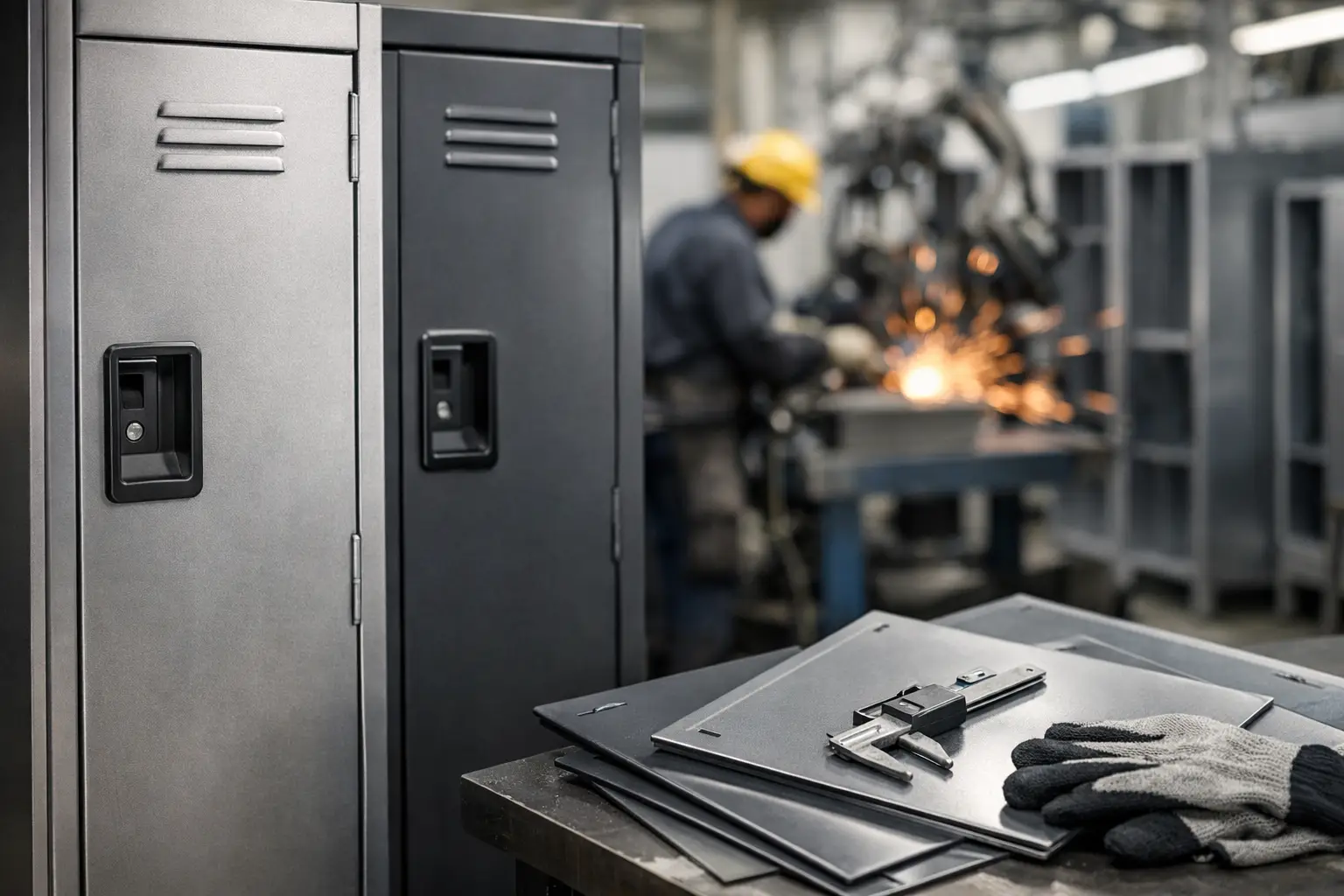
A metal lockers manufacturer is not just supplying boxes with doors. For most commercial buyers, the supplier is shaping how staff store PPE, how students secure personal items, how devices are charged, and how floor space is used every day. If the product fails, the problem shows up fast – broken hinges, poor ventilation, corrosion, delayed installation, and replacement costs that procurement did not plan for.
That is why selecting the right manufacturing partner matters early, not after drawings are approved or tenders are closed. Buyers comparing quotations often see similar dimensions and similar photos, but the real differences sit in steel quality, production control, customization capacity, and delivery discipline. Those differences affect total cost far more than a small gap in unit price.
What a metal lockers manufacturer should actually deliver
A serious manufacturer should provide more than standard locker units. Commercial projects usually involve operational requirements that go beyond basic storage. A school may need ventilation and compact footprints. A gym may need wet area durability and easy cleaning access. An industrial site may need PPE separation, sloping tops, or dirty-clean compartment layouts. An office may need charging lockers with cable management and secure access.
The manufacturer should be able to translate those use cases into workable product specifications. That means correct material thickness, door reinforcement where needed, dependable locking options, powder coating suited to the environment, and dimensions that fit the site without wasting space. In practice, good manufacturing is about repeatability. Buyers need confidence that the sample, the approved drawing, and the delivered batch will match.
How to assess metal lockers manufacturer capability
Not every supplier with a catalog is a true manufacturer. Some are traders. Some outsource most of the production. That is not always a problem, but it changes risk. If your project depends on custom dimensions, branded colors, integrated charging, or coordinated delivery across multiple product categories, production control matters.
Manufacturing depth
Ask how much of the process is handled in-house. Sheet metal processing, bending, welding, surface finishing, and assembly control all affect consistency. A manufacturer with real production depth usually has more control over timelines and fewer quality variations between batches.
This is especially relevant for larger rollouts and repeat orders. A distributor ordering for several customers or a procurement team standardizing storage across facilities needs product continuity. If a locker range changes frequently because production is fragmented, replacement planning becomes harder.
Material and construction quality
Steel gauge matters, but it is not the only factor. Buyers should also look at door rigidity, frame strength, hinge quality, ventilation design, and coating performance. Thin steel with poor reinforcement will not perform well in high-use environments, even if the unit looks acceptable in a brochure.
The right construction depends on the application. A dry office changing area may not require the same build as a factory locker room or a public sports facility. That is where honest supplier guidance matters. Over-specifying increases cost. Under-specifying increases maintenance and replacement risk.
Customization without production chaos
Customization is valuable only when it is controlled. Many projects need non-standard dimensions, compartment layouts, color matching, locking systems, numbering, bench integration, or specialized internal fittings. A capable metal lockers manufacturer should handle those changes without turning every order into an engineering problem.
The question is not whether customization is possible. The question is whether it can be delivered consistently, priced clearly, and produced within a realistic schedule.
Standard products versus custom production
For many buyers, the best answer is not fully custom. Standard locker models often provide faster lead times, lower costs, and easier repeat purchasing. If the site layout and operational needs align with standard dimensions, using a proven catalog product is usually the efficient choice.
Custom production becomes more valuable when the environment has specific constraints. These may include narrow corridors, unusual user volumes, integrated charging requirements, hazardous material separation, or a need to match other metal furniture across the facility. In those cases, custom fabrication solves practical problems that standard units cannot.
The trade-off is straightforward. Standard products usually improve speed and unit economics. Custom products improve fit and function. A good manufacturer helps buyers decide where customization adds value and where it only adds complexity.
Lead times are part of product quality
Procurement teams often treat lead time as a commercial detail. It is more than that. Reliable delivery is part of the product. A locker project delayed by weeks can affect site opening dates, contractor sequencing, staffing readiness, and user move-in plans.
That is why buyers should ask whether standard items are stocked or produced on short cycles, what the realistic lead times are for custom work, and how the manufacturer handles peak demand periods. Fast delivery only matters if it is dependable. A quoted lead time that changes after order confirmation creates cost elsewhere in the project.
For distributors, this matters even more. Supply reliability affects customer trust, not just margin. A manufacturing partner that combines a broad standard range with flexible production can reduce that risk significantly.
The value of sourcing across categories
Locker procurement rarely sits alone. The same project may also require office cabinets, shelving, benches, charging units, chemical storage cabinets, or bunk beds for workforce accommodation. Working with one manufacturer across several product families can simplify specification, finish coordination, and order management.
This is where manufacturing breadth becomes commercially useful. It can reduce supplier fragmentation, shorten communication lines, and help buyers keep consistency across a site. It also supports phased projects. If one facility starts with lockers and later expands into shelving or specialist cabinets, a broader manufacturer relationship can make that expansion easier.
For international buyers, the operational benefit is clear. Fewer suppliers often means fewer approval cycles, fewer logistics handoffs, and less variation in quality standards.
What business buyers should ask before placing an order
A commercial buyer does not need marketing language. They need answers that reduce risk. Ask for product specifications, material details, finish information, lock options, warranty terms, and realistic production timelines. Ask how defects are handled. Ask whether spare parts and repeat orders can be supported over time.
It also helps to clarify the intended use in detail. A locker for industrial PPE storage is not the same as a locker for student belongings or mobile device charging. The more precisely the use case is defined, the more accurately the manufacturer can recommend the right model or propose modifications.
If the order is part of a larger fit-out, coordination matters as well. Dimensions, plinth details, bench layouts, ventilation clearances, and installation access should be reviewed before production starts. Small oversights at drawing stage create expensive corrections later.
Why long-term value beats a low opening price
The cheapest unit in a comparison sheet can become the most expensive unit in operation. Frequent repairs, door alignment issues, coating failure, and short service life all add hidden cost. In high-use environments, those costs arrive quickly.
A better buying approach is to evaluate service life, maintenance exposure, replacement planning, and user suitability. A durable locker that performs well for years usually offers stronger value than a cheaper alternative that needs early replacement. This is particularly true for schools, industrial changing rooms, healthcare spaces, and commercial gyms where storage equipment gets constant use.
For distributors and repeat buyers, long-term value also protects brand reputation. If the product performs well, it strengthens the customer relationship. If it does not, the problem returns through claims, complaints, and lost future orders.
Choosing a supplier that can grow with your needs
A dependable metal lockers manufacturer should fit both the current order and the next one. That means enough product range for immediate needs, enough production flexibility for project-specific requirements, and enough consistency to support repeat business. Buyers should look for a partner that understands commercial storage as an operational system, not just a single product line.
For companies sourcing internationally, that usually means balancing industrial quality, competitive pricing, low minimum order flexibility, and clear communication. Manufacturers that can provide both standard products and tailored metal fabrication are often better placed to support mixed-use projects and evolving procurement demands. Companies such as Loxmet position themselves around that model because business buyers need more than inventory – they need manufacturing reliability.
The right supplier should make your next storage project easier to specify, easier to deliver, and easier to live with once the site is in use.