


Highlights
Wardrobe Lockers for Workplaces

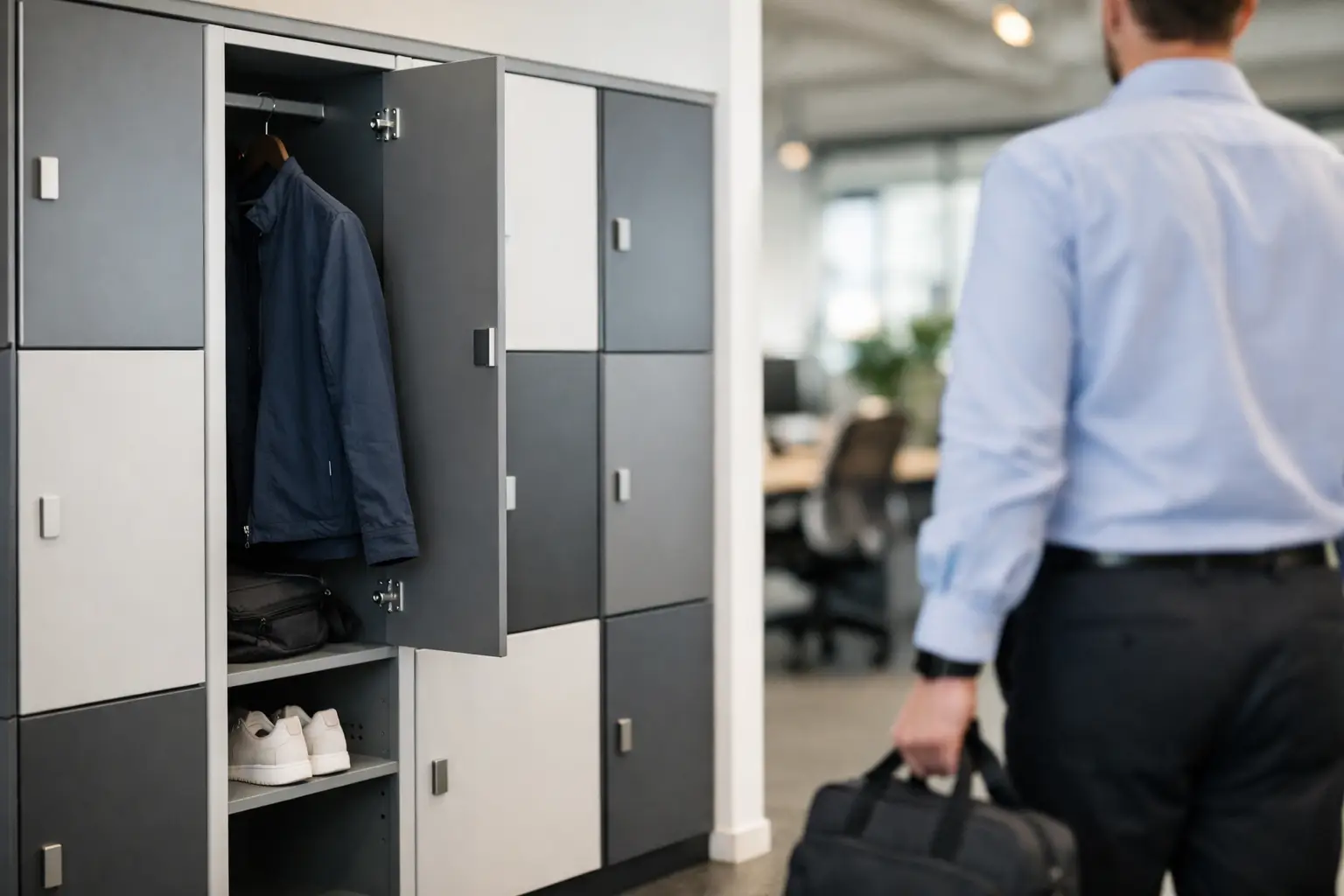
A crowded changing area usually points to a larger operational issue. When employees have nowhere practical to store uniforms, PPE, bags, and personal items, the result is clutter, slower shift changes, and avoidable wear on shared spaces. Wardrobe lockers solve that problem with a format built for hanging storage, daily use, and better organization in workplaces where standard compartment lockers are not enough.
For procurement teams and facility managers, the value is straightforward. A wardrobe-style locker supports cleaner workflows, protects personal belongings, and helps each site use available floor space more efficiently. The right specification can also reduce replacement cycles, maintenance calls, and future layout changes.
What wardrobe lockers are designed to do
Wardrobe lockers are taller storage units configured to hold clothing on hangers, along with shoes, helmets, bags, or folded items. In practical terms, they bridge the gap between a personal locker and a small storage cabinet. That makes them a strong fit for workplaces where staff need to change clothes, store outerwear, or separate work gear from personal belongings.
This matters in sectors where uniforms are part of the operation, not a minor convenience. Manufacturing sites, logistics facilities, healthcare environments, schools, gyms, laboratories, and public institutions often need storage that supports daily changing routines. In those settings, a narrow locker with a few stacked compartments can create more problems than it solves.
The core advantage is vertical storage. Hanging garments keeps uniforms in better condition, reduces creasing, and helps users keep clean and used items better organized. It also gives facilities a more professional and orderly appearance, which matters in staff areas just as much as front-of-house spaces.
Where wardrobe lockers work best
The best application depends on what users need to store. In a corporate office, wardrobe lockers may be used for coats, bags, and personal items in shared workplaces or hot-desking environments. In an industrial facility, the same format may need to accommodate protective clothing, boots, and helmets. In a gym or education setting, the priority may be user capacity and durability under constant turnover.
That is why one standard layout rarely fits every project. A site with light daily use can often work well with a simple single-door wardrobe unit. A high-use industrial locker room may need reinforced doors, ventilation, sloped tops, and internal compartments that separate clothing from footwear or equipment.
There is also a hygiene consideration. In environments where employees change before and after shifts, wardrobe lockers can help support cleaner storage routines. If a project requires separation between clean and used garments, internal dividers or dual-compartment designs may be worth specifying from the start rather than treating them as upgrades later.
How to choose wardrobe lockers for commercial use
The first question is not finish or color. It is what needs to be stored every day. That determines almost everything else – locker width, internal fittings, door type, ventilation level, and overall unit depth.
If users only need space for outerwear and a bag, a compact wardrobe locker may be enough. If they need to hang uniforms and store boots, lunch containers, PPE, or personal devices, the internal layout has to work harder. In many projects, a hanging rail and top shelf are the minimum starting point, not a complete solution.
Material quality also matters more than buyers sometimes expect. Wardrobe lockers in staff areas are opened and closed constantly, and weak hinges, thin doors, or poor coating quality show problems quickly. Scratches, corrosion, door misalignment, and lock failures are not small cosmetic issues in commercial environments. They create service calls, complaints, and early replacement costs.
For that reason, metal construction remains the preferred choice for many business buyers. It offers better impact resistance, stronger security, and longer service life than lighter-duty alternatives. Powder-coated steel is especially practical because it balances durability, finish consistency, and ease of maintenance.
Key features that affect long-term performance
Not every feature is essential for every project, but some decisions have clear operational impact over time. Ventilation is one of them. In changing rooms, sports facilities, and industrial workplaces, airflow helps reduce odor buildup and supports a more usable locker interior. Without it, even a well-built unit can become unpleasant in daily use.
Locking options are another major factor. Cam locks may suit low-risk environments, while padlock hasps, digital locks, or master-keyed systems can be more appropriate in managed facilities. The right choice depends on turnover, security policy, and how the site handles lost keys or user changes. A low-cost lock can become expensive if it creates frequent admin work.
Base design affects cleaning and durability. Some projects benefit from elevated legs for easier floor cleaning, while others prefer a closed plinth base for a cleaner visual line and less debris under the units. Sloped tops can also be useful in schools, healthcare settings, and industrial sites where easier cleaning and less dust collection are priorities.
Internal accessories deserve more attention than they often receive. Shelves, hooks, rails, mirrors, shoe trays, and divider sections all change how usable the locker is. If the interior does not match user behavior, people will improvise. That usually leads to clutter, damaged doors, and underused storage capacity.
Wardrobe lockers and space planning
Storage projects are rarely limited by product availability. They are limited by room dimensions, user numbers, circulation space, and installation constraints. Wardrobe lockers need enough depth to be useful, but they also need to leave comfortable movement space in front of the units. That is particularly important in locker rooms and staff changing areas where multiple users access storage at the same time.
A common mistake is choosing the highest possible locker count per room without considering usability. More units on paper can mean worse traffic flow, blocked access, and faster wear because users are forced into tight spaces. In many facilities, a slightly lower locker count with better aisle spacing performs better over the life of the installation.
This is where custom sizing or layout adjustments can deliver real value. Standard products are often the fastest route, but not every room is standard. Columns, wall recesses, ventilation ducts, and unusual access points can all affect the final design. A manufacturer with both standard range depth and custom production capability gives buyers more flexibility when space planning gets complicated.
Why specification should match the environment
The environment should drive the specification, not the other way around. A wardrobe locker in a dry office area does not need the same build details as one installed in a humid sports facility or a demanding industrial locker room. Over-specifying increases project cost. Under-specifying creates performance problems.
For example, office and administrative spaces may prioritize clean appearance, quiet operation, and compact footprints. Industrial sites may prioritize reinforced construction, stronger locking systems, and practical resistance to heavy daily use. Healthcare or laboratory environments may place more weight on cleanability, airflow, and separation of garments.
That is also why lead time matters. Commercial buyers often work to fit-out schedules, refurbishment windows, or operational deadlines. Delays in storage products can hold up room completion or leave staff areas partially functional. Fast availability on standard wardrobe lockers is useful, but so is the ability to adjust dimensions or features when the project requires it.
A practical buying approach for procurement teams
The strongest purchasing decisions usually come from asking a few direct questions early. Who will use the lockers, what exactly will they store, how often will the units be used, and what level of security is required? Once those answers are clear, the product specification becomes more precise and easier to compare across suppliers.
It also helps to think beyond unit price. Total value includes lifespan, finish quality, replacement risk, ease of cleaning, lock management, and whether the supplier can support repeat orders or matching additions later. For distributors and project buyers, consistency across product batches matters just as much as the first shipment.
Loxmet approaches wardrobe locker projects from that practical angle – durable steel construction, broad standard options, and customization when the room or use case demands more than an off-the-shelf answer. That model suits buyers who need dependable product performance without overcomplicating the procurement process.
A good wardrobe locker should not call attention to itself after installation. It should simply keep storage organized, protect what users need every day, and continue doing that job year after year with minimal interruption. That is usually the clearest sign that the specification was right from the beginning.