


Highlights
Shipping Metal Lockers: Packaging and Transit Protection

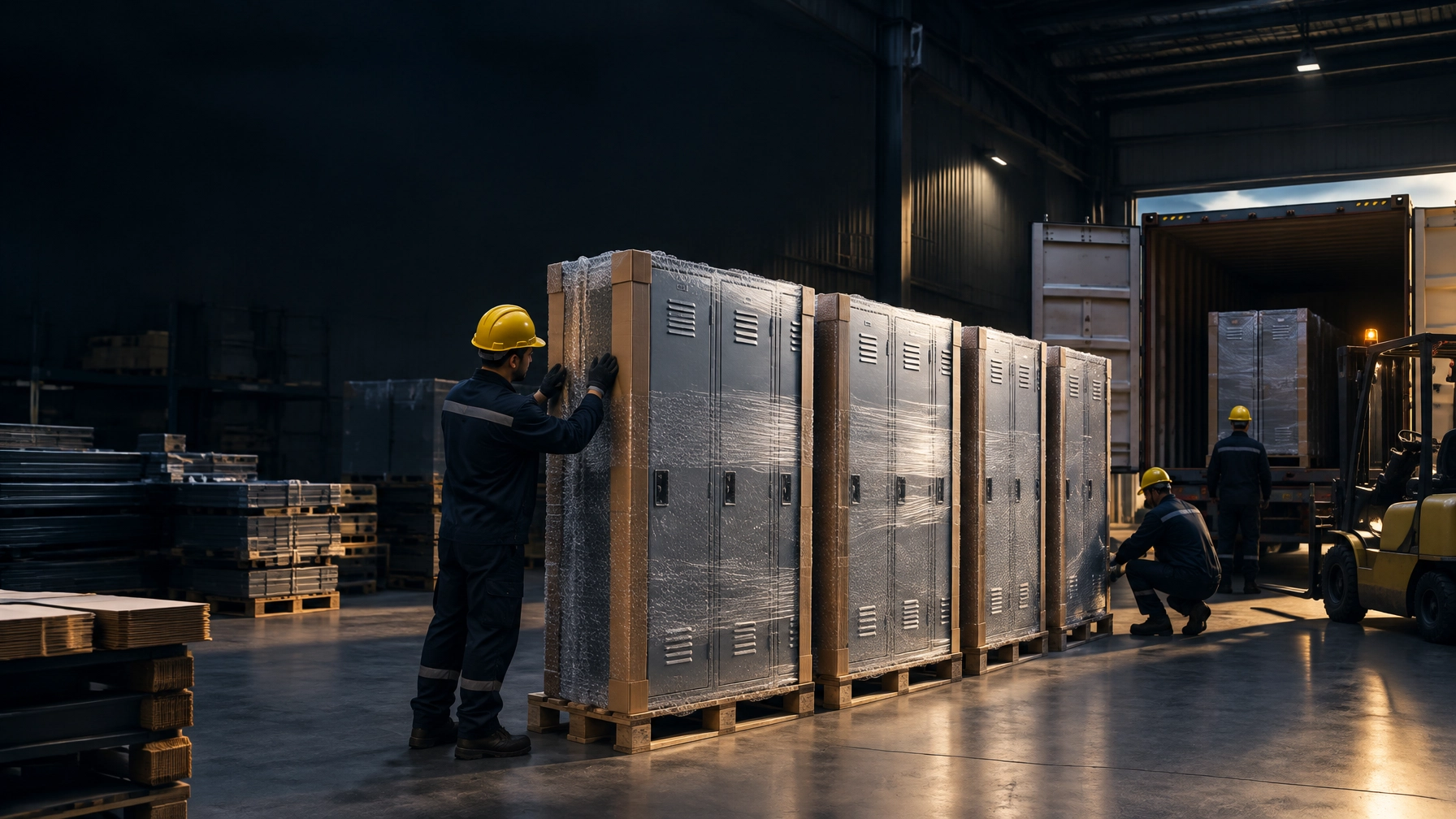
Shipping metal lockers is not only a freight decision. The order is only as good as what comes out of the container, and packaging and loading decide whether it arrives saleable or damaged.
| Stage | What Goes Wrong | What to Agree in Advance |
|---|---|---|
| Packing at the factory | Scuffed paint, exposed corners, incomplete protection | Packaging method, edge protection and any special requirements |
| Palletising and stacking | Unstable stacks, pressure on doors or frames | Pallet needs, unit orientation and approved stacking method |
| Container or truck loading | Shifting cargo, poor weight distribution, unfilled gaps | Loading sequence, securing and final checks |
| Ocean transit | Moisture, condensation or movement in transit | Moisture precautions, cargo condition and forwarder guidance |
| Unloading at destination | Forklift or handling damage | Equipment, access, unloading roles and safe handling steps |
| Storage before installation | Packaging damage, moisture exposure or blocked access | Dry, protected storage area and unpacking timing |
What Actually Damages Lockers
Steel lockers are bulky, finished goods. Their weight and size make poor handling visible: a door-frame edge can crush, a corner can dent, or paint can scuff where units rub together. Stacking without a suitable loading plan can put pressure on doors and frames instead of strong supporting areas.
Moisture is another risk, especially during a long sea leg. Condensation inside a container can expose packaging and metal surfaces to damp conditions. Agree the precautions with your forwarder for the route and shipment conditions.
The difference between a clean delivery and transit damage is often a series of small decisions: how units are protected, how they sit against each other, and how they are secured for movement.
Shipping Metal Lockers: Agree Packing and Loading Before Dispatch
Standard Export Packing
Loxmet’s standard packaging uses bubble nylon stretch with carton edging. This protects finished surfaces from rubbing and gives corners and edges an extra layer of protection during normal handling.
It is not a crate or a guarantee against impact, crushing, water exposure, or pressure from an unsuitable stack. Proper locker packaging controls normal handling wear; it does not replace a sensible loading plan. Tell the factory if your route, handling method, destination storage, or project specification needs additional protection. Pallet packaging is available on request at extra charge.

Good export packing starts with a clear specification. Confirm which components are packed together, how loose fittings are identified, and what labels your receiving team needs. For non-standard sizes or finishes, discuss custom production requirements before packing is agreed.
Loading Plan and Container Use
For assembled welded mono-block lockers, upright loading is the standard recommendation. It keeps the units in their normal position and avoids putting the load on the door edges and frames. Laid-down loading can maximise volume, but it needs a handling caveat: agree how the units will be supported, stacked, and protected so doors and frames do not carry pressure.
A useful loading plan confirms the sequence, orientation, support points, bracing and void filling. The load should be secured to limit movement, with gaps addressed using suitable blocking or fill. Do not use doors or frames as bearing points, and confirm the actual arrangement with the factory and freight forwarder before loading.

Ask for photographs of the completed load before the container closes. For a product-specific capacity discussion, use the locker container-loading guide. Treat capacity as a planning question: packaging, loading position and the actual mix of products all affect the final arrangement.
Knocked Down or Assembled?
Assembled lockers arrive ready for use, but take more space and require care when handled as large units. Knocked-down products can reduce shipment volume, but they need assembly at destination and a clear process for keeping panels and fittings organised.
Choose based on your warehouse capability, site access and project schedule. Confirm whether the order will be assembled or knocked down, what components are included, how each package is identified, and who completes assembly. If products will be handled by your team after arrival, review the Loxmet product range and align the packing method with your receiving setup.
Moisture, Condensation and a Long Sea Leg
Keep the product, packaging and loading environment as dry as practical. Avoid placing lockers or packages directly on a damp container floor. Discuss suitable support, wrapping and desiccant use with your forwarder based on the route and container conditions; do not treat plastic wrapping alone as a moisture-control plan.
Container ventilation depends on the equipment and cargo conditions. Ask your forwarder whether ventilation is relevant for your shipment and what precautions are appropriate. Record the agreed arrangements in the shipping instructions so the factory, forwarder and receiving team work to the same plan.
Documents and Inspection Before the Container Closes
Check the packing list against the order: product models, quantities, package count and any loose fittings should be clear. Take photographs of packaging, labels, the load and the secured container before it is sealed. Agree who reviews the evidence and signs off release.
A pre-shipment inspection can verify the order and packing against the approved requirements. See Loxmet’s guide to pre-shipment inspection for practical checks to agree before dispatch. Keep photos and records with the shipment documents so you can compare the arrival condition.
For UK-bound orders, check the government’s step-by-step guidance to importing goods into the UK and confirm the required documents with your customs agent.
Receiving the Metal Locker Shipment
Prepare the unloading area before arrival. Confirm access, suitable handling equipment and who is responsible for receiving and checking the load. HSE guidance advises assessing manual handling risks and using suitable handling aids where appropriate; see its manual handling guide and musculoskeletal disorders at work resources.
Before unpacking, inspect the external packaging for crushed edges, tears, moisture or signs of movement. Photograph concerns promptly and record them against the affected package and product. Share the evidence with the relevant supplier, carrier or forwarder as soon as possible, following the claim process that applies to your shipment.
Store units in a dry, protected area until installation. Keep packaging in place where practical to protect the finish, and avoid dragging lockers across floors.

What to Put in Your Order Instructions
Give the factory and forwarder one consistent set of shipping instructions. Include:
- Destination and preferred transport arrangement
- Product models, quantities and whether they ship assembled or knocked down
- Upright or laid-down preference, if applicable
- Agreed packaging and pallet requirements
- Loading, bracing and void-filling expectations
- Moisture precautions discussed with your forwarder
- Packing-list details, labels and photographs required
- Who checks and signs off before the container closes
- Who receives, unloads and inspects the goods
Loxmet’s standard trade term is EXW Istanbul. C&F and DAP are available on request. Under EXW, buyers normally coordinate collection and transport with their forwarder; confirm responsibilities in the quotation. Loxmet does not provide shipping insurance. Buyers who need cargo cover should arrange it with their insurer or forwarder. For a practical overview of responsibilities, see EXW vs FOB for lockers.
Buyer Questions
How Are Metal Lockers Packed for Export?
Standard packaging is bubble nylon stretch with carton edging to protect the finish and corners during handling. Pallet packaging is available on request at extra charge. Agree additional requirements in advance, especially if your shipment needs specific handling or storage precautions.
Should Lockers Be Shipped Assembled or Knocked Down?
Assembled units are ready for use but take more space and need careful handling. Knocked-down units can reduce shipment volume but require assembly at destination. Choose based on your loading, receiving and installation capabilities.
How Do I Avoid Transit Damage?
Agree the packaging, loading position and securing method before dispatch, and request photographs before the container closes. At destination, prepare safe unloading and check the packaging promptly. These steps reduce avoidable transit damage and help you identify issues clearly.
Does Packaging Cost Extra?
Loxmet’s standard packaging is bubble nylon stretch with carton edging. Pallet packaging is available on request at extra charge. Other cost drivers depend on the requested packing and shipment requirements; ask for them to be included in your quotation.
Who Arranges the Shipping?
EXW Istanbul is standard, so buyers generally arrange collection and transport through their forwarder. C&F and DAP are available on request, with the agreed responsibilities confirmed in the quotation. Loxmet does not provide shipping insurance.
Can I Inspect the Order Before It Ships?
Yes, inspection arrangements can be agreed before dispatch. Confirm what will be checked, who will inspect, what photographs or records are required, and who signs off the shipment. See the pre-shipment inspection guide for a checklist.
What Should I Check on Arrival?
Check package counts and visible condition before unpacking, and keep the locker packaging intact until the units are in their final location. Oversights here are the most common cause of avoidable scuffing. Photograph crushed corners, torn wrapping, moisture or other concerns, and record which packages are affected. Report findings promptly through the relevant shipment process.
What Are Loxmet’s Ordering Terms and Lead Times?
Catalogue products in catalogue colours are generally within 10 working days; custom colours and made-to-order products typically require approximately 10 additional working days. Single product orders are accepted, special pricing is available above two container or truck loads, and the warranty is 10 years against production faults. These are production lead times, not transport times; see the lead-time guide.
Protect the finish, agree the loading method and prepare your receiving team before dispatch. Send the destination, quantity and loading preference to the Loxmet team, and we will confirm the packing and loading plan with the quotation.