


Highlights
Choosing a Filing Cupboard for Business Use

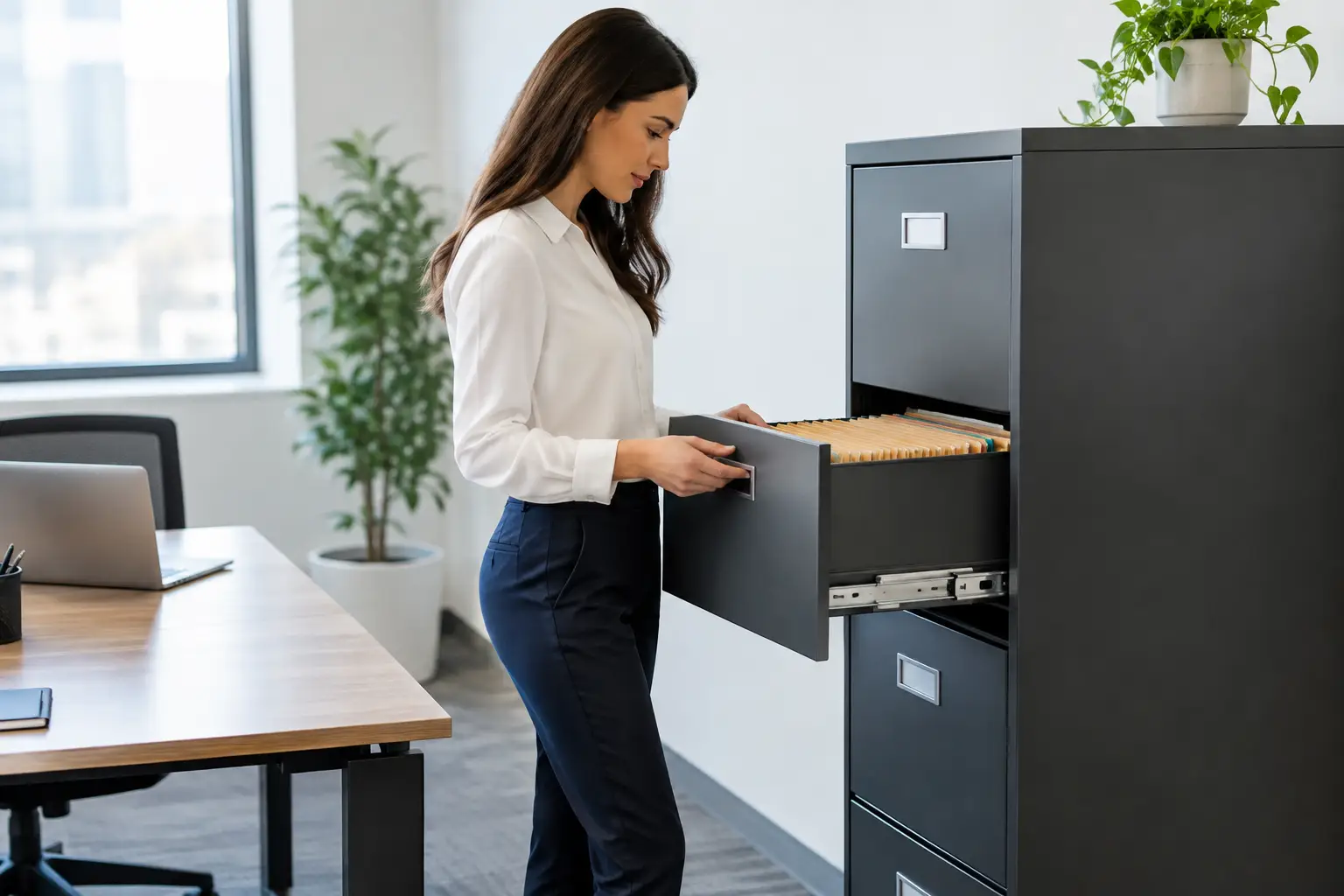
A filing cupboard is not simply a place to put paperwork. For a business, school, healthcare facility, workshop, or public office, it is part of document control. The right unit protects records, supports faster retrieval, keeps work areas orderly, and stands up to frequent daily use. The wrong unit can create crowded aisles, difficult access, damaged files, and avoidable security risks.
Commercial buyers should select filing storage based on the documents being handled, the available floor space, the number of users, and the level of protection required. A cupboard that works well for a small administration office may not suit a busy records room or a shared departmental workspace.
What a Filing Cupboard Must Do for Your Facility
Before comparing dimensions and finishes, define the operational job of the cupboard. Some facilities need active files accessed several times a day. Others need secure storage for archive documents that are retained but rarely handled. These are different applications and should not be specified in the same way.
A well-chosen filing cupboard should provide enough capacity without taking more floor space than necessary. It should allow staff to identify, retrieve, and return files without disrupting adjacent workstations. In shared environments, locking capability is equally important. Personnel records, contracts, financial paperwork, medical documentation, and compliance files should not be left in open storage.
For commercial use, durability is also a practical consideration. Thin domestic furniture may be adequate for light personal use, but high-traffic facilities need a stronger metal construction, dependable hardware, and doors or drawers that remain aligned after repeated opening and closing. This is particularly relevant where multiple shifts use the same office or where cleaning, maintenance, and movement of equipment are routine.
Start With the File Format and Storage Volume
The file format determines the most suitable internal layout. Letter-size and legal-size documents are common in US workplaces, while international operations may also hold A4 records. Confirm the folder size, orientation, and filing method before finalizing a unit. A cabinet that appears large enough externally may not provide usable internal width for the folders your team actually uses.
Capacity planning should account for growth. Measure current files, then allow room for expected retention requirements, new employees, additional clients, or future project records. Filling every drawer or shelf to maximum capacity from day one makes retrieval slower and leaves no flexibility when filing volumes increase.
Vertical, lateral, and cupboard-style storage
Vertical filing units use a smaller footprint and are often suitable for individual offices or narrow work areas. Their deeper drawers can hold a significant number of files, but open drawers may extend into a walkway. They work best when there is clear access in front of the unit.
Lateral filing units are wider and usually allow side-to-side filing. They can make documents easier to browse and may fit under counters or along perimeter walls. However, their width needs careful planning, especially in compact offices.
A cupboard-style configuration uses enclosed doors with internal shelves, trays, or filing frames. This option is useful when a cleaner visual appearance is required or when stored materials include a mixture of binders, archive boxes, stationery, and folders. It can be more flexible than a drawer-only unit, although shelf spacing and load capacity must match the materials being stored.
Choose Steel Construction for Demanding Use
For long-term commercial storage, metal is often the strongest choice. A steel filing cupboard resists impact better than many lightweight alternatives, remains stable under heavy loads, and is easier to maintain in active workplaces. Powder-coated steel also provides a clean, professional surface that can suit offices, schools, industrial facilities, and staff administration areas.
Not all metal cupboards are built to the same standard. Buyers should examine the quality of the steel, door reinforcement, welding or assembly method, shelf supports, and the construction around locks and hinges. These details affect how the product performs after years of use, not just how it looks at installation.
Shelf loading matters when filing includes lever arch binders, boxed records, manuals, or heavy paper archives. A cupboard used for binders can carry far more weight than one used for loose folders. Confirm the load rating per shelf and avoid assuming that all shelves are designed for the same capacity.
For facilities with specific hygiene or maintenance needs, select finishes that are easy to wipe down and resistant to normal workplace wear. In workshops and industrial offices, a durable coating can reduce the impact of minor scratches and keep storage looking professional for longer.
Security Should Match the Records Inside
A lock is not an optional feature when documents contain sensitive or regulated information. The suitable locking arrangement depends on who needs access and how often access changes.
A standard key lock can work well for a single office owner or a small number of authorized users. Central locking is useful where one lock secures multiple drawers or doors, helping reduce the chance that a compartment is left unsecured. For larger teams, master key systems can simplify facilities management while preserving controlled access at department level.
Consider how keys will be managed before purchasing. A secure cupboard loses much of its value if spare keys are untracked or if staff regularly leave keys in the lock. In settings with a higher turnover of users, an alternative locking system or a documented key-control process may be more appropriate.
Security also includes physical stability. Tall filing cupboards should be positioned on level flooring and, where required, anchored to a wall or secured in line with site safety procedures. Units with drawers need anti-tip features or controlled drawer operation, particularly when staff may open more than one loaded drawer at a time.
Plan the Location, Access, and Workflow
The best filing system supports the way people work. Place active records close to the staff who use them, while keeping archive storage in a lower-traffic area. This reduces unnecessary movement and prevents document retrieval from interrupting other tasks.
Measure more than the space where the cupboard will stand. Include door swing, drawer extension, aisle clearance, nearby desks, electrical panels, and emergency routes. A filing unit should not obstruct an exit, restrict access to essential equipment, or create a pinch point when drawers and doors are open.
Shared offices often benefit from a defined filing zone rather than several small cupboards placed wherever space is available. Centralizing records can improve control, reduce duplicate copies, and make responsibility for filing clearer. On the other hand, teams that use confidential records throughout the day may need secure local storage at each department workstation. The right approach depends on access frequency and confidentiality requirements.
Think beyond paper files
Many businesses still retain paper records while using digital systems for daily work. A filing cupboard can therefore serve several roles: storing original signed documents, holding backup records, organizing project binders, or keeping controlled forms ready for use. This mixed-use requirement is one reason adjustable shelves and configurable interiors can be valuable.
If you are equipping a wider facility, coordinate filing cupboards with office cabinets, lockers, shelving, and work benches. A consistent metal storage specification can simplify purchasing, improve the appearance of the site, and make maintenance easier over time. Manufacturers such as Loxmet can support standard and custom configurations when dimensions, finishes, internal layouts, or project quantities need to match a particular workplace plan.
Questions to Ask Before You Place an Order
A clear specification prevents costly changes after delivery. Confirm the overall height, width, depth, internal clearances, number of shelves or drawers, and usable filing capacity. Ask whether shelves are adjustable, whether locks are included, and whether the unit is supplied assembled or requires installation.
Also consider delivery access. A large, fully assembled filing cupboard may be the right product for a ground-floor records room but difficult to move through narrow internal routes or upper-level access points. Modular or appropriately sized units may be more practical where building access is limited.
For a project purchase, request consistent specifications across all units. Matching lock arrangements, colors, handles, and dimensions helps create an organized installation and makes replacement planning easier later. If custom fabrication is needed, provide the intended use, internal load, file format, site measurements, and quantity requirements at the start.
A filing cupboard earns its place when it makes records safer and work faster without demanding attention from the people who use it. Specify the unit around your files, workflow, and facility conditions, and it will remain a dependable part of your storage system for years.