


Highlights
Home Office Furnitures for Commercial Buyers

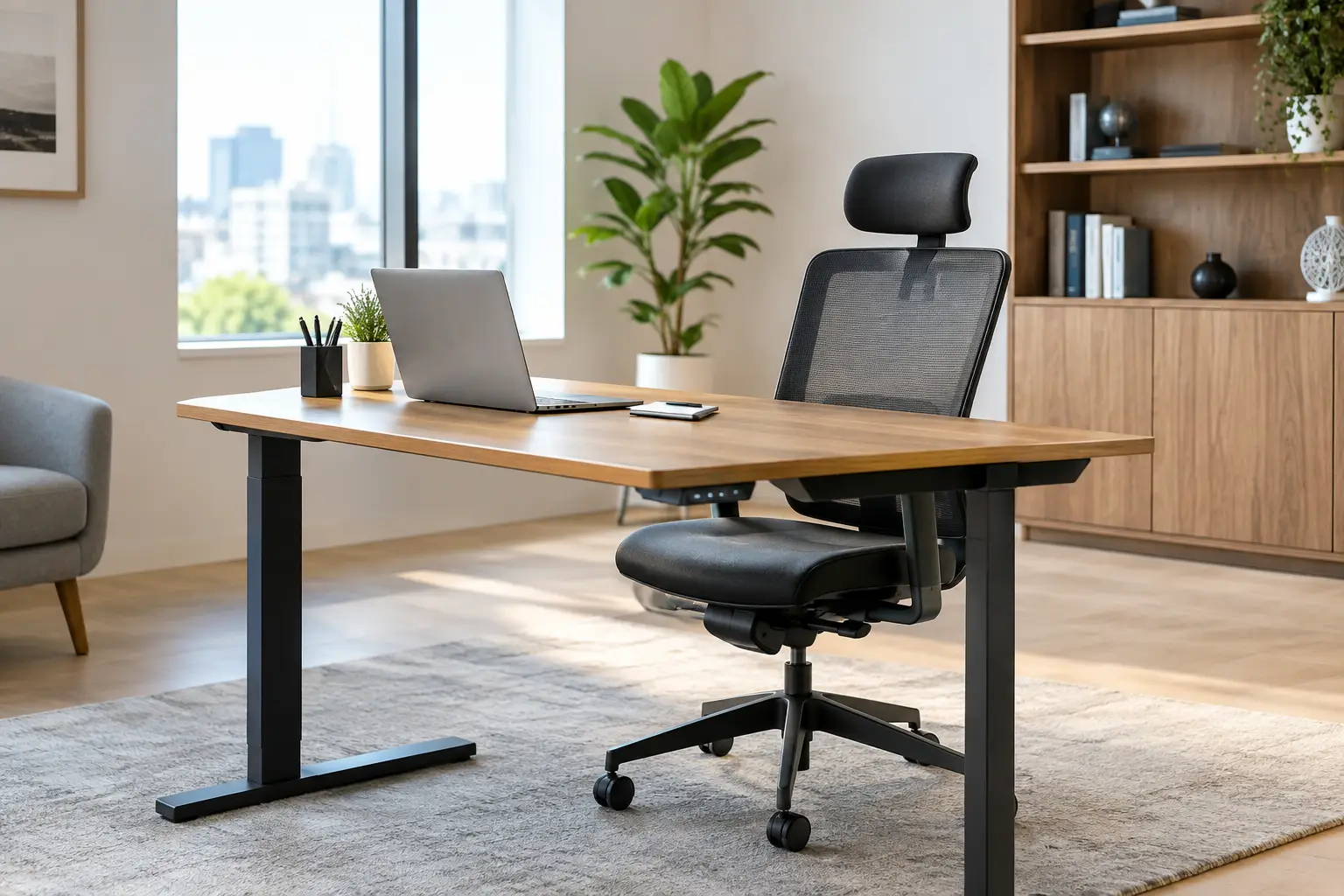
A home office project can look simple on a floor plan, then become difficult when equipment, documents, personal items, and shared workstations start competing for the same square footage. The right home office furnitures must do more than fill a room. They need to support productive work, secure business assets, and remain reliable through daily use.
For commercial buyers, this is rarely a one-person purchase. A fit-out may involve remote-work hubs, executive home offices, serviced apartments, small branch locations, or hybrid work areas within a larger facility. That changes the specification. Appearance matters, but durability, storage capacity, delivery timing, and repeatable product quality matter more.
Start With the Work, Not the Furniture
The best office layout begins with a practical question: what happens in this room every day? A space used for video calls and laptop work has different requirements than a home-based administrative office handling paper files, samples, tools, or company-owned devices.
Desks should be sized around the actual work surface required, not the smallest available footprint. A compact desk may work for a laptop-only role, but it quickly becomes restrictive when monitors, docking stations, paperwork, and charging equipment are added. In commercial projects, standardizing desk dimensions can also simplify installation, replacement, and future expansion.
Storage should be specified just as carefully. When supplies remain on open shelves or documents are left on a desk, the room looks disorganized and sensitive materials become harder to control. Metal office cabinets provide a clear place for files, equipment, and consumables while offering a stronger long-term option than lightweight storage units intended for occasional domestic use.
Home Office Furnitures That Carry the Real Load
A complete workspace does not always require every furniture category. The correct combination depends on the user, the room, and the level of security needed. However, commercial buyers should assess four functional areas before selecting products: work surfaces, secure storage, personal storage, and power management.
Work surfaces and desk support
The desk is the active center of the room. It should provide enough depth for screens at a comfortable viewing distance and enough width for routine tasks without forcing users to stack materials. Cable access is also worth considering early. A clean cable route improves safety, simplifies cleaning, and prevents a professional workspace from becoming cluttered within weeks.
For projects that include metal-framed desks or storage-integrated workstations, check load capacity and connection points. A desk that appears suitable may not be designed for multiple monitors, desktop equipment, or heavy document handling. Product specifications should match the expected daily load rather than the room’s visual style alone.
Lockable office cabinets
Office cabinets are often the most valuable part of a home office installation because they control clutter and protect business materials. Lockable cabinets are suitable for contracts, employee records, electronics, stationery, and items that should not remain accessible to visitors or household members.
Steel cabinets are particularly effective in high-use settings because they resist impact and maintain their structure over time. Powder-coated finishes support routine cleaning and provide a professional appearance across different office environments. For buyers managing multiple locations, standardized cabinet sizes and lock options also make maintenance easier.
The trade-off is weight. Metal cabinets are more substantial than light residential units, so delivery access, floor protection, and final positioning should be planned before installation. That additional effort is usually justified where security and service life are priorities.
Personal lockers for shared spaces
Not every home office is private. Hybrid working hubs, managed residences, and shared staff accommodation can require secure personal storage even in compact rooms. A locker gives each user a dedicated place for bags, personal devices, documents, and workwear without taking over the desk area.
The key decision is compartment size. Small compartments work well for phones, wallets, and compact devices. Larger compartments are better for backpacks, helmets, uniforms, or personal work equipment. For changing teams or rotating users, consider a locking system that aligns with how access is managed on site, whether keyed, hasp-based, or electronically controlled.
Charging storage for company devices
Laptops, tablets, scanners, and mobile devices create a separate storage challenge. Leaving devices connected across desks increases cable clutter and can make asset control difficult. Charging lockers place devices in individual secured compartments while keeping charging organized in one location.
This solution is especially useful for organizations issuing equipment to staff who work between home offices, field assignments, and shared facilities. Buyers should confirm compartment dimensions, ventilation needs, charging configuration, and electrical requirements before ordering. A charging locker is not simply a cabinet with sockets. It must be designed for safe, repeatable device storage.
Specify Durability for the Expected Use Level
A private executive workspace used a few days each week may not need the same construction as a shared office used across multiple shifts. This is where commercial procurement differs from a basic consumer purchase. The right product is based on use intensity, expected lifespan, and the cost of replacement or disruption.
Assess the thickness and quality of the steel, door reinforcement, hinge construction, locking components, shelf load limits, and surface finish. These details determine whether a cabinet or locker continues operating properly after years of opening, closing, loading, and moving.
For projects with long replacement cycles, durable metal furniture can offer a better total cost outcome. The purchase price may be higher than a short-life alternative, but a stable cabinet or locker reduces damage, replacement orders, and complaints. A 10-year warranty can also provide useful assurance when products are selected for demanding commercial environments.
Make Space Efficiency Part of the Specification
Home office rooms can be limited in area, especially in urban properties and converted spaces. A product that performs well in isolation may create circulation issues once a chair is pulled out, cabinet doors are open, or multiple users are present.
Measure wall lengths, door swings, window locations, electrical outlets, and clear walking routes before selecting furniture. Vertical storage often provides the best answer where floor area is restricted. Tall cabinets and lockers can increase capacity without extending the room footprint, provided they are properly positioned and safely installed.
Door configuration also matters. Swing doors need clearance, while other access arrangements may be more suitable where aisles are narrow. There is no universal answer. The best choice depends on room dimensions, frequency of access, and the type of materials being stored.
Plan for Consistency Across Multiple Locations
For distributors, fit-out firms, and procurement teams, a home office project may be the first stage of a wider rollout. Standardizing key furniture lines creates a consistent visual finish and simplifies ordering when new locations are added.
Consistency should not eliminate flexibility. A practical supply partner can provide standard products for faster delivery while adapting dimensions, compartment arrangements, colors, locks, or internal fittings when the project requires it. This balance is valuable when one customer needs the same core storage system across offices, staff housing, training centers, and administrative facilities.
Loxmet supports this type of purchasing model with a broad range of metal lockers, office cabinets, shelving, benches, and custom metal fabrication options. For buyers, the advantage is straightforward: fewer supplier relationships to manage and storage products designed around operational use rather than short-term appearance.
Questions to Resolve Before Placing an Order
A clear specification reduces delays and prevents unsuitable products from reaching the installation stage. Confirm the required quantity, available dimensions, load expectations, security level, finish, delivery conditions, and assembly requirements. If furniture will be installed in occupied properties, also consider access routes such as elevators, stairwells, and restricted delivery hours.
It is equally useful to define what may change after installation. Will staff numbers grow? Will more devices require charging storage? Could one-person rooms become shared workspaces? Selecting modular or repeatable metal storage from the beginning gives the project room to adapt without replacing the entire setup.
A well-planned home office should feel orderly because every item has a purpose and a place. When desks, cabinets, lockers, and device storage are specified around actual work patterns, the space becomes easier to manage from the first day of use.