


Highlights
Metal Filing Cabinets: Steel Construction Explained for Office Buyers

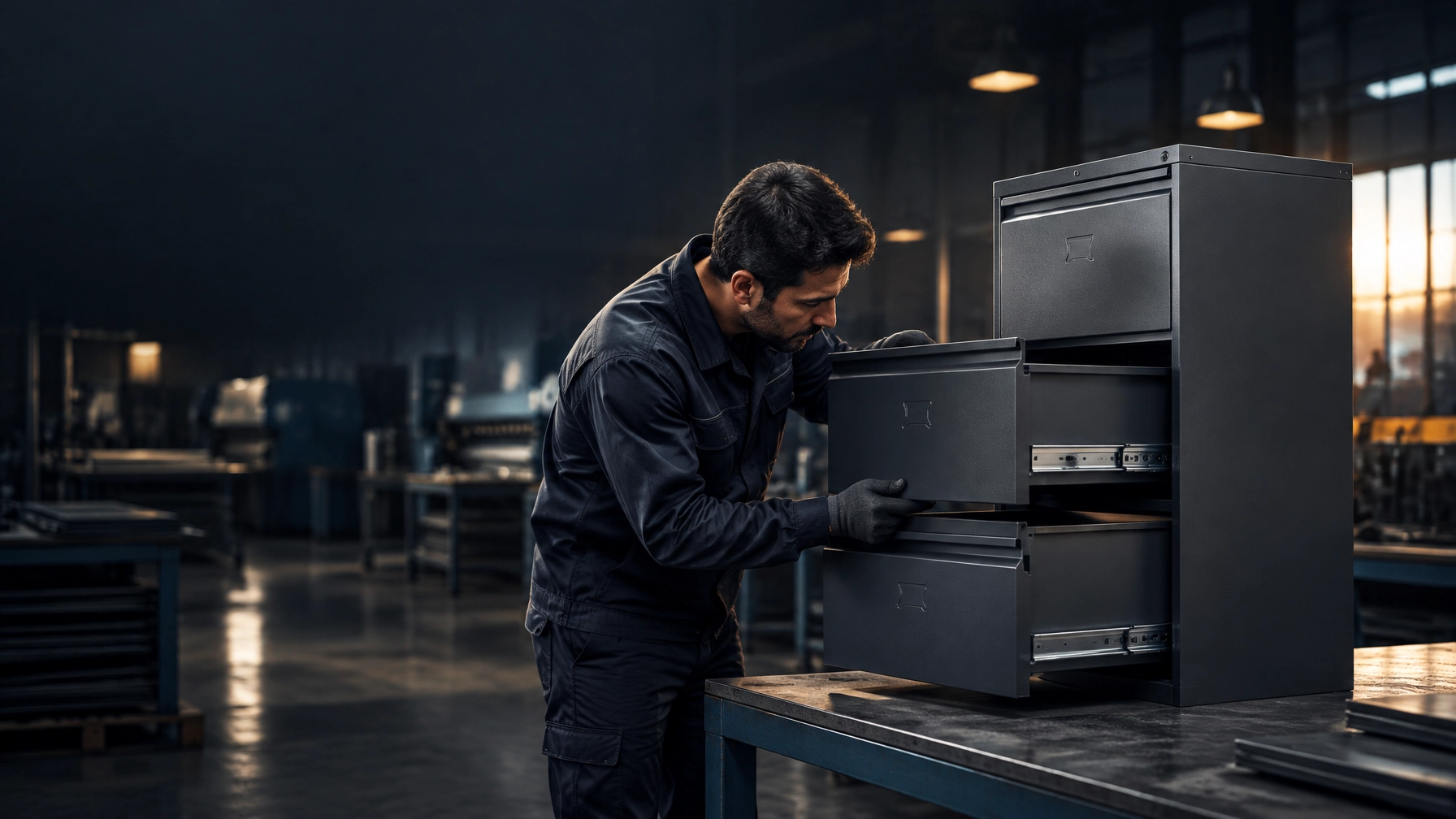
A metal filing cabinet is only as dependable as its panels, assembly, drawer movement and finish. Compare these construction details, not just the drawer count, to choose reliable storage for daily office use.
| Construction | Load capacity | Drawer action | Fire behaviour | Lifespan | Maintenance |
|---|---|---|---|---|---|
| Steel cabinet | Depends on the specific design and published rating. Ask for the rating; do not infer it from material alone. | Depends on runner quality, alignment and suspension design. | Steel construction alone does not make a cabinet fire-rated. | Depends on construction, use and finish care. | Clean routinely; inspect drawers and coating for damage. |
| Laminate or MDF cabinet | Depends on panel construction, supports and the stated load rating. | Depends on hardware and how well the cabinet stays aligned. | Do not assume fire resistance; check for a tested rating. | Depends on use, moisture exposure, edge protection and hardware. | Keep surfaces dry; inspect edges and joints. |
| Knock-down steel cabinet | Depends on panel thickness, reinforcement, fasteners and assembly. | Correct assembly and alignment are important to smooth drawer travel. | Steel does not mean fire-rated. | Depends on assembly, use and finish care. | Check fasteners and alignment as directed by the manufacturer. |
What Defines a metal filing cabinet in real construction?
“Metal” describes the main material, not every detail of build quality. For daily records, check how the panels hold their shape, how the body is assembled, how drawers carry their contents and how the coating protects the surface.
Steel thickness and panel rigidity
Steel thickness matters, but gauge alone does not tell you how a cabinet will perform. Formed edges, folded sections, reinforcements and the way panels connect all affect rigidity. Ask for published material thickness and any available load rating for the exact model.
Loxmet’s product pages list DKP sheet metal and 0.6 mm before paint for the published 2-, 4- and 5-drawer filing cabinets. That specification is a useful point of comparison. It is not a drawer load rating, and it should not be used to infer one.
When you compare a steel filing cabinet, ask whether the stated thickness is measured before or after coating. Also check whether the figure applies to the body, drawer fronts or all components.
Assembly: monoblock, welded or knock-down
A one-piece body can reduce the number of assembly steps at the installation site. Loxmet’s product pages describe a monoblock body, and the cabinets are shipped ready to use, with no assembly required.
That description does not, by itself, specify how every joint is made. If your purchasing specification requires welded or riveted construction, request confirmation for the exact product. For knock-down cabinets, check the assembly instructions, joint design and requirements for keeping the frame square. Poor alignment can affect drawer movement over time.

Drawer runners and suspension
Drawer action is a practical test of cabinet construction. Look for smooth, consistent movement and confirm how much of the drawer extends. Full extension lets staff reach files at the back without leaning into the cabinet.
Loxmet’s listed filing cabinets feature 100% extension drawers and adjustable suspension-file hanging rods. Their published pages do not state a drawer load rating or specify the runner type. If you expect dense file loads or frequent use, request those details before ordering.
The terms metal filing drawers can refer to both the drawer box and its suspension system. Evaluate them together: a steel drawer needs properly aligned, suitable runners to move reliably under its intended load.
Interlocks and stability
Opening several heavily loaded drawers at once can affect cabinet stability. Check whether the exact model includes a drawer interlock or another anti-tip measure, and follow the manufacturer’s loading and installation guidance. Do not assume these features are included unless the product specification confirms them.
Loxmet’s published filing cabinet specifications do not list an anti-tip interlock or load rating. Ask the team to confirm these points if they are requirements for your workplace. Keep drawers closed when not in use, and assess the cabinet’s placement and stability as part of your office safety arrangements.
Powder-coat finish and the base
Loxmet lists electrostatic powder coating on its filing cabinet models. A coated surface gives the cabinet a finished, cleanable exterior, but actual durability depends on surface preparation, application and everyday handling. Inspect corners and edges during use; deal with chips or scratches according to the supplier’s guidance.
Check the base and floor contact too. An uneven floor can affect alignment and drawer movement. Confirm how the cabinet should be levelled and whether it has adjustment provisions before installation. Do not assume levelling feet are included unless the product information says so.
Placement matters as much as construction. Keep drawers closed, avoid blocking walkways and fire exits, and treat heavy storage as part of the wider office risk assessment described in HSE’s office health and safety guidance.
For handling or repositioning a cabinet, consult the HSE’s manual handling guide and guidance on manual handling regulations. HSE advises employers to assess and reduce manual-handling risks; a handling technique alone is not a substitute for suitable controls.
Why choose steel for daily office records?
A well-designed steel cabinet provides a rigid metal structure suited to repeated workplace use. Compared with laminate or MDF, steel construction does not depend on the same panel-based material for the cabinet body and drawer structure. But the material alone does not establish a specific load limit, service life or safety rating. Compare complete specifications and ask for evidence relevant to your intended use.
Steel storage cabinets also suit buyers who need a consistent metal finish across an office. Loxmet offers a range of catalogue colors, while custom colors and made-to-order options can be discussed for projects.
If the cabinet is part of a wider refit, apply the same construction checks to every office storage cabinet on the list. And treat a lockable office cabinet as a separate question: the lock decides who gets access, while the build decides how the drawers behave after years of daily use. A cabinet can pass one test and fail the other.
Important: A standard steel filing cabinet is not a fireproof cabinet or certified safe. Steel does not guarantee protection from fire, forced entry or other defined hazards. If you need certified fire-rated storage, ask the team about documented options for your requirement.

Compare Loxmet’s published filing cabinet models
The office cabinets range includes metal filing cabinets with two to five drawers. Published specifications show a consistent width and depth across these vertical models, while height changes by drawer count. The range covers everything from a compact four drawer file cabinet for a busy department to taller models for dense archive storage.
| Model | Published dimensions (W × D × H) | Published construction details |
|---|---|---|
| 2-drawer file cabinet | 465 × 620 × 685 mm | DKP sheet metal; 0.6 mm before paint; electrostatic powder coating |
| 4-drawer file cabinet | 465 × 620 × 1,300 mm | DKP sheet metal; 0.6 mm before paint; electrostatic powder coating |
| 5-drawer file cabinet | 465 × 620 × 1,610 mm | DKP sheet metal; 0.6 mm before paint; electrostatic powder coating |
The product pages also list a monoblock body, full-extension drawers, label holders, key locks and adjustable suspension-file rods. The published specifications do not state load ratings, runner type or anti-tip interlock details. Request confirmation if these factors are part of your purchasing requirements.
For a separate review of drawer counts and capacity, read Filing Cabinet Sizing: Drawers and Linear Feet Explained. Compare lateral and vertical cabinet orientation when you are assessing room layout, or use the lockable filing cabinet checklist to review file format and lock requirements. The separate guide to when office storage needs a lock covers access control.
Questions Office Buyers Ask
What steel thickness is listed for Loxmet filing cabinets?
The published 2-, 4- and 5-drawer models list DKP sheet metal at 0.6 mm before paint. The product pages do not provide a drawer load rating.
Does a thicker steel filing cabinet always carry more?
Not necessarily. Capacity also depends on panel shape, reinforcements, joints and drawer suspension. Compare the manufacturer’s stated load rating for the complete model.
Do Loxmet filing cabinets have full-extension drawers?
Yes. Loxmet’s published product pages describe the filing cabinet drawers as 100% extension.
Are Loxmet cabinets welded or riveted?
The pages describe a monoblock body but do not specify the joining method for every component. Ask the team if your specification requires a particular joint type.
Do the cabinets include anti-tip interlocks?
The published product information does not confirm an anti-tip interlock. Request confirmation for the model you are considering and follow the supplied installation guidance.
Is a steel filing cabinet fireproof?
No. Steel construction alone is not a fire rating. Ask for documented certification for any fire-rated product you require.
Can I request a custom filing cabinet?
Yes. Loxmet offers custom metal fabrication. Discuss dimensions, colors or other project requirements through the customization service.
Request the Right Specification
Compare the body construction, published thickness, drawer travel, stated load capacity, finish and stability details before you select a cabinet. Loxmet manufactures in Istanbul, accepts single-piece orders and provides a 10-year warranty against production faults. Catalogue products in catalogue colors generally have a 10-working-day lead time; custom colors and made-to-order products typically require approximately 10 additional working days.
Review the office cabinet range and contact our team with your file format, intended use and required specifications. We will help you check a suitable standard or custom option.