


Highlights
Lateral File Cabinet vs Vertical File Cabinet: Which Fits Your Office?

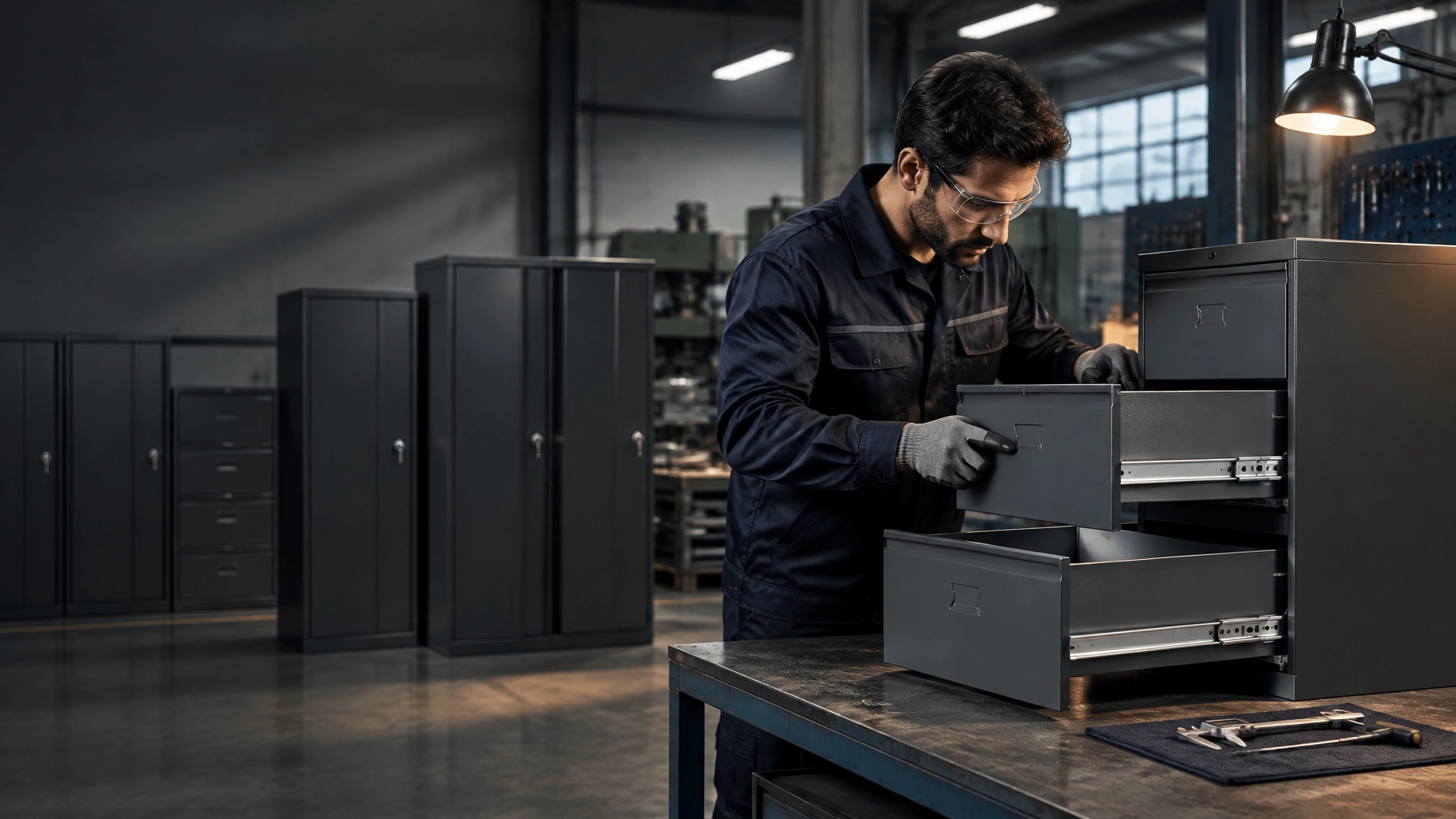
Choose by the space you have, the files you use and how staff need to access them. A lateral file cabinet has wide drawers that typically organize files side-to-side; a vertical file cabinet is narrower, with files arranged front-to-back in drawers that pull out toward the user. The dimensions below include verified Loxmet vertical models. Lateral cabinet sizes vary by manufacturer, so check the exact specification before ordering.
| Feature | Vertical filing cabinet | Lateral filing cabinet |
|---|---|---|
| File arrangement | Typically front-to-back in deep drawers | Typically side-to-side in wider drawers |
| Main space requirement | Narrower footprint; allow room in front for open drawers | More wall width; check drawer projection and aisle clearance |
| Loxmet example dimensions | 465 mm wide × 620 mm deep; height varies by drawer count | Confirm the chosen model’s width, depth and height |
| Best fit | Compact offices and individual filing points | Offices with broad wall space and shared file access |
Lateral File Cabinet vs Vertical File Cabinet: Compare the Fit
The key difference is the way each cabinet uses floor and wall space. A vertical cabinet concentrates storage in a narrow footprint, but its drawers extend forward. A lateral cabinet spreads storage across a wider face, so it needs more wall width. In both cases, measure the cabinet, open-drawer clearance and nearby circulation space before you decide.
A vertical file cabinet works well when wall width is limited and files are organized for individual retrieval. A lateral filing cabinet can suit a shared office where staff need to scan a broader range of file labels. The right choice depends on the room layout and filing routine, not a general claim that one format is always better.
Loxmet’s published vertical models provide a practical size reference. The 2-drawer file cabinet measures 465 mm wide × 620 mm deep × 685 mm high. The 3-drawer model measures 465 × 620 × 990 mm. The 4-drawer filing cabinet measures 465 × 620 × 1,300 mm, and the 5-drawer model measures 465 × 620 × 1,610 mm.
These are external dimensions for specific vertical products, not a universal standard. Check usable drawer space, file-size compatibility, drawer extension and clearance for the model you plan to order.
Choose by Room Layout
Choose vertical when you have limited wall width and a narrow cabinet suits the available space. Check that the deeper cabinet and open drawers do not block a walkway, chair movement or access to nearby equipment.
Choose lateral when you have more wall width and want files arranged across a wider drawer. Confirm how the model’s hanging rails support your file format and how far the drawers extend into the room.
Choose a different cabinet format when most storage is binders, supplies or inactive records rather than active hanging files. Loxmet’s office filing cabinet with adjustable shelves offers a metal cupboard format with adjustable shelving and a keyed lock.
Plan for Safe, Convenient Access
Measure the space with drawers open, not only the cabinet’s closed footprint. Keep aisles clear and avoid placing storage where it restricts a seated worker’s legroom. OSHA’s computer workstation guidance covers clearance around work surfaces. Its office safety guidance also advises keeping file drawers closed when not in use and maintaining clear passageways.
For frequently used files, consider which drawer height is comfortable for the people who will use it. Put heavier materials in lower drawers and follow the manufacturer’s instructions for safe loading, drawer use and any anti-tip features. If records have specific retention, access or storage requirements, check the rules that apply to your organization. The National Archives Records Storage Standards Toolkit is relevant to federal records and should not be treated as a universal certification for office cabinets.
Drawer Count: 2, 3, 4 or 5?
Drawer count helps you compare storage capacity and cabinet height. It does not tell the whole story: consider the volume of files, how you will label them, and which drawers staff access most often.
- 2 drawers: A practical starting point for a smaller filing point or a limited active-file collection. Loxmet’s model is 685 mm high.
- 3 drawers: A middle option when you need more separation by department, project or file type. The Loxmet model is 990 mm high.
- 4 drawers: A taller option for a larger active filing collection. Loxmet’s 4-drawer model is 1,300 mm high.
- 5 drawers: A high-capacity vertical option where floor width is limited and additional drawer levels suit the room and users. The Loxmet model is 1,610 mm high.
A 2 drawer file cabinet can separate current records from reference files. A 4 drawer filing cabinet gives more compartments, but its greater height should suit the room and user access needs. Compare drawer count alongside outside dimensions and the type of files each unit supports.
Security, Materials and Product Options
A metal filing cabinet gives offices a durable, practical format for everyday document storage. For confidential records, check the lock type and how the locking system operates. Loxmet’s vertical drawer models include a key lock and central locking system, plus adjustable suspension-file rods for compatible formats. Confirm the file dimensions before ordering.
Browse Loxmet office filing cabinets to compare drawer models with shelf cupboards, sliding-door cabinets and clear-view options. The catalogue includes product dimensions and features so you can assess the fit for your space. Loxmet manufactures metal storage solutions in Istanbul, Turkey, and offers custom-made options for project requirements. Contact the team to discuss dimensions, color and lock specifications.
Frequently Asked Questions
Is a lateral file cabinet better than a vertical file cabinet?
Neither is automatically better. A lateral format uses more wall width, while a vertical format uses a narrower footprint and typically needs more clearance in front of its drawers. Measure your room and consider how staff file and retrieve documents.
How do files sit in a vertical cabinet?
Files are typically arranged front-to-back in drawers that pull out toward the user. Check the model’s hanging rails and file-size compatibility to make sure it suits your folders.
What should I measure before ordering office filing cabinets?
Measure the available width, depth and height. Also check drawer-open clearance, aisle space, door access and nearby desks or equipment. Compare the manufacturer’s dimensions for the exact model.
How many drawers should a filing cabinet have?
Choose drawer count based on file volume, how you plan to separate records and the height that suits users. A 2-drawer cabinet serves a smaller collection; 3-, 4- and 5-drawer options provide additional storage levels.
Are Loxmet vertical filing cabinets lockable?
Yes. The listed vertical drawer models include a key lock and central locking system. Review each product’s details and request confirmation if your project has specific security requirements.
Does Loxmet offer lateral filing cabinets?
Loxmet’s linked drawer-cabinet range includes vertical models with published dimensions. For current product availability or a custom office storage requirement, contact the team directly.
Make the Choice With Confidence
Measure your available space, confirm file compatibility and compare drawer count before you select a lateral or vertical cabinet. Explore the office cabinet range and review the product specifications. Contact Loxmet to request support with a secure, durable filing solution for your workplace.