

Highlights
How Metal Lockers Are Made: Inside a Turkish Factory

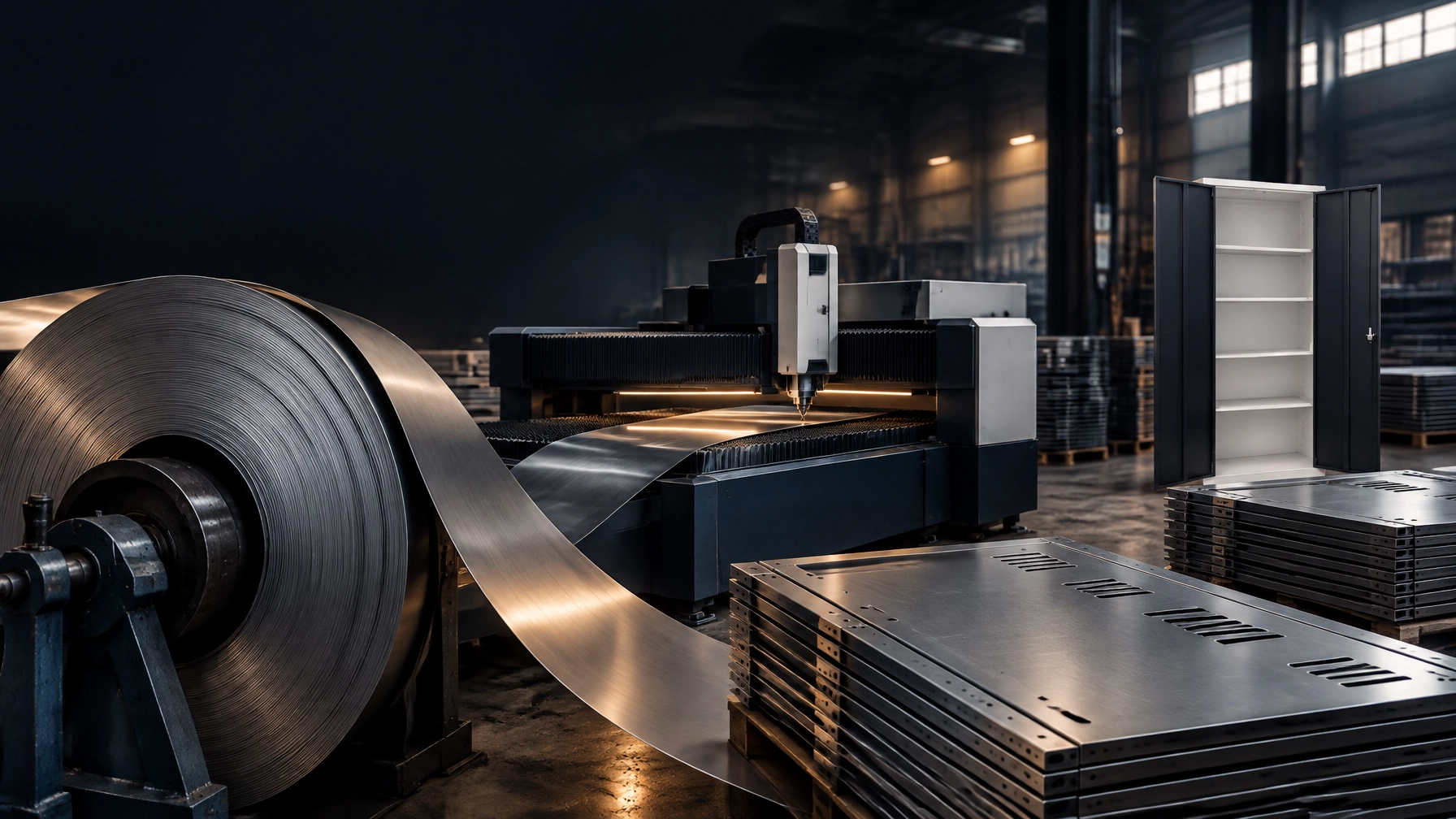
For importers, understanding how metal lockers are made helps you check construction, finishing and export readiness before approving an order. At Loxmet’s Istanbul factory, production moves from specified steel sheet to inspected, protected units prepared for shipment.
| Production stage | What happens | What you should verify |
|---|---|---|
| Material selection | Steel sheet is selected to the approved design | Grade, thickness and component specification |
| Cutting and forming | Panels are cut, bent and prepared for the chosen construction | Dimensions, edges and approved assembly type |
| Surface preparation and coating | Parts are cleaned, pre-treated where applicable, coated and cured | Process control, colour and finish |
| Assembly | Doors, hinges, locks, louvres and labels are fitted | Alignment, operation and correct configuration |
| Final inspection and packing | Units are checked and protected for transport | Inspection records, packing method and order details |
How metal lockers are made: Loxmet’s production flow
1. Steel selection and product specification
Every production run starts with the approved product design. Dimensions, door layout, lock type, ventilation, colour and accessories guide how the parts are cut and assembled.
Loxmet uses DKP cold-rolled steel sheet. For standard models, the stated sheet thickness is typically 0.6 mm before paint. The agreed specification matters: confirm which components it applies to, and distinguish the sheet thickness from the finished, coated measurement.
This early stage helps keep each order consistent. Loxmet manufactures more than 100 standard products and also produces custom metal fabrication solutions. Browse the locker range or share drawings and requirements for a custom design.
2. CNC cutting and forming
CNC cutting shapes the sheet-metal components, including body panels and doors. Accurate cutting supports consistent dimensions and repeatable features such as lock openings and ventilation louvres. Edges and cut parts are checked before moving to the next operation.
A press brake then bends flat components into formed panels. These bends add shape and stiffness, and help create the edges needed for assembly. Buyers should ask how the supplier checks dimensions and panel fit, especially when ordering a custom layout.

Construction method is another point to agree before production. Loxmet can make monoblock welded bodies or knock-down assemblies, depending on the model and project requirements. A welded body arrives assembled; knock-down (KD) construction is designed for assembly after delivery. Confirm the chosen method, packing arrangement and any assembly information before approving the order.
3. Surface preparation and powder coating
Before coating, steel parts are degreased and prepared so the finish can bond properly. Phosphating is used where applicable to the production process. The agreed pre-treatment and coating requirements should be clear for the product and its intended use.
Electrostatic powder coating applies dry coating powder to the metal. The coated parts then pass through a curing process to form the finished surface. Colour approval is important for repeat orders: confirm the required colour reference and whether it is a catalogue colour or custom colour.
Coating is both a visual and protective part of locker manufacturing. Inspect sample pieces for even coverage, clean edges and an agreed finish. For general guidance on workplace controls around hazardous substances and coating processes, see the UK Health and Safety Executive’s COSHH Essentials and its surface engineering guidance. The HSE also provides information on reducing risks associated with coating powders.

4. Assembly and functional checks
Once parts are ready, the assembly stage brings together the body, doors and hardware. Depending on the model, this includes hinges, locks, ventilation louvres and labels. Where the design calls for it, the team also checks internal fittings and compartment layout.
For buyers, an assembled sample is a practical way to check the details that matter in use: door alignment, smooth opening and closing, lock operation and the fit of accessories. These checks are especially useful when developing steel lockers in a custom size or configuration.
Application needs vary. A project for workwear lockers, dirty lockers, uniform lockers or PPE lockers may need a particular internal layout or separation between stored items. Include these functional requirements in the drawing or order specification rather than relying on a general product description.
5. Quality control and export packing
Quality checks take place across the production flow, not only at the end. Loxmet’s checkpoints include weld integrity where relevant, panel and door alignment, coating condition, lock function and a final inspection before packing. The inspection should match the approved design and order details.
Packing protects the finished units through handling and transport. Loxmet’s standard export protection uses bubble nylon stretch wrap with carton edging. Pallet packaging is available on request. Confirm the packing method in your quotation, particularly if your destination, handling requirements or onward distribution call for a specific arrangement.

For a metal locker factory, a clear packing specification is part of order control. Confirm labels, model and colour identification, quantity per package and whether the units ship assembled or knock-down. If you need guidance on order quantities, see Loxmet’s MOQ information.
What importers should verify
Factory insight helps you ask direct, useful questions before placing a bulk order. Request the technical specification, confirm the construction method, and agree how sample or drawing approval works. Ask what checks are recorded during production and what final inspection covers.
Also review relevant management systems and product documentation. Loxmet’s company credentials include CE and ISO 9001:2015, ISO 10002:2018, ISO 14001:2015 and ISO 45001:2018. Ask for the documentation applicable to your order and destination market.
Loxmet manufactures in Istanbul and was established by Usta Celik Buyro Mobilya, drawing on contract manufacturing experience since 2013. Catalogue products in catalogue colours generally require 10 working days. Custom colours and made-to-order products typically need approximately 10 additional working days. Timing depends on the approved specification and order details, so confirm the schedule with your quotation.
Single-unit orders are accepted. Pricing is quote-based, and Loxmet provides a 10-year warranty against production faults. For more about sourcing from a locker manufacturer from Turkey, review the production and commercial details together before approval.
Buyer questions
Can I order a sample before a larger order?
Yes. Loxmet accepts single-unit orders. Share the model or specification with the sales team to confirm the most suitable sample option.
Can Loxmet make custom dimensions or colours?
Yes. Loxmet offers custom fabrication. Provide dimensions, layout, colour reference and required features so the team can review the design and timing.
What is the standard sheet thickness?
For Loxmet standard models, the stated DKP cold-rolled steel sheet thickness is typically 0.6 mm before paint. Confirm the specification for each model and component in your quotation.
Are the lockers welded or supplied knock-down?
Both construction approaches are available depending on the model and project. Confirm whether your order is monoblock welded or knock-down before production and agree the packing format.
How long does production take?
Catalogue products in catalogue colours generally require 10 working days. Custom colours and made-to-order products typically take approximately 10 additional working days. Confirm the schedule for your exact order.
What warranty does Loxmet provide?
Loxmet provides a 10-year warranty against production faults. Review the applicable warranty terms and claim process before confirming the order. Further company and ordering answers are available on the FAQs page.
A reliable metal locker factory makes the production steps, specifications and checks clear before shipment. Send your product list, quantities, destination and any drawings to contact Loxmet for practical guidance and a quote-based offer.