


Highlights
Rolling Office Cabinet Selection for Busy Facilities

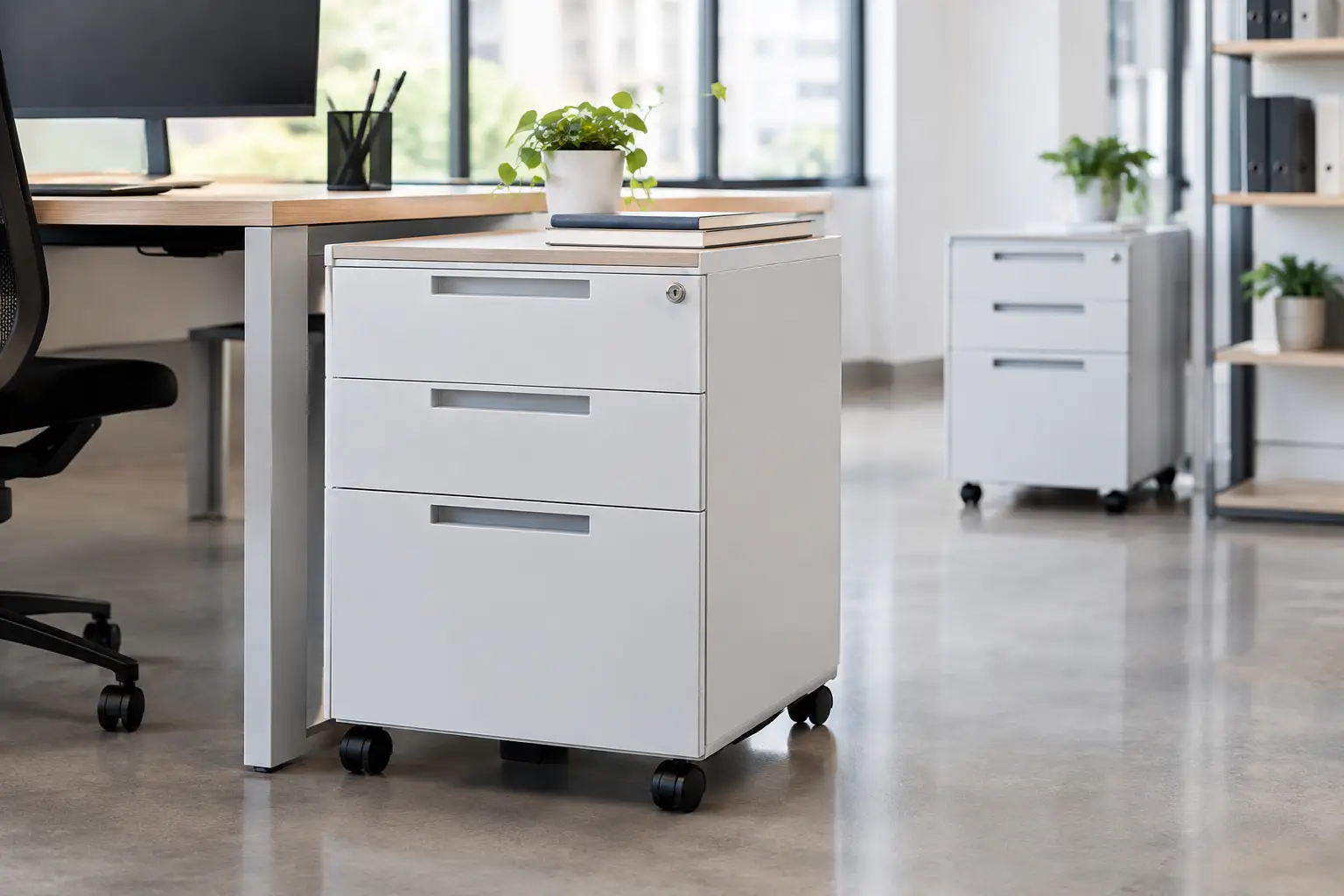
A rolling office cabinet earns its place when documents, supplies, devices, and personal items need to move with the work rather than remain fixed against a wall. For facility managers and procurement teams, the right unit reduces clutter at shared workstations, supports reconfigured layouts, and keeps essential materials secure during a busy shift. The wrong unit becomes a noisy obstruction with weak wheels, limited capacity, and drawers that fail under daily use.
For commercial environments, mobility is only one part of the specification. Cabinet construction, drawer load, locking method, caster quality, dimensions, and finish all affect whether the product will perform over years of use. A purchase decision should start with the workflow the cabinet needs to support, not simply the number of drawers.
When a Rolling Office Cabinet Makes Business Sense
Fixed storage is effective where teams have permanent desks and stable filing requirements. A rolling cabinet is more suitable where space is shared, teams rotate between stations, or supplies must be available in several parts of a facility. This includes administrative offices, schools, healthcare reception areas, training rooms, project offices, workshops, and commercial fit-out projects.
Under-desk cabinets are a common choice for individual employees who need secure access to files and stationery. Larger mobile cabinets can support shared printers, records, equipment, or project materials. In flexible offices, they can also define a temporary work zone without adding permanent partitions.
The practical benefit is not simply that the cabinet can move. It is that storage can remain close to the point of use. Staff spend less time walking to a central storage room, while supervisors can keep controlled materials organized during layout changes or temporary operations.
Mobility does involve a trade-off. A cabinet that moves easily may not be appropriate for high-security archives, heavy machinery components, or locations with uneven flooring. In those cases, fixed cabinets, shelving systems, or a combination of mobile and stationary storage may be the better operational choice.
Start With Storage Load and Daily Use
A cabinet intended for light office supplies does not need the same construction as one storing dense paper files, technical tools, or devices. Paper is particularly demanding. A fully loaded filing drawer can place significant weight on drawer runners, the cabinet frame, and casters. Thin material and low-grade slides may appear acceptable at delivery but deteriorate quickly under repetitive loading.
Specify the expected contents before selecting a cabinet size. Consider whether drawers will hold hanging files, binders, boxed records, electronics, consumables, or personal belongings. Also consider who will use it. A cabinet used by one assigned employee experiences different wear than a shared unit accessed throughout the day.
For demanding commercial use, steel construction provides clear advantages. It resists impact better than lightweight alternatives, maintains its shape under load, and is suited to workplaces where furniture is repositioned frequently. Powder-coated steel finishes also support straightforward cleaning and provide a professional appearance across office, educational, and industrial settings.
Look beyond the exterior panels. Drawer slides should operate consistently when loaded, drawer fronts should remain aligned, and the cabinet body should not flex when a drawer is opened. If a tall or narrow cabinet will be used heavily, anti-tip design becomes especially relevant. Opening multiple loaded drawers at once can create a forward-weight condition, so drawer interlock systems may be appropriate for file-intensive applications.
Casters Determine Whether Mobility Is Useful
Casters are often treated as a minor detail. In practice, they determine whether a mobile cabinet performs as intended. Poor-quality casters can drag, mark finished floors, collect debris, or fail under a cabinet’s loaded weight. That creates an operational problem for staff and a maintenance problem for the facility.
The floor surface should guide the caster selection. Hard flooring generally benefits from non-marking wheels that roll smoothly without damaging the finish. Carpeted work areas may require a wheel design that handles greater rolling resistance. Industrial offices and service areas may need casters designed for heavier loads and more frequent movement.
Locking casters are essential when the cabinet will double as a workstation support, printer base, or document station. At least two brakes help prevent movement while drawers are opened or equipment is used. For high-traffic areas, confirm that the braking mechanism is easy to engage without requiring staff to reach under the cabinet awkwardly.
Caster placement also affects stability. A wide cabinet with a balanced wheel layout is more predictable in motion than a tall, narrow model with a high center of gravity. When evaluating dimensions, measure clear routes as well as the final parking location. Doorways, elevator thresholds, desk legs, cable channels, and tight turns can all limit usable mobility.
Security Should Match the Contents
Not every rolling office cabinet requires the same lock. A simple central lock may be enough for stationery and low-risk paperwork. Personnel records, financial documents, controlled keys, tablets, and confidential project materials require a more deliberate approach.
Central locking is efficient because one key can secure multiple drawers. Individual drawer locks may be useful where several users share a cabinet but need separate access. For larger projects, key management should be considered early. Procurement teams should determine whether keyed-alike options, master key systems, or replacement key availability are needed across multiple units.
Security also depends on cabinet placement. A locked cabinet positioned in an open reception area does not provide the same control as one stored within a restricted office. For confidential paper records, the cabinet should be part of a wider document-handling process that includes access rules, retention procedures, and secure disposal.
Electronic locks may suit some workplace applications, but they are not automatically the best answer. They add convenience where access codes or audit control are required, yet mechanical locks remain practical, dependable, and easy to manage in many standard office installations. The right decision depends on risk, user volume, and the facility’s existing access-control approach.
Choosing the Right Configuration
The best drawer arrangement depends on what the cabinet must hold. A pedestal-style cabinet with shallow drawers and one deeper file drawer works well beside individual desks. Multi-drawer units are useful for stationery, forms, components, and small supplies. Wider cabinets may support shared records or equipment but require more floor space and greater attention to maneuverability.
Before issuing a purchase order, verify these operational details:
- Overall width, depth, and height, including handle projection and caster height
- Internal drawer dimensions and usable filing format
- Cabinet and drawer load capacity under real working conditions
- Locking arrangement, keying requirements, and anti-tip features
- Caster material, brake function, and compatibility with the installed floor
Color and finish can also serve a practical purpose. Neutral finishes suit general office environments, while color coding can separate departments, projects, controlled inventory, or assigned work areas. For large installations, consistent finishes across cabinets, lockers, shelving, and work benches create a more organized facility without complicating maintenance.
Plan for Standard Products and Custom Requirements
Standard rolling cabinets are often the fastest route for common workplace needs. They offer predictable dimensions, proven configurations, and shorter delivery planning. They are particularly effective when a business needs to equip many similar workstations or replace existing units with minimal disruption.
Custom fabrication becomes valuable when the workspace has nonstandard dimensions, a required drawer layout, specific lock requirements, branded colors, or an unusual load profile. A cabinet may need to fit beneath a particular counter, accommodate labeled bins, protect technical equipment, or align with other metal storage systems. In these cases, forcing a standard product into the application can create avoidable compromises.
For project buyers, provide the manufacturer with intended use, cabinet dimensions, load expectations, floor conditions, access requirements, and quantity from the start. This reduces revisions and makes it easier to compare a standard cabinet against a tailored design. Loxmet supports both standard metal storage products and custom fabrication for facilities that need a more specific solution.
Build Mobility Into the Workplace Plan
A rolling cabinet should be specified as working equipment, not as an afterthought. Its dimensions affect circulation, its load affects safety, and its lock affects how confidently teams can store materials at the point of use. The strongest choice is the one that fits the actual task, the actual floor, and the actual storage load.
When a cabinet is built from durable steel, fitted with suitable casters, and configured around the people who use it, mobility stops being a convenience feature. It becomes a practical way to keep work organized as the facility changes.