


Highlights
Mobile Filing Cabinet for High-Use Workplaces

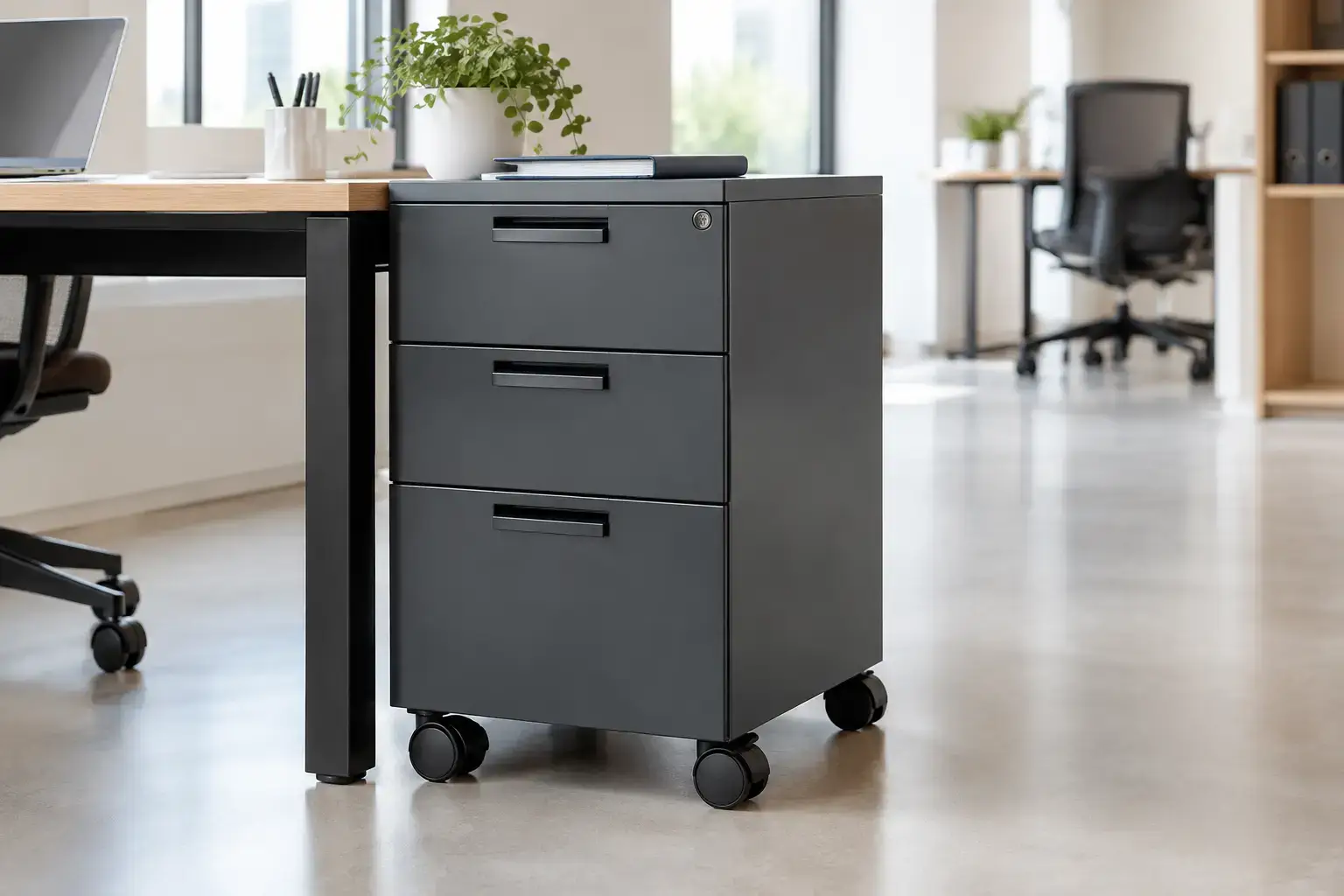
A mobile filing cabinet is a small piece of office furniture with a large operational role. Positioned beneath a desk, beside a shared printer, or at the end of a workstation run, it keeps active documents close to the people who use them. For commercial buyers, the right cabinet must do more than hold folders. It must withstand daily movement, protect sensitive records, fit the available workspace, and remain dependable through years of use.
That is why cabinet selection should begin with the working environment, not with appearance alone. A compact cabinet used by one office employee has different requirements from a unit serving a reception desk, a busy administrative department, or a production planning office.
What a Mobile Filing Cabinet Should Do
The primary benefit of mobility is practical access. Instead of placing frequently used documents in fixed wall storage, users can move the cabinet to the point of work. This helps reduce unnecessary walking, keeps desks clear, and allows teams to adapt when layouts change.
A well-built mobile filing cabinet should support three functions at once: document organization, personal-item storage, and controlled access. Many workplaces need a file drawer for hanging folders alongside smaller drawers for stationery, keys, forms, or devices. This combination makes the cabinet more useful than a dedicated filing unit, particularly where workstation space is limited.
Mobility should not mean instability. Casters need to roll smoothly on the facility’s floor surface, while the cabinet body must stay rigid under a full drawer load. A poor-quality cabinet may move easily when empty but become difficult to position, misaligned, or unsafe once filled with records. For high-use environments, drawer slides, caster mounts, and the cabinet frame deserve as much attention as external finish.
Choose the Right Filing Capacity
Filing capacity is often underestimated. Paper records are dense and heavy, and one loaded drawer can place significant stress on drawer runners and the cabinet structure. Buyers should first identify the filing format in use, whether letter-size, legal-size, or another document standard, then confirm that the drawer depth and rail arrangement support it correctly.
A two-drawer configuration can be sufficient for an individual workstation with modest active files. A three-drawer mobile cabinet generally offers more flexibility, with one larger file drawer and smaller utility drawers above it. The best choice depends on document flow. If employees archive records elsewhere and retain only current work at their desks, a compact unit may be more efficient. If files are referenced throughout the day, greater capacity can prevent desktop clutter and reduce time spent searching.
It is also worth planning for growth. Purchasing cabinets based only on current folder volume can create a replacement issue within a short period. Where retention requirements or team headcount are likely to increase, choosing a stronger cabinet with usable reserve capacity is usually the more cost-effective decision.
Drawer Load and Full Extension Matter
A filing drawer should open far enough for users to view and retrieve folders without pulling documents forward by hand. Full-extension slides improve access to files at the back of the drawer and make daily work faster. They also need to maintain smooth operation under a realistic load, not just under a light demonstration load.
For facilities with continuous use, metal ball-bearing slides are a practical specification. They offer consistent movement, support heavier contents, and are better suited to repeated opening and closing than light-duty alternatives. The cabinet should also include a drawer-stop system that prevents accidental removal during normal use.
Security Is Part of Filing Efficiency
Documents can include employee information, financial paperwork, customer records, contracts, and controlled operational forms. Leaving these materials in an unlocked drawer creates an unnecessary risk, even in a generally secure office.
A central locking system is often the most efficient option for a mobile filing cabinet because it secures multiple drawers with one key. This makes closing down a workstation quicker at the end of a shift. For shared offices, key management should be considered before purchase. Facilities may need keyed-alike groups for department access, different key codes for separate teams, or replacement-key availability for long-term maintenance.
Locking alone is not enough if a cabinet can tip when a loaded file drawer is opened. Anti-tip features or counterbalanced construction help reduce this risk. This is especially relevant in offices where users may open drawers quickly, where floor levels vary, or where cabinets are frequently moved between workstations.
Material and Construction for Commercial Use
Metal construction is a strong choice for workplaces that expect daily use, frequent relocation, and a long service life. A steel cabinet can provide better resistance to dents, drawer misalignment, and general wear than lighter office storage products. It is also easier to maintain in shared and high-traffic environments.
Look beyond the thickness of visible panels. The quality of folded edges, welded or reinforced connection points, drawer slide fixings, and caster plates determines how the cabinet performs over time. Sharp unfinished edges, loose hardware, and thin unsupported drawer bottoms are warning signs when the cabinet will carry heavy files.
Powder-coated finishes are well suited to commercial metal furniture because they provide a clean, durable surface that is easy to wipe down. Color can support workplace planning as well. Neutral colors fit most office interiors, while department-specific colors can help identify ownership in large administrative areas, schools, healthcare facilities, and shared service centers.
Casters Need a Clear Purpose
Not every caster arrangement is suitable for every location. Hard casters can move well on carpet, while softer materials may be preferable on hard floors where noise reduction and surface protection matter. Locking casters are useful when the cabinet must remain stable beside a desk or under a work surface.
The expected movement pattern should guide the specification. If staff will reposition the cabinet only occasionally, four stable casters with brakes may be enough. If it will travel repeatedly across a large office, reception area, or operational floor, caster quality becomes a primary durability issue rather than a minor accessory detail.
Fit the Cabinet to the Workspace
Before ordering, measure more than the available gap beneath the desk. Account for drawer opening clearance, chair movement, legroom, power outlets, floor transitions, and access routes. A cabinet that fits physically but blocks a user’s seating position will not improve the workstation.
Height is particularly important. Many mobile cabinets are designed to sit under standard desk heights, but desk frames and adjustable workstations can reduce usable clearance. Width and depth also affect how easily a cabinet can be moved around corners, between desk banks, and through doorways.
For project buyers, standard dimensions are often the fastest route to delivery and installation. Custom fabrication becomes valuable when a project has nonstandard desk sizes, specific color requirements, specialized lock systems, or a need to coordinate cabinets with lockers, shelving, and other metal storage products. The right approach depends on whether speed, exact fit, or a coordinated facility specification is the priority.
Questions to Ask Before You Buy
Procurement teams can avoid most selection problems by confirming a few operational details early. Ask what file format will be stored, how much weight each drawer must carry, who requires access, and how often the cabinet will move. Then verify the cabinet dimensions, lock arrangement, slide type, anti-tip provision, caster configuration, and warranty terms.
For larger orders, request consistent specifications across the full batch. Mixed drawer sizes, lock types, or finishes can complicate installation and future replacement. A manufacturer with standard product availability and custom metal fabrication capability can help balance a fast initial order with long-term consistency as the facility expands.
Loxmet supplies heavy-duty metal storage solutions for buyers who need practical, repeatable specifications across workplace projects. For a mobile cabinet, the objective is straightforward: secure files, usable space, durable movement, and a product that continues working without demanding attention from the facilities team.
A cabinet may occupy only the space beneath a desk, but its effect is felt across the workday. Specify it around real document loads, user habits, and floor conditions, and it becomes a dependable part of an organized workstation rather than another item that needs replacing.