


Highlights
Choosing a Flammable Storage Cabinet for Workplaces

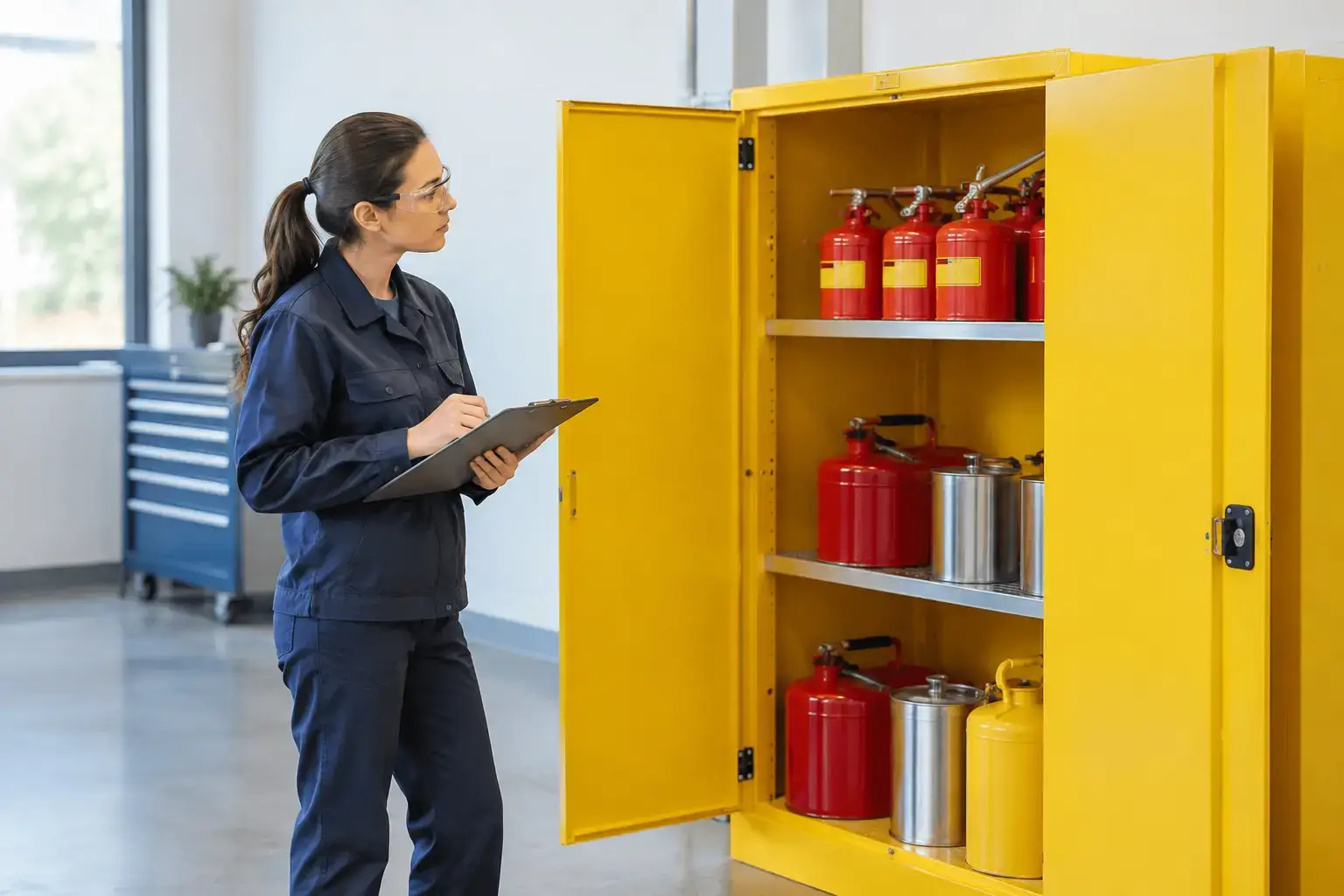
A flammable storage cabinet is not simply a metal cabinet with a warning label. It is a controlled storage point for liquids that can ignite, spread fire quickly, or create hazardous vapors in a workplace. For facility managers, safety coordinators, and procurement teams, the right cabinet supports safer daily handling while keeping chemicals organized, accessible, and separated from general storage.
The decision should start with the materials being stored and the way employees use them. A cabinet that suits a maintenance room with a few solvent containers may not suit a production line, laboratory, paint shop, or vehicle workshop. Capacity matters, but fire protection, construction quality, ventilation requirements, location, and internal organization matter just as much.
What a Flammable Storage Cabinet Is Designed to Do
Flammable liquid cabinets are designed to reduce the risk associated with storing combustible and flammable liquids. Their purpose is to provide a protected enclosure that delays exposure to heat and flame, helps contain leaks, and keeps ignition-prone materials in one defined location.
A well-built steel cabinet typically includes double-wall construction, insulated air space, self-closing or tightly fitted doors, flame-arresting vents, and a leak-tight sump at the base. These features are not decorative specifications. They address practical risk points: fire reaching stored containers, vapors moving through open vents, and spills escaping onto the floor.
The cabinet does not make unsafe practices safe. Damaged containers, incompatible chemicals, open containers, and excessive storage volumes still create risk. Its value comes from being part of a broader chemical management process that includes correct labeling, employee training, spill response planning, and appropriate ventilation within the room.
Start With the Chemicals, Not the Cabinet Size
Procurement often begins with a capacity request: 30 gallons, 45 gallons, 90 gallons, or another standard size. Capacity is necessary, but the inventory should be reviewed first. Identify every liquid intended for cabinet storage, including solvents, paints, fuels, adhesives, cleaning fluids, and maintenance chemicals.
Check each product’s safety data sheet for its hazard classification, storage guidance, and incompatibilities. Not all hazardous liquids belong together. Flammable liquids may require separation from oxidizers, acids, corrosives, or other reactive materials. A large cabinet can create an operational problem if it encourages incompatible products to be stored in the same enclosure.
Usage patterns should guide the layout. A workshop that issues small containers throughout the day may benefit from a countertop or under-counter cabinet positioned close to the work area. A central maintenance store may need a larger floor-standing model with adjustable shelves and clear inventory control. For high-use operations, several smaller cabinets can be more practical than one large unit because they reduce travel, avoid congestion, and limit the quantity held in one location.
Key Construction Features to Specify
Commercial buyers should request clear, verifiable product specifications rather than relying on general descriptions such as “fireproof” or “heavy-duty.” Cabinet performance depends on details of design and manufacturing.
Steel body thickness, double-wall construction, reinforced doors, durable hinges, and reliable closing mechanisms all affect long-term service. In demanding facilities, doors may be opened dozens of times per shift. A weak latch or misaligned door can compromise daily usability long before the cabinet body shows visible wear.
The base sump is equally important. It should be leak-tight and sized to contain spills from stored containers. Removable, adjustable shelves simplify cleaning and allow the internal space to accommodate different can, bottle, and container heights. Shelves should be strong enough for the intended load, not only for a lightly stocked display configuration.
Vent connections are often misunderstood. Many cabinets include capped vent ports with flame arresters, but this does not automatically mean the cabinet should be connected to an exhaust system. Whether ventilation is required depends on the chemicals, local fire code, room conditions, and site safety policy. Improperly venting a cabinet can reduce its designed fire resistance or introduce other risks. Confirm the approach with the responsible safety professional before installation.
A durable powder-coated finish also has practical value. It supports corrosion resistance, withstands routine cleaning, and keeps warning colors and identification visible in industrial environments. For projects with site-specific requirements, manufacturers can provide dimensions, shelf arrangements, locking options, and finish selections that fit the operating environment.
Door Style and Access Control
Manual-close doors can work well where trained staff are present and operational procedures require doors to remain closed after use. Self-closing doors add a safeguard by closing automatically, which can be valuable in busy areas where a door may otherwise be left open.
The best choice depends on workflow and local requirements. Self-closing doors can reduce reliance on user behavior, while manual doors may be appropriate for controlled storage rooms with limited access. In either case, a secure locking system helps restrict chemical access to authorized employees and supports better inventory accountability.
Plan the Installation Area Carefully
Where the cabinet is located is as important as the cabinet selected. It should be installed on a stable, level surface where doors can open fully and workers can remove containers without reaching around obstacles. A cabinet should not block an exit route, aisle, emergency equipment, electrical panel, or access to a workstation.
Avoid placing it beside ignition sources, direct heat, or areas where forklifts and carts can strike it. In industrial settings, physical protection may be needed if vehicle traffic passes close to the storage area. Keep the location visible enough for inspection but controlled enough to prevent unauthorized access.
The surrounding environment also affects cabinet life. Wet areas, corrosive atmospheres, and outdoor exposure can shorten the service life of standard finishes and hardware. If the cabinet will operate in a harsh environment, specify appropriate corrosion protection and consider a custom configuration designed for the site.
Capacity, Compliance, and the Risk of Overfilling
A cabinet should never become a place for every chemical container that has nowhere else to go. Overfilling creates several problems: containers become difficult to inspect, labels are hidden, shelves are overloaded, and spills are harder to detect and clean.
Set an internal stock limit that keeps shelves orderly and allows employees to remove containers without shifting others. This is especially useful for sites that receive chemicals in bulk but use them in smaller quantities. Keep bulk inventory in the approved storage area and place only working quantities in the cabinet where the material is used.
Regulatory requirements vary by jurisdiction, building type, chemical class, and total quantity stored. Buyers should confirm applicable fire, workplace safety, and environmental requirements before finalizing cabinet quantity and placement. A product may be manufactured to a recognized standard, yet the installation can still be noncompliant if the wrong materials are stored together or site limits are exceeded.
Build Inspection Into Everyday Operations
A flammable storage cabinet should be included in routine facility inspections. The checks are straightforward: verify that doors close correctly, labels remain readable, shelves are not overloaded, containers are sealed, and the sump is clean and dry. Look for corrosion, dents, hinge wear, damaged gaskets, or signs that the cabinet has been struck by handling equipment.
Keep an up-to-date inventory inside or adjacent to the storage area, following your site’s documentation procedure. This supports purchasing control and helps emergency responders understand what may be present. It also reduces duplicate ordering and prevents old chemicals from remaining forgotten at the back of a shelf.
For multi-site organizations, standardizing cabinet sizes and layouts can simplify training, replacement parts, inspections, and purchasing. A manufacturer with both standard production and custom metal fabrication capability can help create a consistent storage specification across workshops, warehouses, laboratories, and maintenance departments.
Select for Long-Term Facility Use
The lowest purchase price rarely reflects the full cost of chemical storage. A cabinet that has poor door alignment, limited shelf strength, inadequate spill containment, or a finish that deteriorates quickly can create replacement costs and daily safety issues. For commercial projects, evaluate construction quality, available documentation, warranty coverage, delivery reliability, and the supplier’s ability to support repeat orders.
Loxmet manufactures heavy-duty metal storage solutions for workplaces that require durable, practical configurations. For buyers managing different facility types, the ability to combine standard cabinet models with project-specific dimensions or internal layouts can make procurement simpler and storage more effective.
Choose the cabinet around the chemical inventory, the working routine, and the site requirements – then maintain it as carefully as the materials inside it. That approach keeps safety storage useful long after installation day.