


Highlights
Suspension File Storage Cabinet Buying Guide

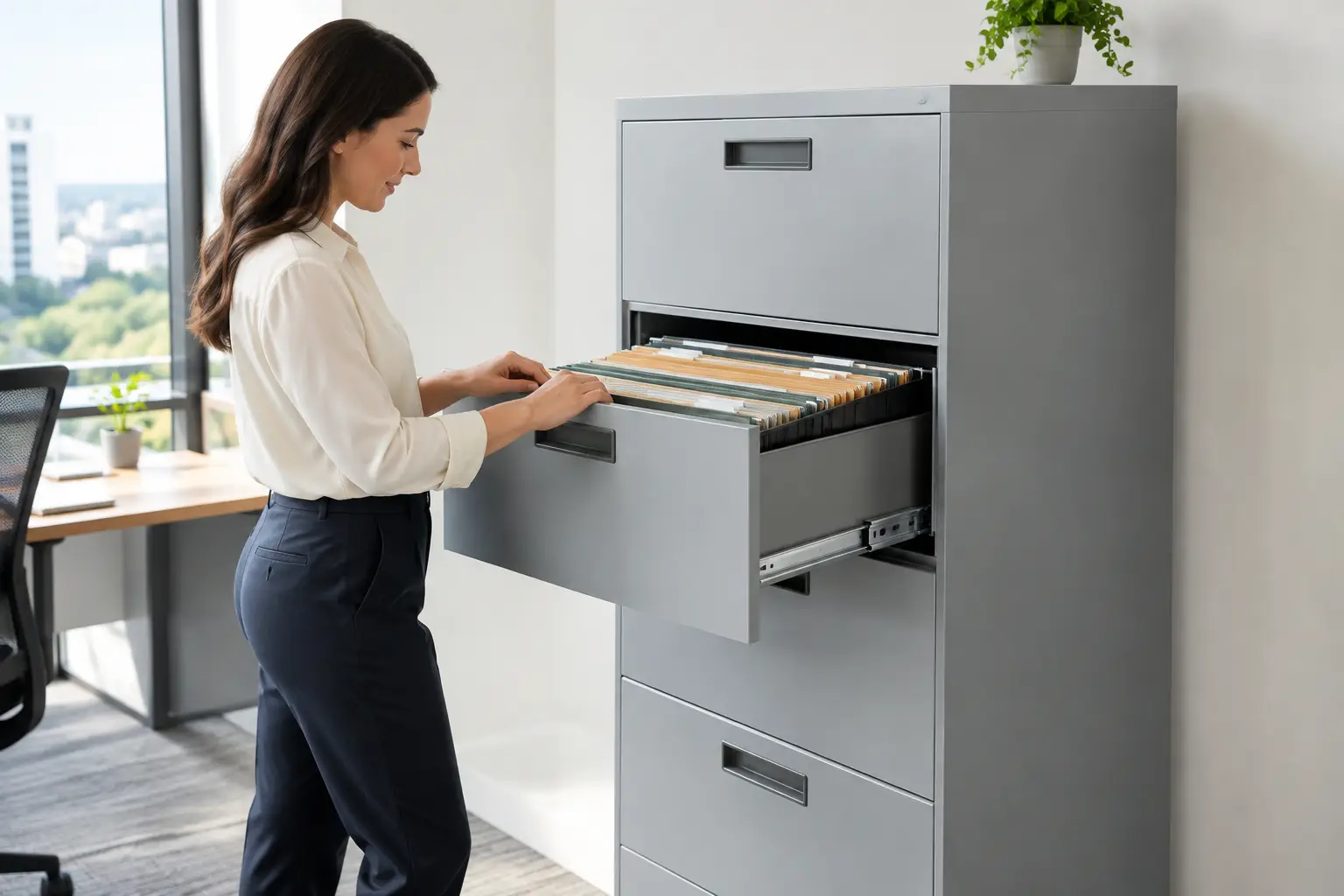
A suspension file storage cabinet is a working part of an office, not just a place to put paperwork. When files are active, confidential, or retained for compliance, the cabinet must keep them accessible, protected, and properly supported through daily use. For procurement teams and facility managers, selecting the right unit means balancing filing capacity, floor space, security, and long-term durability.
Paper records still matter across healthcare offices, schools, legal teams, HR departments, finance functions, public institutions, and industrial facilities. Even organizations with digital workflows often need secure physical storage for personnel records, contracts, drawings, invoices, inspection reports, and archived documents. A well-specified steel cabinet keeps those records organized without creating avoidable risks for users or operations.
What a Suspension File Storage Cabinet Does
Suspension filing systems hold folders from rails fitted inside each drawer. Rather than stacking files upright in a box, folders hang from tabs, allowing staff to identify, remove, and return documents quickly. The result is a filing system that uses drawer depth efficiently while keeping paper edges supported and visible.
The cabinet itself needs to do more than contain drawers. Its body must resist denting and distortion, its runners must operate reliably under load, and its drawers must remain aligned after years of opening and closing. These details are especially relevant in shared offices, records rooms, and high-traffic administrative departments where a weak cabinet becomes a daily operational problem.
Metal construction is generally the practical choice for commercial use. Steel cabinets provide a stable structure, offer better resistance to impact than lightweight alternatives, and are suitable for workplaces that require a professional, consistent finish across multiple rooms or locations.
Start With the Files, Not the Cabinet
The most common purchasing mistake is choosing a cabinet based only on external dimensions. The internal filing format should come first. A cabinet that fits the room but does not suit the folder type, paper size, or expected volume will create disorder from the first day of use.
US letter-size filing is common in American workplaces, while legal-size files require deeper drawers. International projects may also require A4 compatibility. Buyers should confirm the usable internal width and depth, the rail configuration, and whether the cabinet is supplied ready for the chosen folder format. Do not assume that every drawer accepts every suspension file system.
Capacity should also reflect growth. A cabinet filled to its limit at installation leaves no room for new records, temporary case files, or reorganized departments. For active filing, allowing spare capacity makes daily retrieval easier and reduces overloading. For archives, capacity planning should consider retention schedules and the likely rate at which records are added.
Drawer Count and Cabinet Height
Two-drawer cabinets suit smaller teams, individual departments, and under-desk applications. Three- and four-drawer units provide higher capacity without taking additional floor area, making them a strong option for central filing points. The trade-off is height and weight. Taller cabinets require a stable base, correct installation, and sensible loading practices.
Where a facility has large quantities of archived documents, several coordinated cabinets may be more practical than one very tall unit. This can improve access, distribute weight, and allow departments to separate files by function, year, or confidentiality level.
Security Is Part of the Specification
Many records stored in filing cabinets contain personal, commercial, or operationally sensitive information. A lock is therefore not an optional finishing detail. It is a basic requirement for HR files, student records, medical documentation, financial paperwork, and controlled project information.
A central locking system allows authorized users to secure all drawers with one key. For departments where access must be limited, consider key control procedures and the availability of replacement keys. Different lock arrangements may be appropriate for shared departmental filing and individual responsibility. The right choice depends on how many users need access and how the organization manages document ownership.
Security also includes drawer behavior. An anti-tilt mechanism helps prevent more than one drawer from opening at a time, reducing the risk of instability. This is particularly valuable for full-height cabinets and high-density filing. A cabinet should be loaded with heavier files in lower drawers whenever possible, even where anti-tilt protection is included.
Construction Details That Affect Service Life
A cabinet can look similar on a quotation sheet yet perform very differently in service. Procurement specifications should address the parts that carry load and absorb repeated use.
Drawer runners are one of the most important components. Smooth, stable runners make full drawers easier to open and help prevent folder rails from binding. For intensive filing environments, buyers should ask about runner design, drawer extension, and load suitability. Full extension improves access to files at the back of the drawer, while partial extension may be sufficient for lower-volume applications.
Steel thickness, body reinforcement, and drawer construction also matter. Heavy-duty cabinets need a rigid carcass that remains square when drawers are loaded. Poor alignment can lead to sticking drawers, uneven gaps, and premature wear. A durable powder-coated finish protects the metal surface and supports straightforward cleaning in offices, schools, workshops, and public-facing facilities.
Welded or securely assembled construction should be selected based on the delivery and installation requirements of the project. Fully assembled cabinets reduce on-site work and arrive ready for use. Knock-down designs can assist with access constraints and freight efficiency, but they must still provide the rigidity required for regular commercial service.
Match the Cabinet to the Workplace
The best cabinet is not always the largest or most heavily specified model. It is the unit that fits the records, work pattern, and physical environment.
In a compact office, vertical filing cabinets make effective use of limited floor space. In open-plan administrative areas, cabinet finish and noise levels may matter alongside capacity. In factories and maintenance offices, the priority may be a tough painted steel body that tolerates more demanding surroundings. For schools, healthcare facilities, and government departments, secure access and clear filing organization often take priority.
Consider the cabinet’s position before ordering. Measure not only the space where it will stand, but also the clearance needed to open drawers safely. A cabinet placed in a narrow passage can obstruct traffic when in use. Doorways, elevators, floor loading, and access routes should be reviewed for larger project orders.
Color and finish are also functional choices. Neutral finishes work well in general office settings, while a consistent color across cabinets, lockers, shelving, and other metal furniture can support a more organized facility standard. Custom colors may be useful for department identification, branded fit-outs, or multi-zone workplaces.
Specify for Projects and Repeat Orders
For multi-site organizations, distributors, and commercial fit-out projects, standardization reduces future purchasing complexity. Using a defined range of cabinet sizes, locks, colors, and filing formats helps facilities teams order replacements or additions without restarting the selection process each time.
A clear specification should cover external dimensions, internal filing format, number of drawers, lock type, anti-tilt requirements, finish, color, and delivery condition. If cabinets will be installed alongside office storage, lockers, or shelving, include visual and dimensional coordination requirements. This creates a more practical procurement document and makes supplier comparisons more accurate.
Custom manufacturing can be valuable when standard cabinets do not suit the project. Requirements such as non-standard widths, special colors, alternative lock options, or integrated storage layouts may justify a tailored solution. The key is to identify which details are truly operational requirements and which are preferences that add cost without improving performance.
Loxmet supports commercial buyers with heavy-duty metal storage solutions designed for long service life, repeatable quality, and project flexibility. For buyers managing a wider workplace storage requirement, coordinating filing cabinets with other durable steel furniture can simplify sourcing and create a more consistent facility standard.
Care That Keeps Filing Reliable
Routine care is simple but worthwhile. Avoid forcing overloaded drawers, keep folder rails clear of loose paper, and inspect locks and runners if a drawer begins to resist movement. Staff should be trained not to open multiple full drawers at once and not to use open drawers as a support point.
Cleaning should be limited to methods appropriate for the powder-coated finish. Abrasive materials and harsh chemicals can damage the surface over time. In humid or industrial environments, regular inspection helps identify scratches or surface damage before corrosion becomes a larger issue.
A suspension file storage cabinet earns its value through dependable daily access to records. Choose the filing format first, specify the security and load requirements clearly, and select construction that will still perform after years of routine use. That approach turns filing storage from a recurring office frustration into a reliable part of the workplace infrastructure.