


Highlights
Tall Filing Cabinet Selection for Busy Offices

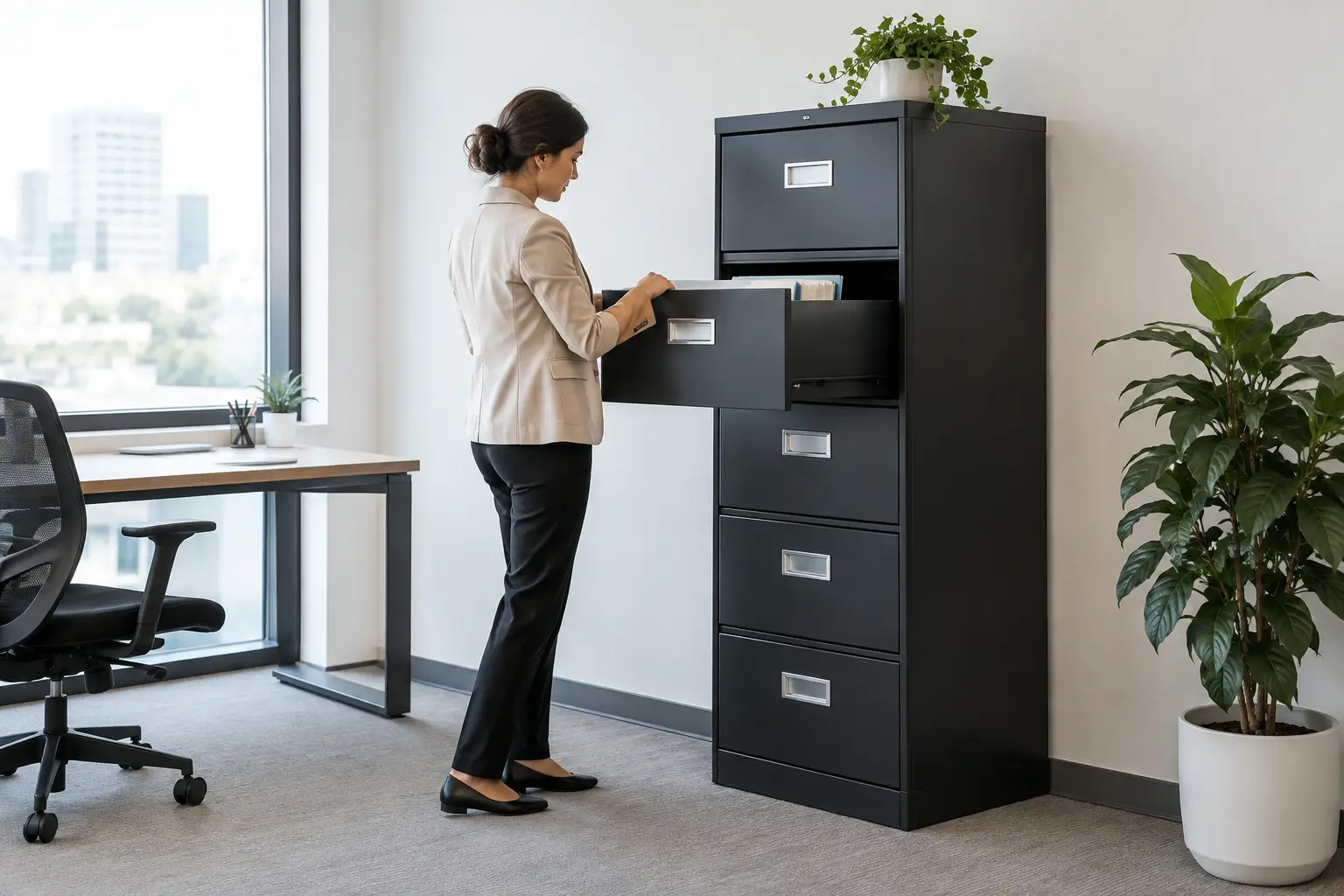
A tall filing cabinet earns its floor space when records must remain secure, accessible, and organized without spreading storage across an entire office. For facility managers and procurement teams, the right cabinet is not simply a place for files. It is part of a document-control system that affects available workspace, employee workflow, privacy, and long-term operating costs.
Metal filing cabinets are especially suited to shared offices, schools, healthcare facilities, workshops, and public-sector environments where furniture receives frequent use. The selection process should begin with the records being stored, the users accessing them, and the physical conditions of the installation area. Cabinet height matters, but capacity alone does not define a good purchase.
What a Tall Filing Cabinet Solves
A vertical cabinet uses height rather than a large floor footprint to create file capacity. This makes it practical for offices where wall space is available but open floor area is limited. A taller unit can consolidate active and archived records in one controlled location, reducing the need for multiple smaller storage pieces.
This format works well for personnel records, accounting files, project documentation, student administration, medical paperwork, technical manuals, and controlled forms. It can also support departmental storage where several teams need separate drawers but operate from the same office or service counter.
There is a trade-off. Tall cabinets concentrate substantial weight in a smaller footprint. A unit filled with paper is much heavier than it appears when empty, and opening several loaded drawers can affect stability. For that reason, commercial buyers should assess anti-tip protection, drawer interlock systems, anchoring requirements, and the load rating of both drawers and the cabinet body before ordering.
Start With the Filing System, Not the Cabinet Size
The most common purchasing mistake is choosing a cabinet based on exterior dimensions before confirming file format. A cabinet that fits the room but does not accommodate the organization’s folders creates daily friction and can lead to improvised storage.
Letter-size filing is common in U.S. offices, while legal-size files require greater drawer depth. Some operations use A4 documents, hanging folders, binders, or boxed archives. Each format affects the required internal width, depth, and rail arrangement. If a facility handles more than one format, adjustable rails or purpose-built drawer layouts may be the better choice.
Consider how records move through the organization. Frequently retrieved files should be stored between waist and chest height where staff can access them comfortably. Less active archives can occupy upper drawers. In departments where several employees retrieve documents throughout the day, drawer action and handle design deserve as much attention as the filing capacity.
Capacity Should Include Growth
Estimate current file volume, then allow room for growth rather than filling every drawer on day one. Paper records tend to expand unevenly. A human resources department may add files gradually, while a project office can experience large increases during active contracts.
A practical approach is to reserve one drawer or a defined percentage of capacity for future use. This reduces early replacement costs and avoids overpacked files that are difficult to retrieve. For multi-site buyers or distributors, standardizing cabinet dimensions and file layouts also simplifies future expansion and replacement orders.
Choose Steel Construction for Commercial Use
For demanding environments, steel construction provides the rigidity and service life that lightweight office furniture often cannot match. The cabinet body, drawer fronts, suspension components, and locking mechanism should be considered as one system. A strong shell is of limited value if the drawer runners fail under repeated loading.
Steel thickness and reinforcement influence resistance to denting, twisting, and drawer misalignment. The appropriate specification depends on use. A low-traffic administrative office may have different requirements than a school records room, industrial maintenance office, or facility serving rotating shift teams. High-use settings generally justify heavier-duty drawer slides, reinforced bodies, and durable handles designed for repeated opening.
Powder-coated steel finishes are a practical choice because they support a clean, professional appearance while providing resistance to routine wear. Color can also serve an operational purpose. Departments can use consistent colors to identify records areas, restrict document ownership, or match existing workplace furniture.
Drawer Performance Is an Operational Detail
A loaded filing drawer can carry considerable weight. Smooth, full-extension runners allow staff to see and reach files at the back of the drawer without pulling folders forward by hand. Ball-bearing slides are often preferred for frequent access because they support controlled movement under load.
Ask for the drawer load capacity and confirm whether it applies to evenly distributed weight. Filing cabinets are routinely overloaded when binders, loose paper, and archived folders accumulate. A clear load rating gives facility teams a realistic basis for use and helps prevent premature wear.
Drawer interlock systems are another useful safety feature. These mechanisms limit the number of drawers that can be opened at once, reducing the risk of forward tipping. On tall units, this is not an optional detail to overlook. It is a core safety consideration, particularly in shared workplaces where users may not follow ideal loading practices.
Security Requirements Vary by Department
A filing cabinet should match the sensitivity of the information inside it. General office records may require basic centralized locking, while human resources, finance, healthcare, and legal departments may need stricter access control. The goal is not to treat every drawer as high-security storage. It is to apply an appropriate level of protection to the records and the environment.
A central locking system can secure all drawers with one key, which is efficient for a department managed by a small number of authorized users. Individual drawer locks may suit situations where separate users or teams require controlled access. Key management should be planned at the same time as cabinet selection. Lost-key procedures, master-key access, and replacement availability all influence the day-to-day practicality of the system.
For documents that have retention, privacy, or audit requirements, a cabinet should be part of a broader records policy. Physical security supports that policy, but it does not replace defined access rights, file tracking, and secure disposal procedures.
Measure the Installation Area Carefully
Cabinet dimensions must be checked against more than the empty area along a wall. Buyers should allow for full drawer extension, walking clearance, doors, circulation routes, and nearby workstations. A cabinet placed in a narrow passage can create a bottleneck every time a drawer is opened.
Height deserves close attention. Confirm ceiling clearance, overhead cabinets, sprinkler coverage requirements, and access for installation. Elevators, stairwells, loading areas, and interior door widths can also determine which cabinet sizes are practical for a site.
Floor condition matters as well. A fully loaded tall filing cabinet places concentrated weight on a relatively small area. Level flooring supports proper drawer alignment and stable operation. If the installation location is exposed to vibration, uneven surfaces, or heavy pedestrian activity, securing the cabinet to a wall or floor may be appropriate based on site requirements and local safety practices.
Custom Details Can Improve Procurement Value
Standard cabinets are efficient when requirements are straightforward and lead time is the primary concern. However, project specifications may call for custom dimensions, drawer configurations, colors, lock types, labels, or internal fittings. Custom production is particularly valuable when a cabinet must fit an existing furniture plan or support a specific filing process.
For example, a commercial fit-out may require cabinets in a coordinated finish across offices, reception areas, and records rooms. An industrial facility may need reinforced construction and a particular drawer layout for technical documentation. A school district may require consistent lock management across multiple buildings. These details are easier to define before production than to modify after installation.
Loxmet supports both standard and custom metal storage requirements, helping buyers align cabinet specifications with the conditions of the workplace rather than forcing operations to adapt to a generic product.
Questions to Ask Before Placing an Order
Before finalizing a tall filing cabinet purchase, confirm the file format, internal drawer dimensions, and expected load per drawer. Review the cabinet’s overall dimensions, required clearance, stability features, locking arrangement, finish, and installation method. For larger orders, ask whether replacement keys, matching units, and consistent specifications will remain available for future phases.
Also consider who will maintain the cabinets after delivery. Facilities teams benefit from clear guidance on loading, cleaning, anchoring, and key control. Procurement teams benefit from a manufacturer that can provide consistent quality across a project, whether the order is for one department or a wider rollout.
The best filing cabinet is the one that keeps records protected, staff moving, and floor space working harder. Specify it around the real demands of the facility, and it becomes dependable infrastructure rather than another piece of office furniture.