


Highlights
How to Reduce Workplace Theft With Lockers

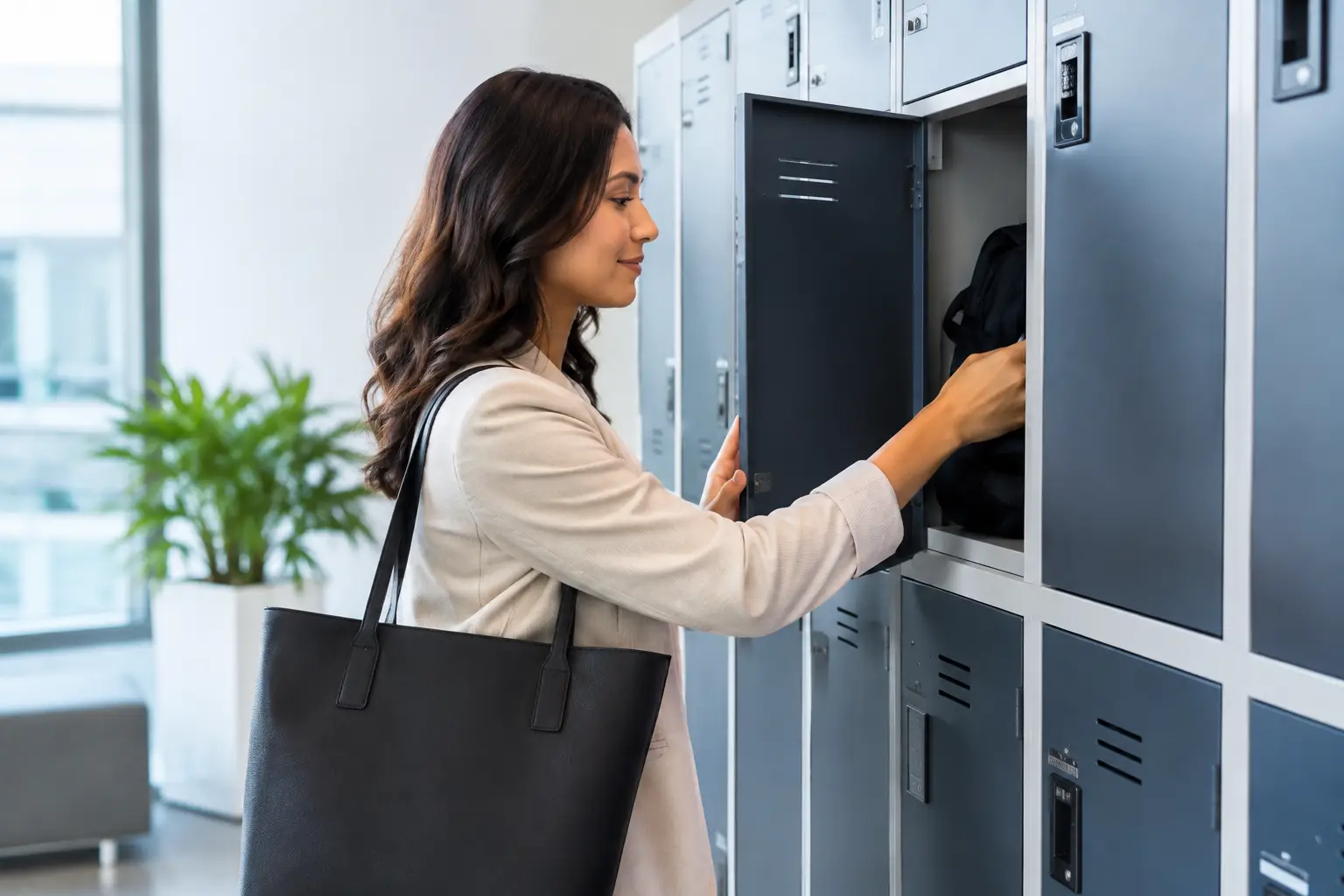
A missing phone, power tool, access card, or piece of PPE creates more than a replacement cost. It interrupts work, damages trust, and forces managers into difficult investigations. Knowing how to reduce workplace theft with lockers starts with a practical premise: people need secure, clearly assigned storage where they work.
For facility managers and procurement teams, lockers are not a stand-alone security policy. They are a physical control that reduces opportunity, establishes accountability, and keeps personal and business assets out of open work areas. The right locker system must fit the value of the items being stored, the number of users, and the demands of the environment.
Start With the Assets at Risk
A locker program should be designed around what employees, contractors, and visitors need to secure. In an office, the main concern may be laptops, handbags, documents, and mobile devices. On an industrial site, it may include tools, radios, uniforms, PPE, and personal belongings. Healthcare, education, fitness, and transport facilities often need a combination of these requirements.
This assessment affects locker size, compartment layout, lock type, and construction. A small personal compartment may be suitable for wallets and phones, but it will not protect a laptop bag, hard hat, or issued equipment. Oversized compartments, on the other hand, can waste floor space and make high-density installations unnecessarily expensive.
Speak with supervisors before specifying units. Ask what is regularly left unsecured, when losses tend to occur, whether shifts share the same space, and which items are company property. Theft risk is often highest during shift changes, cleaning periods, busy visitor hours, or when temporary workers are on site.
How to Reduce Workplace Theft With Lockers: Match Security to Risk
Not every facility needs the same lock. A simple key lock may work for low-risk, permanently assigned staff storage. Shared locations and higher-value items usually require greater control. The objective is to select a locking method that users can operate reliably while management can administer without excessive overhead.
Key locks are cost-effective and familiar, but lost keys create a replacement and security issue. Combination locks remove key management, although users may forget codes or share them. Mechanical combination locks are useful where battery replacement is impractical, while digital locks can support changing users and more flexible access rules.
For workplaces with rotating staff, contractors, or hot-desking, an electronic locker lock can be configured for assigned use or temporary use. This allows a compartment to be released after a shift and used by another authorized person. Where auditability is required, access-controlled options can provide a clearer record of use. The trade-off is a higher initial investment and the need for a process to manage credentials, batteries, or power.
For most projects, lock selection should answer four questions:
- Who is authorized to use each compartment?
- Is the locker assigned permanently or shared between users?
- What happens when a key, code, or credential is lost?
- Does the site need an access record for incident reviews?
A strong locker body cannot compensate for weak access control. Equally, a sophisticated lock is not worthwhile if staff cannot get support when access problems occur. Match the system to the facility’s operating capacity.
Choose Durable Metal Construction
Lockers intended to prevent theft must resist forced entry as well as daily wear. Thin, lightly built storage units can bend around doors, hinges, and lock areas after repeated use. This is particularly relevant in factories, warehouses, gyms, schools, and public-facing facilities where lockers receive heavy traffic.
Specify metal lockers with reinforced doors, reliable hinges, rigid door frames, and protected lock mounting areas. Door stiffness matters because a door that flexes can compromise the lock even when the locking mechanism itself is sound. Ventilation should also be considered for uniforms, workwear, and PPE, but vents should be designed so they do not create an easy point of access.
Powder-coated steel provides a practical finish for demanding environments. It supports routine cleaning and resists the scuffs, moisture, and handling common in commercial settings. In wet areas or corrosive environments, material and coating choices need closer review. The right specification depends on humidity, cleaning chemicals, and the expected service life.
A 10-year warranty can be a useful procurement indicator, but it should not replace a review of construction details. Buyers should confirm door thickness, body strength, hinge design, lock compatibility, ventilation pattern, and whether replacement parts will be available over the life of the installation.
Design the Locker Area to Reduce Opportunity
Placement is part of theft prevention. A locker bank hidden in an isolated corridor may protect belongings from casual access, but it can also create a space with little natural oversight. In many workplaces, the best location is a clearly visible staff area with controlled entry and regular foot traffic.
Good lighting, clean sightlines, and a defined entrance make a difference. Staff should be able to use lockers without leaving bags or equipment in hallways, break rooms, vehicles, or workstations. If the storage area is difficult to reach during a shift, employees may take shortcuts that undermine the investment.
Consider traffic flow as well. Crowded locker rooms can lead to doors being left open while people change or prepare for work. Provide adequate aisle width, benches where appropriate, and enough compartments for peak occupancy. For facilities with multiple shifts, plan the allocation method around overlap periods rather than average headcount.
Anchoring and grouping can also improve security. Freestanding units may be moved, tipped, or used in ways that weaken the installation. Where site conditions allow, lockers should be fixed to walls, floors, or joined in stable banks. This improves both safety and resistance to tampering.
Assign Ownership and Set Clear Rules
A locker system works best when users know exactly what is expected. Each assigned compartment should have a user record, and management should maintain a controlled process for issuing keys, resetting codes, or replacing credentials. This is not about treating employees with suspicion. It is about preventing confusion when an item goes missing or a locker is abandoned.
Written rules should explain that lockers are for personal and approved work items, whether food or hazardous materials are prohibited, and how long a temporary locker can be used. If the employer reserves the right to inspect lockers, that policy must be clearly communicated and applied in line with local employment and privacy requirements.
Avoid informal practices such as shared keys, unlabeled spare keys, or employees passing codes between shifts. These habits eliminate accountability quickly. For shared-use systems, establish a reset process at the end of each shift or booking period.
Training should be brief and practical. Show users how to lock the compartment, what to do if access fails, and where to report a damaged door or missing key. A locker left unlocked because someone does not understand the mechanism offers no theft protection.
Include Charging and Specialized Storage Where Needed
Workplace theft is not limited to cash and personal bags. Devices are among the most commonly carried high-value items, and they are often left charging on desks, counters, or break room outlets. Charging lockers give phones, tablets, scanners, and other portable devices a designated secure location while keeping charging activity organized.
Industrial and healthcare locations may need separate storage for PPE, uniforms, chemicals, or tools. These items should not be forced into general-purpose employee lockers if safety requirements call for dedicated cabinets. Chemical storage cabinets, for example, require a specification based on the substances stored and applicable safety procedures.
Separating storage by function improves both security and compliance. It also prevents a common issue: users overfilling personal lockers with work equipment because no suitable operational storage has been provided.
Inspect, Maintain, and Adjust the System
A locker program needs periodic review. Check doors, hinges, locks, numbering, anchors, and ventilation panels for damage. A bent latch, loose cam, or missing number label can become a security problem before it causes a formal complaint.
Review usage patterns at least annually, or sooner after a theft incident, workforce change, or site expansion. Empty compartments may indicate that the layout is wrong, while overloaded ones may show that the locker size or quantity is insufficient. Facility teams should also track repeated lockouts, lost keys, and repair requests, as these often identify a weak point in the chosen system.
For larger projects, work with a manufacturer that can supply standard products quickly while adapting dimensions, compartment configurations, colors, and lock preparations for the site. Loxmet supports commercial buyers with heavy-duty metal storage designed around operational requirements rather than a one-size-fits-all layout.
The most effective theft prevention measure is often simple: give every person a secure place for what they carry, make access easy to manage, and maintain the system before small failures become everyday workarounds.