


Highlights
Locker Sizes: Dimensions, Tiers and Heights Explained

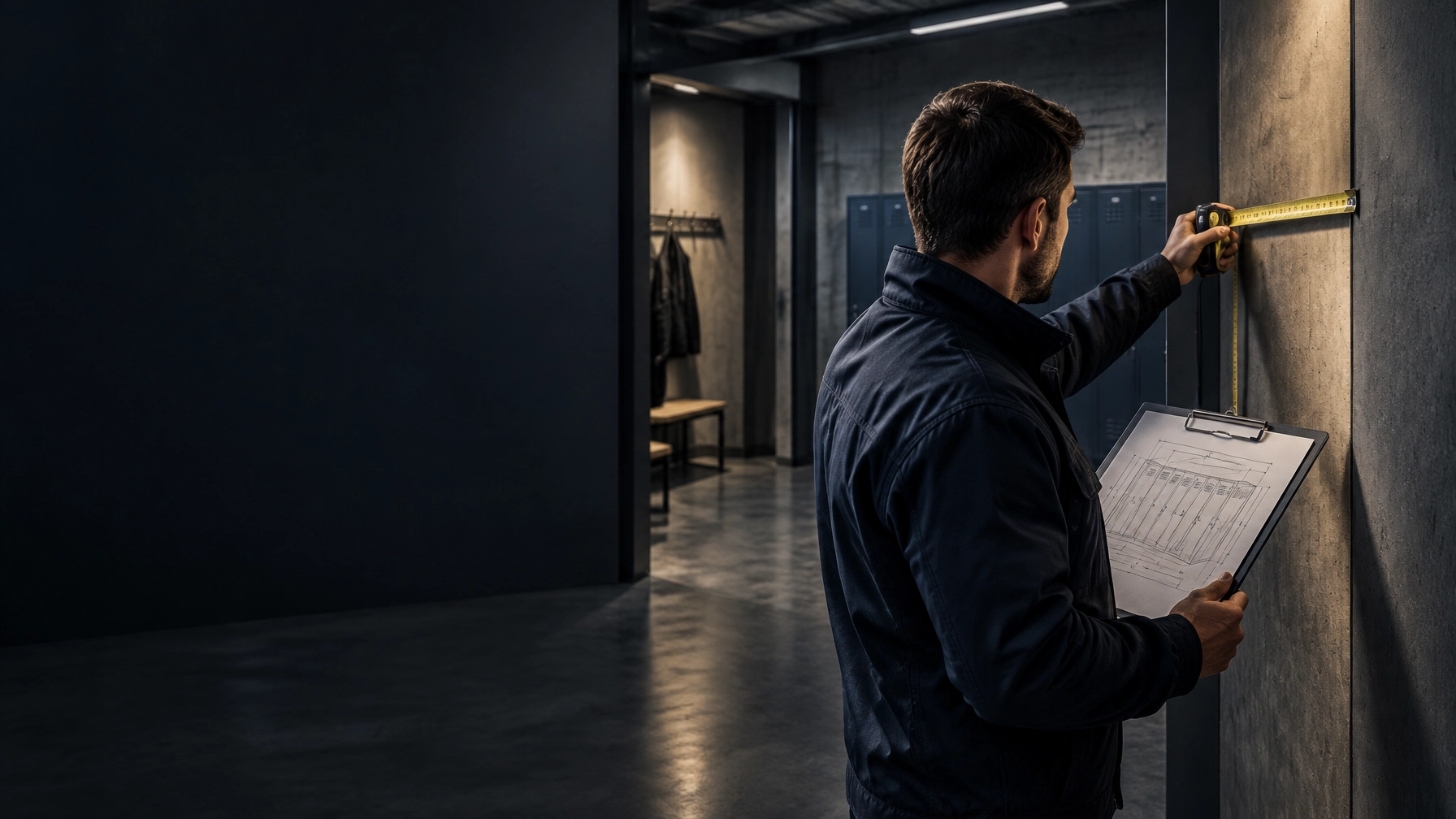
Choosing locker sizes from a catalogue image alone can lead to a poor fit. Check the listed width, depth and height against your room, then confirm the compartment layout and the space people need when doors are open. The table below compares published Loxmet product dimensions; internal usable dimensions are not listed for these models, so confirm them before ordering for a specific item.
| Locker format | Published width × depth × height | Typical user and storage use | Limitation to check |
|---|---|---|---|
| Slim single-tier, 1 door | 320 × 400 × 1,850 mm | One full-height compartment for personal storage or garments | Confirm internal usable space and the largest item to be stored |
| Slim single-tier, 2 doors | 610 × 400 × 1,850 mm | Two side-by-side full-height compartments in one model | More overall width than the single-door model; check door operation |
| Standard single-tier, 1 door | 410 × 400 × 1,850 mm | One full-height compartment where a wider format is preferred | Confirm the listed dimensions’ reference points and internal clearance |
| Standard double-tier, 4 doors with bench | 790 × 400+400 × 1,600+400 mm | Double-tier locker arrangement with an integrated bench | The listing uses combined measurements; request the drawing for the installed footprint |
| Standard double-tier, 2 doors | 410 × 400 mm | Two stacked compartments in one narrow column | Height is not published in the attribute list; request it for the model |
Locker Sizes: Start With the Drawing, Not the Photo
A product photo shows appearance, not fit. Before comparing models, mark four things on your site plan: locker width, depth, height and operating space. The last one is easy to miss. Users need room to open doors, stand at the compartments and move around one another.
The product pages list width, depth and height, but do not label every figure as an external or internal measurement. Treat the listed dimensions as a planning reference, not a substitute for a dimensioned drawing. Ask the supplier to confirm exactly what each number includes for the model and configuration you are considering.

Read the Dimension Table Carefully
Loxmet product listings present dimensions as width, depth and height, in millimetres. Other suppliers may use a different order or label dimensions differently. Read the headings and units rather than assuming the sequence.
External dimensions help you check the space a unit occupies. Internal usable dimensions determine whether your belongings fit. The two are not interchangeable: doors, sides, hinges, shelves and partitions take up space. Loxmet’s cited product pages do not publish internal compartment dimensions, so do not infer them from the outside measurements.
Check what the stated locker height includes. A base or feet can affect the installed height, and a sloped top can add height to the completed unit. Ask for the overall height in the proposed configuration, including any selected base, top or accessories.
For hanging garments, internal usable height is the key check. A locker’s external locker height does not tell you whether a coat hangs clear of the floor or compartment base. Request confirmation of the clear hanging space and the internal arrangement for the exact model.
Height and Tiers
A single-tier locker provides one full-height compartment in each vertical column. It is the format to consider when users need to hang longer garments. A double-tier model divides the vertical storage into two compartments. Multi-tier banks add more compartments, generally trading clearance in each one for more separate storage spaces.
The exact usable height is not simply the total external height divided by the number of tiers. The top, base, doors and internal dividers affect the finished compartment. Loxmet’s product pages list overall dimensions but do not publish internal tier clearances. Ask for those figures if you need to store a specific garment, bag or item of equipment. The height question on its own, including how single, double and multi-tier formats divide a cabinet, is covered in our guide to how tall lockers are. This article concentrates on reading the full dimension table and choosing a width and depth that suit the room.
Door count also needs context. In Loxmet’s standard range, the single-tier, 2-door model is listed at 790 mm wide, while the double-tier, 2-door model is 410 mm wide. The models have different door arrangements and overall widths. Door count alone does not tell you the layout or compartment width. Check the product title, drawing and compartment structure. These published locker measurements are the practical way to compare families: read the width of the exact carcass, then confirm what the door count does to the compartment split.
For planning across several users, see Loxmet’s guides to compartment locker selection and multi-door locker planning. They cover allocation and layout decisions beyond the dimensional checks in this guide.
Width and Depth
Width affects how the locker bank fits along a wall and how much frontage each compartment has. Compare the actual published locker width for the model, not just its family name. A multi-door carcass may have side-by-side doors, vertically stacked doors or another arrangement, and these layouts do not guarantee equal compartment widths.
If width-constrained space is your main issue, use the slim and narrow locker guide rather than estimating capacity from a product name. For a broader overview of compact formats, see the small lockers buyer’s guide.
Depth affects how far the unit projects into the room and whether the intended bag, box or other item fits inside. The published slim single-door and two-door examples share a listed depth of 400 mm, while their widths differ. Do not assume every model in a range has the same depth; check the individual product page.
Also check the door and the person using it. The closed locker footprint does not show the space needed for access. Mark the door swing and standing area on your plan, along with entrances, routes and nearby furniture. If a bench is part of the plan, use Loxmet’s locker bench sizing guide for that separate measurement.

Standard Size Versus the Exact Model
“Standard locker size” is a broad trade phrase, not a reliable specification for every supplier or product family. The only dependable figure is the published dimension for the exact model and configuration you plan to order.
Loxmet lists more than 100 standard products. As a practical comparison, the published single-tier slim model is 320 × 400 × 1,850 mm, the slim two-door model is 610 × 400 × 1,850 mm, and the standard single-tier model is 410 × 400 × 1,850 mm. These three examples share the same listed depth and height but differ in width. Their pages do not state internal usable dimensions, so request those separately if item fit depends on them.
Browse the standard-size locker range and space-saver slim range. Compare model-specific specifications before you choose. For workplace clothing requirements, Loxmet’s guide to lockers for workers covers usage and changing-area considerations.
Site Survey Checklist
Before requesting a quotation, record:
- Wall run: usable length, corners and any gaps needed for installation.
- Floor to ceiling: measure the available height at more than one point if the floor or ceiling is uneven.
- Obstructions: pipes, columns, sockets, radiators, skirting and other fixed items.
- Door swings: the locker door’s operating space and the room’s own entrances.
- Access routes: the route through doors and corridors for bringing the unit to its final position.
- Largest stored item: measure the item, including any case or accessories, and confirm the required internal clearance.
- Configuration: number of tiers, compartment arrangement, top, base or bench options.
For UK workplaces, requirements depend on the work and the facilities needed. The Workplace (Health, Safety and Welfare) Regulations 1992, regulation 24 addresses suitable and sufficient changing facilities in specified circumstances; it does not set one universal locker size. Review the HSE guidance on welfare facilities and its changing rooms and lockers guidance for relevant workplace considerations.
Buyer FAQs
How are locker dimensions usually written?
Check the labels and units on the supplier’s specification. Loxmet’s cited listings identify width, depth and height in millimetres, but not every page identifies whether the figures are external or internal. Confirm the reference points before ordering.
What is the difference between external and internal locker measurements?
External measurements describe the unit’s overall footprint and height. Internal measurements describe the usable compartment space. The latter is usually smaller because the cabinet’s construction and fittings occupy space. Ask for internal dimensions when the stored item needs a precise fit.
How do I choose the right locker height?
Start with the item and how it will be stored. For hanging garments, confirm clear internal hanging height, not only the overall locker height. For multi-tier models, request the usable height of each compartment. Our guide to locker heights covers the tier options in more detail.
Does a two-door locker have two compartments side by side?
Not always. Door count must be read with the tier description and product drawing. Loxmet’s single-tier and double-tier two-door examples have different listed widths and arrangements. Verify the specific model rather than relying on door count alone.
What should I measure besides the locker itself?
Measure the installation area, route into the room, obstructions, and the space needed for open doors and users. Also measure the largest item that will be stored and confirm that it fits the usable compartment.
Is there one standard locker size?
No single size should be assumed across products and suppliers. “Standard” is a general description. Compare the exact model’s published width, depth and height, then confirm internal clearances and installed dimensions with the supplier.
Can Loxmet make lockers to different dimensions?
Yes. Loxmet offers custom metal fabrication for project requirements. Send your measurements, room plan, intended storage items and preferred compartment arrangement through the customization service. Standard catalogue products in catalogue colours are generally delivered within 10 working days; custom colours and made-to-order products typically require approximately 10 additional working days.
Confirm the Fit Before You Order
Measure the room, check the compartment layout and confirm internal usable dimensions for the items you need to store. Loxmet accepts single-piece orders and provides a 10-year warranty against production faults. If a catalogue model does not fit your room or use, contact our team with your drawing and requirements. We’ll help you review a practical standard or custom option.