


Highlights
Lockers for Workers: Choosing Employee Storage for Factories, Warehouses and Worksites

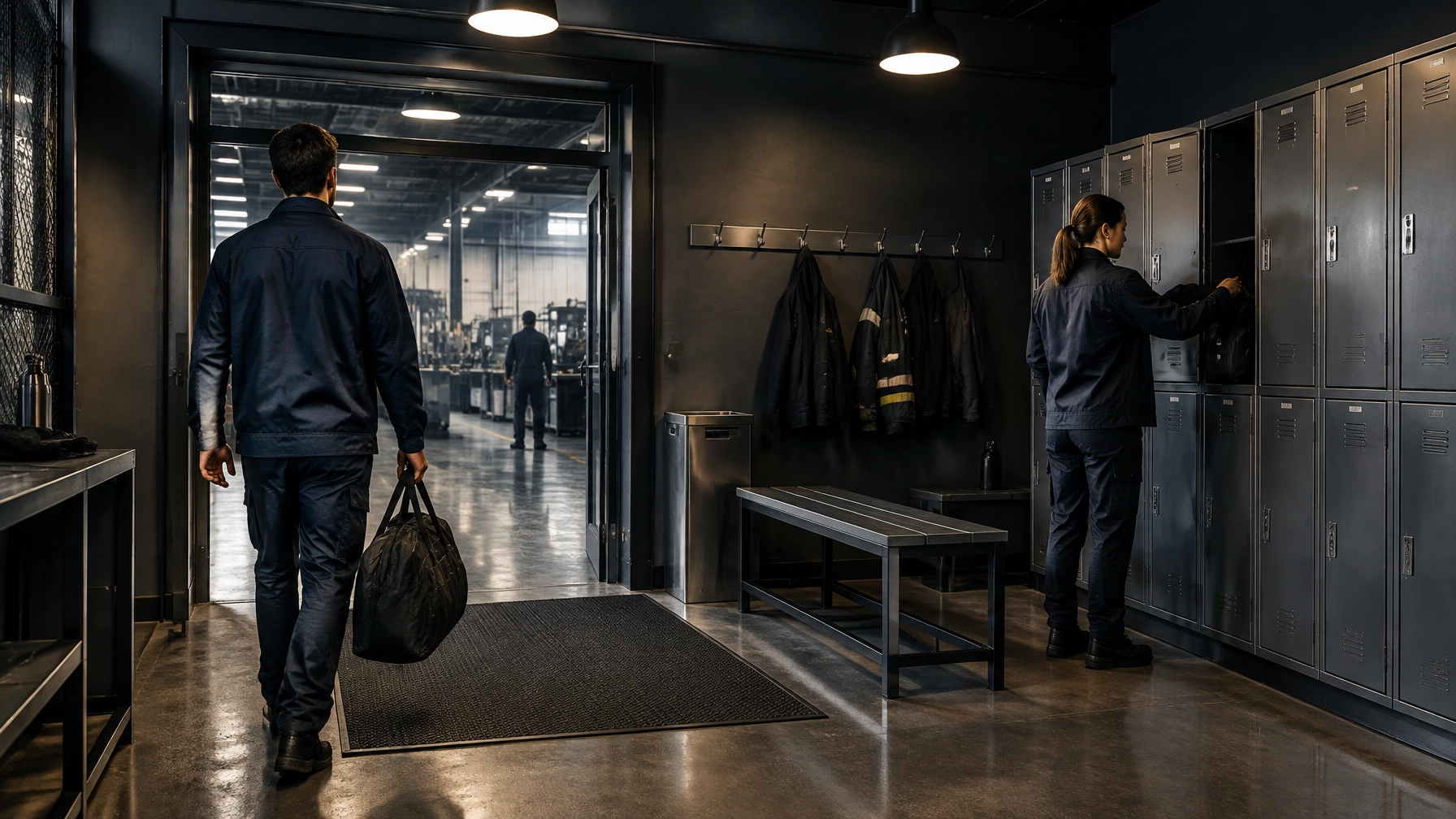
Providing secure storage helps workers keep personal belongings and work clothing organized during the shift. For facility managers and procurement teams, the right locker plan also supports orderly changing areas, practical shift handovers and a clear separation between personal items and workwear where required.
| Environment | Recommended configuration | Tier | Locking option |
|---|---|---|---|
| Factory with hanging workwear | Full-height locker; consider separate clean and used-clothing storage | Single-tier | Key, padlock holder or combination |
| Warehouse with limited changing-room space | Compact compartments for personal items | Double-tier or multi-door | Padlock holder or combination |
| Site with clean and used clothing to separate | Clean-and-dirty compartment layout | Single- or double-tier, based on storage needs | Key or padlock holder |
| Humid or damp changing area | Ventilated locker configuration | Select by garment and user needs | Lock matched to site policy |
| Construction camp or rotating workforce | Assigned lockers or a managed shared-use arrangement | Based on headcount and shift overlap | Choose for user turnover and access management |
Lockers for Workers: Start With the Shift
Choose storage around what each person needs to keep, how many people use the area at one time, and whether lockers are assigned or shared. A factory with full-length uniforms has different needs from a warehouse team storing bags and everyday clothing. Workplace lockers should make access simple at shift change without narrowing circulation routes or creating queues.
Lockers also contribute to worker welfare. UK guidance and regulations address suitable accommodation for personal and work clothing, changing facilities where required, and practical considerations such as security and separation where needed. They do not mean that every workplace must use a particular locker design. Review the relevant requirements for your location and work activities, including the HSE welfare guidance, Workplace (Health, Safety and Welfare) Regulations 1992, and HSE advice on changing rooms and lockers for construction sites.

Match the locker to the work
For hanging uniforms or coats, start with a full-height single-tier option. Loxmet’s single-tier locker is 410 mm wide, 400 mm deep and 1,850 mm high. Its product details list a clothes hanger, internal shelves and ventilation holes.
Where workers need separate storage for personal belongings and used work clothing, consider a clean-and-dirty configuration. Loxmet’s clean and dirty lockers use a divider to keep clothing separate within the compartment. This can help make the storage routine clearer; assess the clothing and contamination risks at your site to determine whether separation is needed.
For humid environments, check ventilation and how wet clothing will be handled. Ventilation holes are listed on Loxmet’s standard locker product pages. Select the locker and site procedure together: storage alone does not dry garments or replace appropriate workplace controls.
Plan Capacity Around Headcount
Begin with the number of workers who need a locker, then check how many are likely to use the changing area at the same time. In a shift-based workplace, the total workforce and peak concurrent users may differ. Decide whether lockers stay assigned to individuals, are shared between shifts, or are allocated for short-term use.
Tier count changes the number of compartments per locker body. For example, 30 double-tier units with two doors each provide 60 separate compartments. That can help use floor space efficiently when each compartment is suitable for the user’s belongings. Loxmet’s double-tier two-door locker is 410 mm wide, 400 mm deep and 1,980 mm high.
Do not choose by compartment count alone. Consider garment length, bags, footwear, PPE, and whether employees need separate clean and used-clothing storage. If your room is narrow, compare the space-saver slim locker range. Published options include a single-tier model 320 mm wide, 400 mm deep and 1,850 mm high. Check the exact product details before finalizing a layout.
Set a practical allowance for future hiring, temporary staff and seasonal changes without overfilling the room. Draw the changing area with door swings, benches, walkways and entrances included. Place lockers near the entrance to the changing zone or close to the work area where access is convenient and does not obstruct movement.

Choose Locks for the User Routine
For assigned employee lockers, key locks offer a familiar access method; padlock holders let users provide their own compatible padlock. Combination and electronic options can reduce key handling but require procedures for forgotten codes, resets and authorized access.
For lockers shared between shifts, decide who manages access when one shift ends and another begins. For stable teams, a simple assigned-locker arrangement may be easier to administer. Compare lock options in Loxmet’s guide to locker lock types and review compatible products in the accessories range.
A lock is one part of a secure storage plan. Set clear rules for assignment, key or code recovery, and unused lockers. Keep emergency access under controlled site procedures.
Configure for Your Facility
Factories, warehouses, production plants and construction worksites need practical storage that fits their workflow. Industrial lockers should suit daily use, space constraints and the items workers bring to the changing area. Metal lockers offer a durable storage option, while a suitable door layout and lock help keep belongings protected.
Loxmet manufactures more than 100 standard products in Istanbul, Turkey, and provides custom fabrication for project-specific layouts. Product credentials include CE and ISO 9001:2015. The company offers a 10-year warranty for production faults.
Standard products in catalogue colors are generally delivered within 10 working days. Custom colors and made-to-order products typically require approximately 10 additional working days. Single-piece orders are welcome; special pricing is available for orders exceeding two container or truck loads.
If standard dimensions do not fit your changing room, share a drawing, room measurements, user numbers and storage requirements through the customization service. Buyers comparing broader options can also read Loxmet’s guides to small lockers, gym lockers, phone lockers and locker cost factors.
Buyer Questions
Should every worker have an individual locker?
That depends on your workplace routine and applicable requirements. Individual assignment supports consistent access; shared lockers can suit some shift patterns when access and handover procedures are clear.
How many lockers do I need for a two-shift team?
Start with the number of workers who use the changing area at the same time, then decide whether compartments are assigned or shared between shifts. Confirm the plan against peak use and the items workers need to store.
Are double-tier lockers suitable for workwear?
They can suit smaller personal items and folded clothing. Choose full-height storage when workers need to hang longer garments, and confirm compartment space against the workwear used on site.
When should I choose clean-and-dirty lockers?
Consider them where workers need separate places for clean clothing and used workwear. Assess the specific work and clothing risks, and check applicable local guidance before specifying the layout.
Which lock is best for shared staff lockers?
Padlock holders, combination locks and electronic locks can serve different routines. Compare them based on who manages access, how often users change, and how codes or keys will be handled.
Can Loxmet make lockers for a non-standard room layout?
Yes. Loxmet offers custom fabrication for bespoke dimensions and layouts. Send the room plan, required capacity, preferred lock and clothing-storage needs for review.
Request a Practical Locker Plan
Choose staff lockers around headcount, shift overlap, garment storage and access rules. Whether you need workwear lockers, dirty lockers, uniform lockers or PPE lockers, define what each worker stores and how the changing area operates before ordering. For a product recommendation or custom layout, contact Loxmet with your measurements and requirements.