


Highlights
Gym Lockers: A Buyer’s Guide for Fitness Facilities

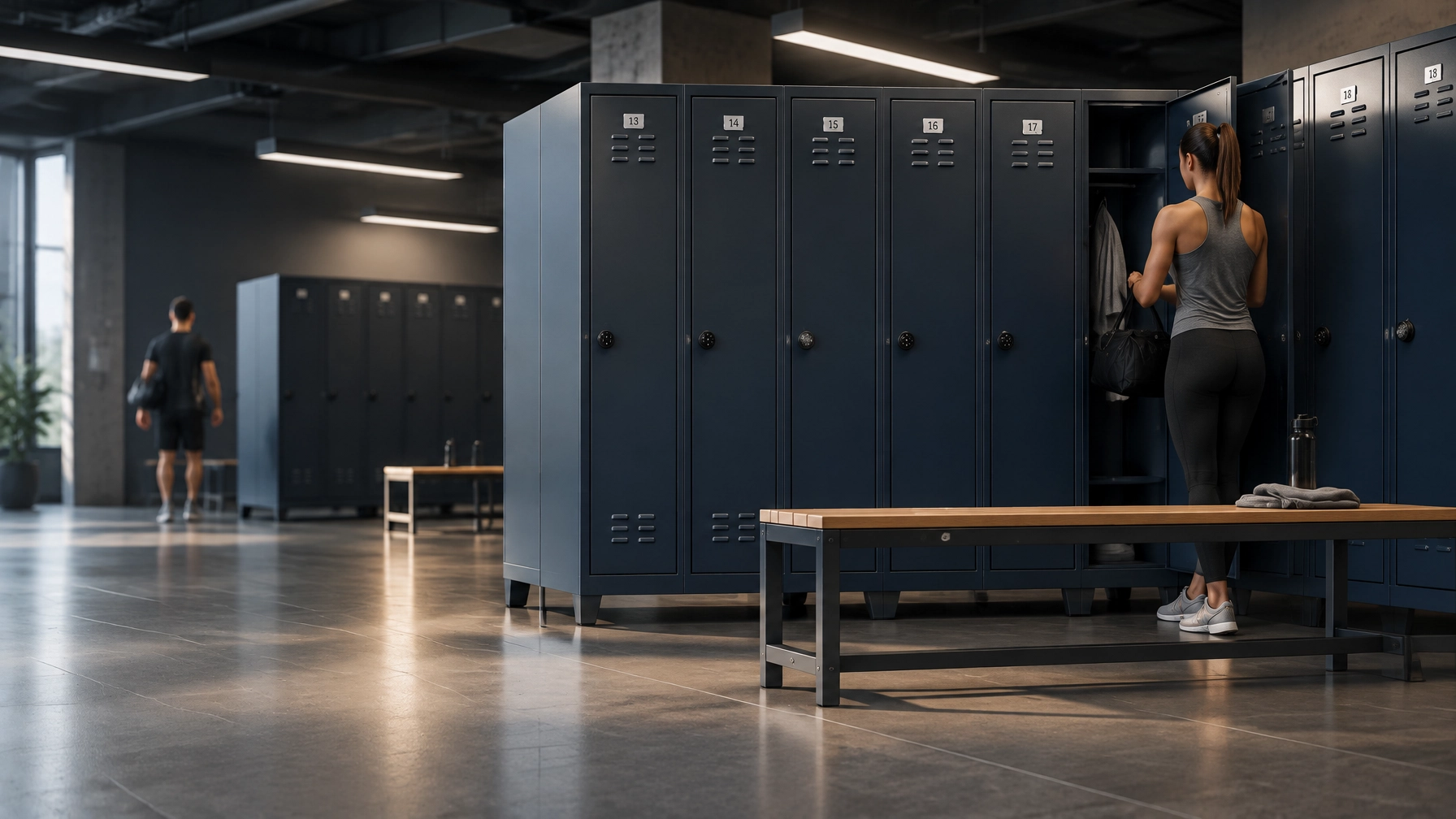
Gym lockers in a fitness facility must handle frequent member turnover, damp clothing and constant door use. Choose a layout, finish and lock system that fit your peak demand, not just the average day.
| Tier / configuration | Hanging space | Capacity | Best area |
|---|---|---|---|
| Single tier, one door | Full-height compartment | One user per door | Members storing coats, clothes and larger bags |
| Double tier, two doors | Divided; less height per door | Two users per unit | Facilities balancing personal storage with floor space |
| Double tier, four or six doors | Multiple divided compartments | More users per unit | Busy changing areas where users store smaller bags |
| Locker with bench | Depends on locker tier | Storage plus seating | Changing areas where users need a place to sit |
Capacity describes the number of doors, not a recommended locker-to-member ratio. Check each model’s product details and plan for simultaneous peak use.
Gym Lockers for High-Traffic Fitness Facilities
A busy locker room gym has a different operating pattern from an office. Members arrive in groups, change quickly, use lockers for different lengths of time and return keys or cards throughout the day. Showers add moisture. Doors and hinges face repeated opening and closing.
Specify metal gym lockers with practical details for daily use:
- Ventilation louvers or holes to support airflow around stored clothing and towels.
- A durable powder-coat finish that is easy to wipe down as part of routine cleaning.
- Reinforced doors and robust fittings to handle frequent use. Ask about door construction, hinges and replacement parts; don’t assume a locker has been tested for impact or slamming.
- Number plates or label holders to make member assignment and staff management easier.
- Sloped tops, if suitable for your installation, to discourage clutter on top of lockers and simplify cleaning.
Loxmet’s standard single-tier locker listing describes a reinforced door, label holder, ventilation holes and electrostatic powder coating. The same model is listed at 410 mm wide × 400 mm deep × 1,850 mm high. Explore the standard-size locker range and check the specifications of the configuration you plan to order.

Choose the Right Size and Tier
The right gym locker size depends on what members bring and how much hanging space they need. Use single-tier lockers when members need a full-height compartment for clothes, coats or larger bags. Choose multi-tier lockers to serve more users within a limited floor area, while keeping in mind that each compartment offers less vertical space.
Published gym lockers dimensions vary by model. Loxmet’s catalogue lists these overall measurements:
- Single tier, one door: 410 × 400 × 1,850 mm.
- Double tier, two doors: 410 × 400 × 1,980 mm.
- Double tier, four doors: 790 × 400 × 1,980 mm.
- Double tier, six doors: 1,170 × 400 × 1,980 mm.
These are external product dimensions. Compartment sizes and usable hanging space differ by configuration. Review the relevant single-tier product or double-tier, four-door model before you finalize your plan.
Calculate for Peak Use
Do not base locker quantity only on total membership. Estimate how many people will change at the same time during busy arrival periods, class changeovers and shift overlaps. Include staff lockers and any separate storage needs for visitors or members using different areas.
Walk through the busiest hour. Count expected users who need a locker at one time, then consider whether some members share lockers at different times or need dedicated assignments. Add capacity for unavailable lockers and changing demand. If you run group classes, assess the arrival and departure pattern around class start and finish times separately.
There is no single locker-to-membership ratio that fits every facility. The layout, operating hours, class schedule and member habits all affect the number you need.
Match Locks to Member Turnover
The best gym locker locks are the ones members can use easily and staff can manage reliably. Choose a system based on whether lockers are assigned, shared or used for short visits.
- Padlock holders: Members bring their own compatible padlock. Set a clear policy for locks left behind.
- Key locks: Familiar and straightforward, but require a process for distributing, collecting and replacing keys.
- Combination locks: Reduce key handling. Decide who can help when a member forgets a code.
- RFID or card locks: A practical option when your gym already issues compatible membership cards. Confirm credential compatibility and the access procedure for lost cards.
- Coin-return or coin-retain locks: Common options for short-term shared use. Confirm whether the specific model, coin or token system and servicing requirements suit your operation.
Loxmet lists key, padlock-holder, mechanical combination, electronic combination and RFID options in its locker accessories range. Coin locks are not listed among the options referenced here, so contact the team to confirm availability before specifying them. For a fuller comparison of access types, read Locker Lock Types.
Plan the Changing Room Layout
A good locker room gym layout keeps member movement clear. Plan the route from changing benches to lockers and then to showers, while keeping wet areas separate from dry storage where the room design allows. Leave practical access to locker doors and avoid placing benches where open doors block circulation.
Pair gym changing room lockers with seating where members change footwear or organize bags. Loxmet offers locker room benches and locker configurations with benches. If your facility issues towels or uniforms, plan how clean items and used items are handled. Loxmet’s clean and dirty lockers provide separated storage for clean and used clothing.
HSE workplace guidance says changing facilities should be accessible, include seating and provide appropriate clothing storage. It also advises keeping clean clothing separate from work-soiled clothing where relevant. Review the HSE changing rooms and lockers guidance and its welfare facilities guidance. For projects subject to UK workplace rules, check the relevant Workplace (Health, Safety and Welfare) Regulations.

Check Supply, Customization and Warranty
Loxmet manufactures in Istanbul, Turkey, with 100+ standard products and custom metal fabrication for project-specific layouts. The stated company credentials include CE and ISO 9001:2015.
Standard catalogue products: Generally delivered within 10 working days in catalogue colors.
Custom colors and made-to-order products: Typically require approximately 10 additional working days.
Minimum order: Single-piece orders are accepted.
Warranty: 10 years for production faults.
Bulk orders: Special pricing is available for orders exceeding two container or truck loads.
Confirm the dimensions, finish, lock selection and delivery timing for your order. The warranty covers production faults; ask for the applicable terms and confirm what they cover for your selected configuration. For a room-specific layout, use the customization service or contact the Loxmet team.
Buyer Questions
Should a gym use single-tier or multi-tier lockers?
Choose single-tier lockers when members need full-height hanging space. Multi-tier models increase the number of compartments within a cabinet footprint but provide less height for each user.
How many lockers does a gym need?
Plan for the number of people who need lockers at the same time during your busiest periods. Include class changeovers, staff use and any dedicated storage requirements.
What locker dimensions does Loxmet publish?
Examples include a single-tier, one-door locker at 410 × 400 × 1,850 mm and a double-tier, four-door locker at 790 × 400 × 1,980 mm. Check the product page for the specific configuration; these are overall dimensions.
Do locker ventilation holes prevent dampness?
Ventilation holes support airflow but do not replace adequate room ventilation, cleaning or drying procedures. HSE guidance advises that workplace ventilation should remove and dilute warm, humid air. Ask your building or ventilation specialist to assess the changing and shower areas.
Can members use their own padlocks?
Padlock holders are listed in Loxmet’s accessories range. Confirm compatibility with the selected locker and set a policy for abandoned locks.
Can I order one locker or request custom dimensions?
Yes. Single-piece orders are accepted, and custom fabrication is available for project requirements. Custom colors and made-to-order products typically need approximately 10 additional working days beyond the standard lead time.
What warranty does Loxmet provide?
Loxmet provides a 10-year warranty for production faults. Confirm the applicable terms for your order with the sales team.
Specify Gym Storage with Confidence
Choose locker size, tier, lock and bench arrangement around your peak member use and changing-room layout. Compare standard configurations or share your room dimensions and requirements with Loxmet. Contact the team today to request a practical specification for your fitness facility.