


Highlights
PPE Lockers for Safer, Cleaner Worksites

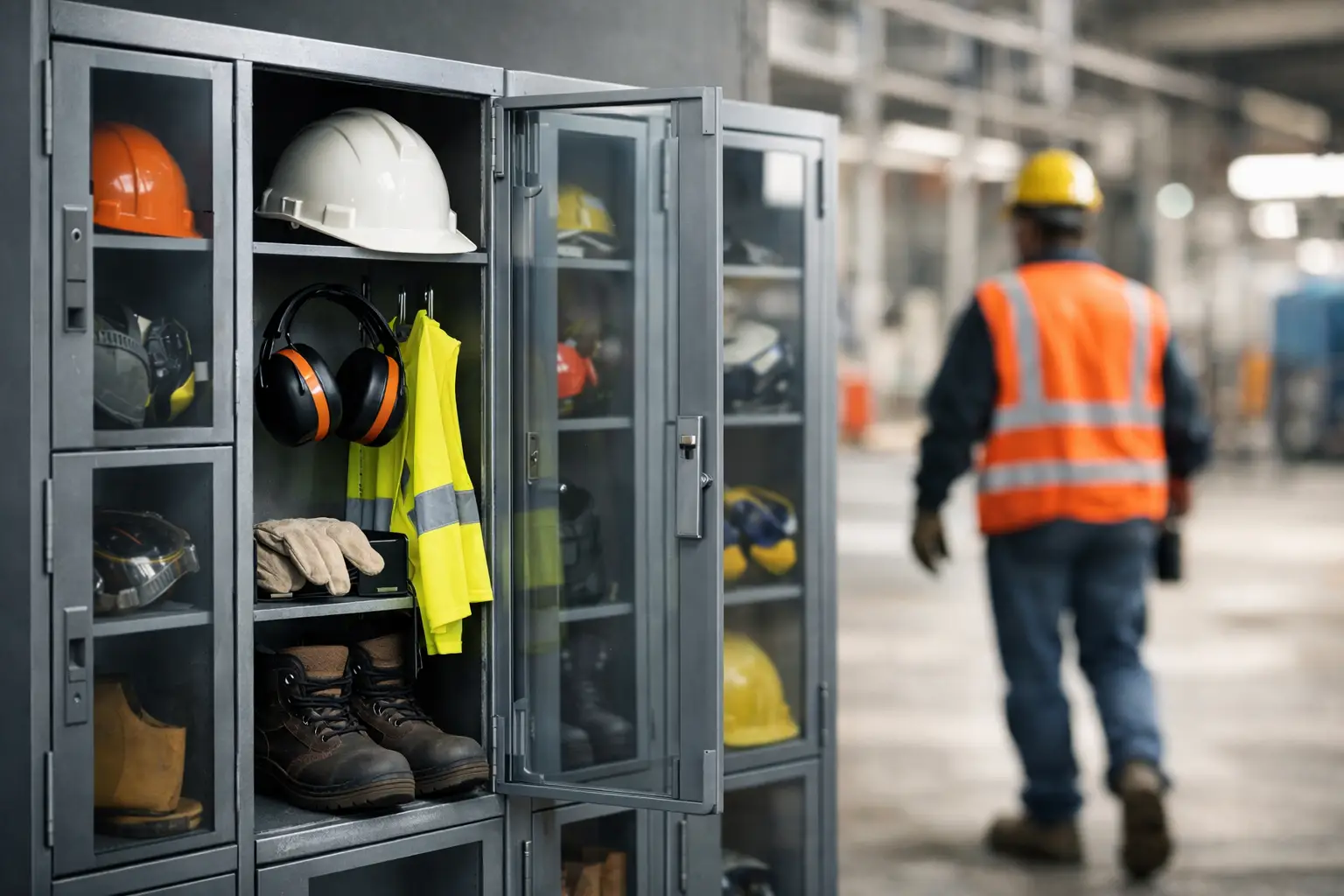
A shared shelf for gloves, helmets, masks, and workwear usually works fine – until it does not. Missing items, mixed clean and used gear, and cluttered changing areas create delays and raise risk. PPE lockers solve that problem by giving each user, shift, or task a defined storage point that keeps protective equipment organized, protected, and ready for use.
For procurement teams and facility managers, that sounds simple because it is. The value of a PPE locker is not just storage capacity. It is control. When personal protective equipment has a designated place, workplaces run with less confusion, better hygiene, and fewer preventable losses. That matters in factories, warehouses, hospitals, laboratories, food processing plants, schools, sports facilities, and any site where staff rely on assigned protective gear.
Why PPE lockers matter in daily operations
The cost of disorganized PPE is rarely limited to replacing a few missing items. It shows up in slower shift changes, poor housekeeping scores, unnecessary stock consumption, and weak accountability. In regulated environments, it can also create compliance issues when clean and contaminated items are stored together or when essential equipment is not available at the point of need.
PPE lockers help standardize storage across teams and departments. Each compartment can be assigned to a person, a role, or a work zone. That reduces mix-ups and supports faster access at the start and end of each shift. In environments with strict hygiene requirements, separated compartments can also help keep clean clothing away from used garments or boots.
There is also a space management benefit. Loose PPE storage tends to spread across benches, hooks, shelves, and temporary cabinets over time. A properly planned locker system consolidates those items into a more controlled footprint. That improves traffic flow in changing rooms, welfare areas, and production support spaces.
What makes a good PPE locker
Not every locker is suitable for protective equipment. A PPE locker needs to match the gear being stored, the working environment, and the cleaning standard required by the site.
Material strength comes first. Metal construction is often preferred in commercial and industrial settings because it stands up to frequent use, impact, and demanding cleaning routines. For high-traffic staff areas, weak doors, thin body panels, and low-grade hardware create problems quickly. Lockers need to keep their shape, hold alignment, and resist daily wear over the long term.
Internal layout matters just as much as the shell. A compartment designed for small personal belongings will not perform well if users need to store coveralls, hard hats, face shields, boots, and gloves in one place. Depending on the application, buyers may need full-height compartments, divided sections, hanging rails, shelves, or separate lower spaces for footwear.
Ventilation is another practical consideration. Some PPE needs airflow after use, especially clothing and footwear exposed to heat, moisture, or dust. In other applications, more enclosed storage may be the better option to protect clean gear from airborne contamination. The right choice depends on whether the locker is supporting drying, segregation, or secure storage.
Locking options should match the level of control needed on site. Key locks may suit smaller teams. Padlock hasps can work well where users bring their own locks. Centralized access systems may be more appropriate in healthcare, logistics, or large industrial operations. The best approach depends on user turnover, security requirements, and how much control management wants over access.
Choosing PPE lockers by environment
A warehouse changing area does not have the same requirements as a clean production facility. That is why a one-size-fits-all specification often leads to poor performance.
In industrial plants, durability and capacity usually lead the decision. Workers may need to store helmets, high-visibility clothing, gloves, glasses, hearing protection, and steel-toe footwear in one unit. Larger compartments and reinforced construction are often necessary. If the area handles dirt, oil, or dust, easy-to-clean surfaces and ventilated doors can improve day-to-day usability.
In healthcare and laboratory settings, separation is often the key issue. Clean and used garments may need to be stored apart. Staff may also require individual compartments with layouts that support quick changeovers while maintaining hygiene standards. Smooth metal surfaces and designs that simplify cleaning are especially valuable in these spaces.
In food production, contamination control usually drives the decision. Buyers often look for locker configurations that support clear zoning between personal items and protective clothing. Depending on the facility design, that may mean split compartments or multiple locker banks positioned across hygiene transitions.
Construction and infrastructure sites bring a different challenge. PPE storage may need to be tough, simple, and suitable for changing user groups. Security can matter more than fine internal organization in these cases, especially where expensive protective equipment or specialist gear is issued per worker.
Standard or custom PPE lockers
Standard products are often the right starting point. They are faster to specify, easier to price, and usually offer the best lead times. For many projects, a well-designed standard PPE locker will cover the basic need without adding unnecessary complexity.
Custom production becomes useful when the site has a clear operational constraint. That might be a restricted room size, a non-standard item mix, a need for sloping tops, color coding by department, or a requirement for specific locking systems. Customization also makes sense when the locker is part of a wider storage project and needs to match other metal furniture across the facility.
The trade-off is straightforward. Standard models are generally quicker and more economical. Custom lockers give a closer fit to the application but require more planning. For project buyers, the best outcome usually comes from defining the storage need first and only customizing the features that improve function.
Common specification mistakes
The most common mistake is choosing by external dimensions alone. A locker may fit the room but still fail if users cannot store their assigned PPE properly. Internal layout should be reviewed against the actual equipment list, not assumptions.
Another frequent issue is underestimating use intensity. A locker room serving one daytime shift has a different wear profile than a site running around the clock. Heavy-duty hinges, reliable locks, and strong coating performance make a bigger difference in high-turnover environments.
Ventilation can also be misunderstood. More airflow is not always better. If the goal is to protect clean PPE from dust or process contamination, too much openness may work against the requirement. On the other hand, damp clothing stored in fully enclosed compartments can create odor and maintenance issues.
Installation planning is another area where projects slip. Buyers should consider access routes, assembly requirements, floor conditions, cleaning clearance, and whether units should be nested, fixed, or placed on plinths or legs. These details affect both installation time and long-term maintenance.
How PPE lockers support compliance and accountability
Lockers are not a compliance system by themselves, but they support one. Clear storage assignment helps reinforce PPE policy because equipment has a designated home. Supervisors can spot non-compliance faster when locker usage is structured instead of scattered across open storage points.
Assigned compartments also improve traceability. If gear is issued per employee or per role, storage becomes easier to monitor. That reduces the chance of equipment being misplaced, used by the wrong person, or left in unsuitable areas.
For many organizations, this is also a housekeeping and audit issue. A clean, ordered locker area sends a clear signal about site discipline. It helps visitors, auditors, and employees see that protective equipment is treated as an operational priority, not an afterthought.
Buying PPE lockers with the full project in mind
The best purchasing decisions usually come from looking beyond the locker itself. Room layout, user volume, shift patterns, cleaning methods, and future expansion all affect what the right product looks like. A lower-cost unit that needs early replacement or causes daily workflow problems is rarely the economical choice.
This is where manufacturing flexibility matters. Buyers often need more than one storage type in the same project – PPE lockers, benches, office cabinets, charging lockers, or shelving. Working with a supplier that can support both standard products and custom metal fabrication can simplify procurement and keep specification quality consistent across the site. For businesses managing multiple facilities or distributor networks, that consistency has real value.
Loxmet approaches PPE storage the same way it approaches every heavy-duty storage category: with a focus on durable construction, practical configuration, and reliable supply for commercial buyers.
PPE lockers do a basic job, but the right ones do it with precision. They protect equipment, support cleaner routines, and give workplaces a more controlled way to manage daily risk. If the locker matches the environment and the gear, it stops being just another cabinet and starts working like part of the operation.