


Highlights
Choosing a 2 Door Locker for Busy Facilities

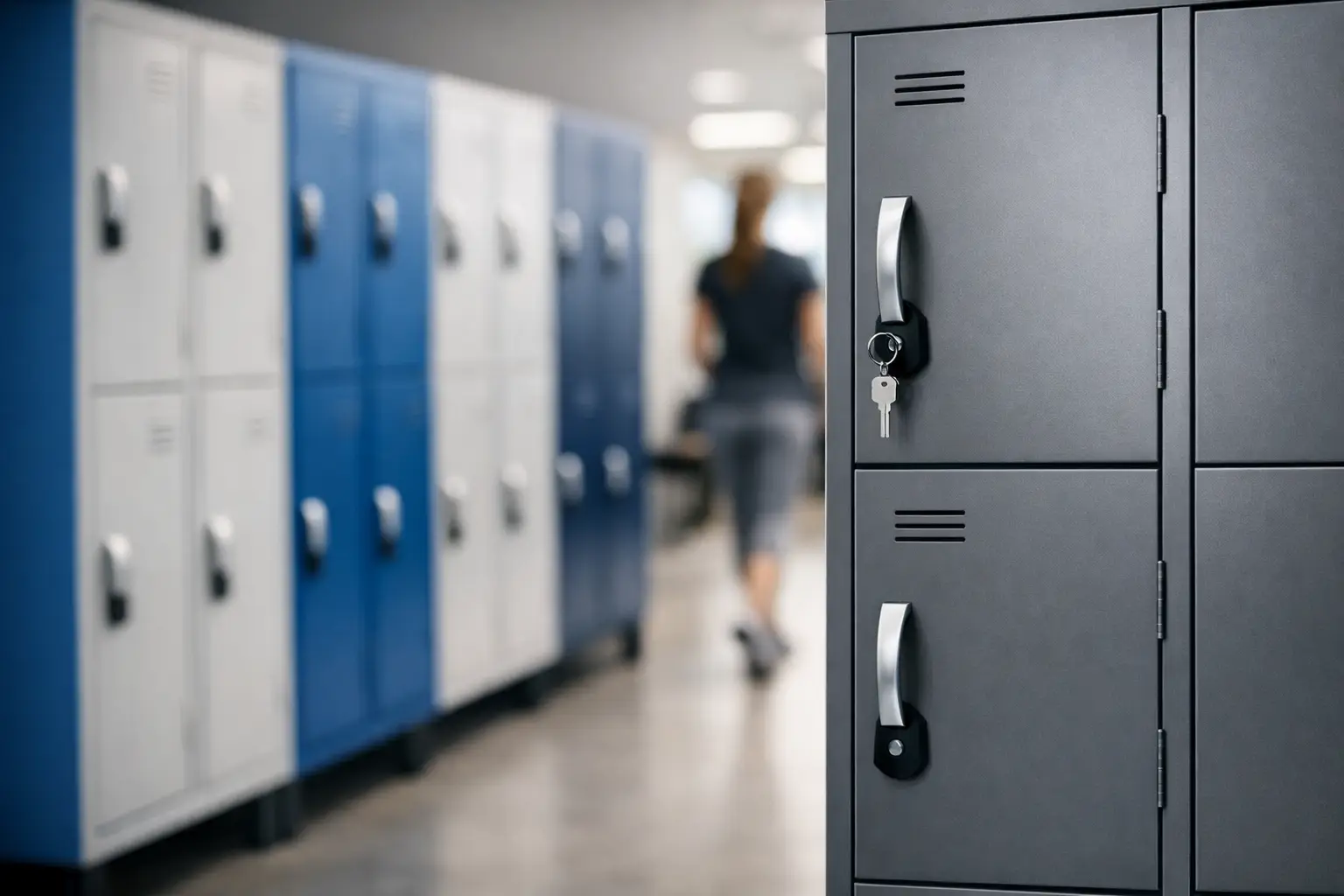
A 2 door locker is often the most practical starting point for employee changing rooms, staff areas, schools, gyms, and industrial facilities. It gives each user more vertical storage than a multi-compartment unit while keeping the overall footprint compact. For buyers, the real decision is not simply how many lockers fit along a wall. It is whether the locker will stand up to daily use, support the items users carry, and remain easy to manage over years of operation.
A well-specified locker reduces clutter, protects personal belongings, and helps facilities maintain orderly workflows. A poorly specified one can create overcrowded storage, damaged doors, lock-management issues, and premature replacement costs. The right choice depends on the users, the environment, and the level of security required.
Where a 2 Door Locker Works Best
Two-door configurations divide a full-height metal cabinet into two individual compartments. Each compartment gives one person a dedicated vertical space for outerwear, bags, uniforms, safety equipment, or work clothing. This makes the format particularly useful where users need more than a small personal cubby but do not require a full-height locker each.
In offices and education settings, a two-door unit can provide practical day-use storage for coats and backpacks. In factories, warehouses, and construction support areas, it can separate clean clothing from workwear or give employees room for boots, PPE, and personal items. Gyms and leisure facilities may choose the format where members need room for clothing and a bag without consuming the floor area required by single-door lockers.
The trade-off is capacity. A bank of two-door units serves fewer users than a six-door or eight-door arrangement of the same external size. When space is tight and users only store small belongings for short periods, higher-compartment locker systems may be more efficient. When storage volume, hanging space, and user comfort matter, two doors are usually the better operational choice.
How to Specify a 2 Door Locker
Procurement teams should begin with the contents users need to store. This simple question determines almost every meaningful specification, including compartment height, internal fittings, door strength, lock type, and ventilation.
Size and internal layout
Check both external dimensions and usable internal dimensions. A locker may look full height from the outside but lose useful space to plinths, internal shelves, or structural components. For staff who store coats or uniforms, a hanging rail or coat hook is valuable. For industrial users, a shelf can help keep folded garments, gloves, or small equipment separate from footwear.
Also consider bench placement and aisle width. Lockers are rarely installed alone. Doors need clearance to open, and users need enough room to change safely without blocking circulation. Planning the complete locker room layout before placing an order avoids a common problem: fitting the cabinets into the room but creating an uncomfortable, congested space around them.
Steel quality and construction
Metal lockers should be built for repeated impacts, frequent door openings, and daily cleaning. Steel thickness matters, but it should not be viewed in isolation. Door returns, reinforcement, frame design, hinge construction, and welding quality all contribute to how the cabinet performs under use.
Look for doors that resist flexing and frames that remain aligned after repeated use. A door that bends easily can affect lock engagement and create maintenance issues. For high-traffic sites such as factories, schools, transport facilities, and changing rooms, heavy-duty construction is a commercial requirement, not an optional upgrade.
Powder-coated finishes are a practical choice for most dry indoor environments because they provide an even, durable surface that is easy to maintain. Where humidity, intensive cleaning, or corrosive conditions are expected, the coating system and any additional material protection should be matched to the environment. A standard painted locker may be suitable for a dry office but not for a damp changing area or demanding industrial operation.
Locking options and access control
The correct lock depends on how the locker is assigned. Permanent employee lockers are often suited to key locks, padlock hasps, combination locks, or digital locks with fixed user access. Short-term or shared-use environments may benefit from systems that allow temporary allocation and straightforward administration.
Key locks are familiar and cost-effective, but facilities need a clear process for replacement keys and master-key access. Padlock hasps shift lock ownership to the user, which can simplify initial procurement but may lead to inconsistent security levels. Combination and electronic locks remove the need for physical keys, yet they require users or managers to handle code resets, batteries, or access credentials.
There is no universally best lock. The best option is the one your facility can administer consistently. Before selecting it, decide who assigns lockers, how lost access is handled, whether supervisors need emergency entry, and whether users keep the same locker over time.
Ventilation and hygiene
Ventilation is especially relevant when lockers hold workwear, sports clothing, shoes, PPE, or damp items. Perforated door panels or ventilation slots help air circulate and reduce odor buildup. They do not replace a proper drying process for wet equipment, but they improve day-to-day conditions inside the compartment.
For facilities handling PPE, consider whether employees need separation between clean and used garments. In some cases, two individual compartments are not enough on their own, and a clean-and-dirty locker layout is more suitable. The storage system should support the site’s hygiene procedures rather than force staff into workarounds.
Plan the Locker Bank, Not Just the Cabinet
A single locker specification can perform well, yet a project can still fail if the installation plan is weak. Think in terms of a locker bank: the number of users, the wall layout, the room flow, the need for seating, and future headcount changes.
Start by identifying the number of regular users and adding a realistic allowance for growth, visitors, temporary staff, or shift overlap. Then determine whether lockers will be allocated permanently or shared between shifts. Shared lockers can lower the number of compartments needed, but only if cleaning, access, and scheduling are controlled effectively.
Installation details also matter. Locker banks should be stable, level, and appropriately secured where required. Sloping tops can be useful in areas where dust control and easy cleaning are priorities. Plinths or raised bases may help protect the cabinet bottom from wet-floor cleaning, while benches can improve comfort and keep users from placing belongings on the floor.
For larger projects, consistent dimensions and modular compatibility simplify future expansion. Standard products can support fast procurement, while custom metal fabrication may be worth considering when room dimensions, branding, access systems, or specialized internal layouts demand a tailored solution.
Common Buying Mistakes
The first mistake is choosing by price alone. Lower initial cost can disappear quickly when lightweight doors deform, finishes wear prematurely, or replacement parts are difficult to source. Total value comes from service life, maintenance demands, security, and how well the lockers fit the facility’s actual use.
The second is overestimating compartment capacity. Employees carrying winter clothing, work boots, helmets, bags, and uniforms need more room than a simple count of users suggests. Ask representative users what they carry during a normal shift before finalizing the layout.
The third is treating lock selection as a final detail. Lock administration affects facility teams every day. It should be selected with the same care as cabinet construction and layout.
Finally, avoid assuming every site needs the same configuration. A corporate office, a school, a gym, and a manufacturing plant may all purchase metal lockers, but their user behavior and operating conditions are different. The specification should follow the use case.
A Better Standard for Long-Term Storage
A 2 door locker should do more than provide a place to put personal items. It should support a cleaner workplace, protect employee property, and handle the pace of the facility without becoming a maintenance burden. Buyers who define user needs first can make confident decisions about size, steel construction, ventilation, locks, and layout.
For project buyers, working with a manufacturer such as Loxmet also makes it possible to combine standard heavy-duty models with custom requirements when the site calls for a more specific solution. The best locker program is the one that fits daily operations now and still performs when the workforce, workflow, or facility changes.