


Highlights
PPE Storage Cabinet Selection for Safer Workplaces

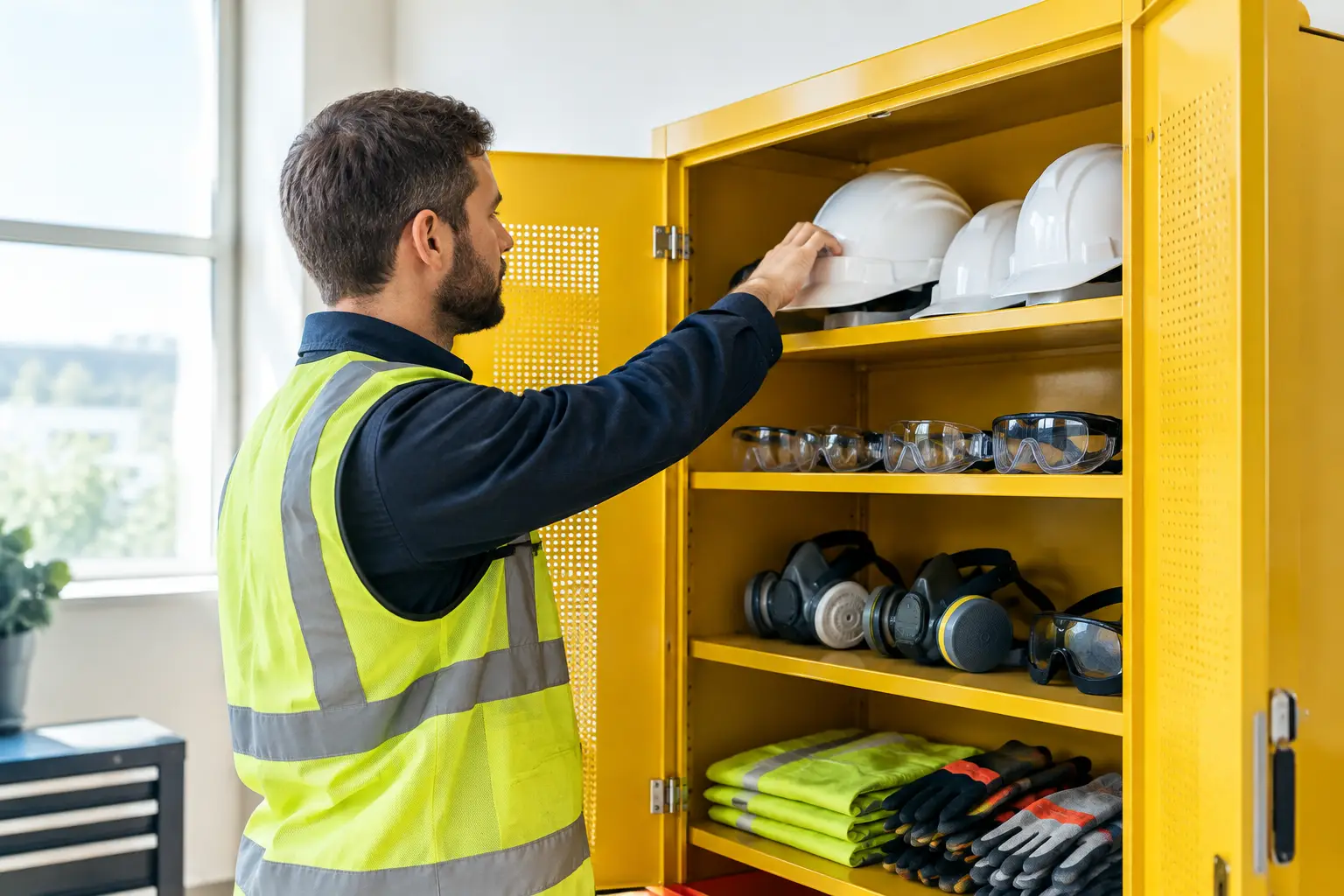
A missing pair of gloves can stop a maintenance task. A respirator left on an open shelf can become contaminated. When personal protective equipment is scattered across a facility, the issue is not only untidy storage – it is slower work, uncertain stock levels, and avoidable safety exposure. A properly specified PPE storage cabinet gives teams a defined, secure point of access while protecting equipment between shifts.
For procurement and facility teams, the right cabinet is rarely a one-size-fits-all purchase. The required capacity, internal layout, lock type, ventilation, and cabinet material depend on the PPE being stored and the environment where the unit will operate. The goal is simple: make essential equipment easy to find, protected from damage, and ready for use.
Start With the PPE and the Workflow
The most useful starting point is not cabinet dimensions. It is an inventory of what workers need, how often they collect it, and whether items are issued individually or shared across a department.
Disposable gloves, masks, shoe covers, safety glasses, ear protection, high-visibility vests, hard hats, and reusable respirators all create different storage demands. Small consumables need organized compartments or bins that prevent mixed stock. Bulkier items need clear shelf height and enough depth to avoid crushing or folding. Reusable face protection may need separated compartments to maintain hygiene between users.
Then consider movement through the facility. A cabinet located at a single entrance can support controlled issue at the start of a shift. Cabinets positioned at work zones may reduce walking time in large warehouses, manufacturing plants, laboratories, or healthcare settings. Decentralized storage improves availability, but it requires a stronger replenishment routine to prevent one location running empty while another holds excess stock.
It also matters whether PPE is personal or communal. Assigned equipment is best kept in individual lockable compartments, particularly where hygiene, accountability, or employee privacy is relevant. Shared equipment usually benefits from larger shelves, labeled sections, and access that supervisors or designated personnel can manage.
Choose a PPE Storage Cabinet Built for Daily Use
A cabinet may look adequate in a catalog but fail quickly in a demanding environment if its construction is too light for the load and frequency of use. Metal is usually the practical choice for commercial and industrial PPE storage because it handles repeated opening, cleaning, and high-traffic use better than temporary storage furniture.
Look at the cabinet body, door construction, hinges, shelf supports, and base. These details determine how the product performs after thousands of opening cycles, not just on installation day. A powder-coated steel finish provides a durable surface that is easier to clean and helps resist normal workplace wear. In humid, washdown, or corrosive settings, material selection and finish requirements should be reviewed more closely.
Door design deserves particular attention. Full-height doors provide access to larger supplies and hanging garments. Multi-door configurations can separate teams, shift groups, or PPE categories within a compact footprint. Perforated or louvered doors can support airflow where moisture buildup is a concern, although ventilation should be matched to the actual items stored. Not every PPE category needs an open-air design, and equipment requiring a cleaner controlled environment may be better protected behind solid doors.
Shelves should be adjustable where stock profiles are likely to change. A cabinet that initially stores glove boxes may later need to accommodate face shields, packaged coveralls, or refill cartons. Adjustable interiors extend useful life and reduce the need to replace storage equipment when operations change.
Capacity Planning Without Wasting Floor Space
Overbuying cabinet volume consumes valuable floor area. Underbuying creates overflow on benches, carts, and open shelves. Capacity planning should account for normal demand, peak usage, replenishment frequency, and a sensible reserve stock level.
A facility that receives weekly deliveries can operate with less reserve capacity than a remote site that needs several weeks of supply on hand. Seasonal operations also need flexibility. Construction, logistics, education, and public-facing facilities may experience major shifts in headcount or PPE consumption throughout the year.
Measure the space beyond width, depth, and height. Check door swing clearance, aisle requirements, nearby workstations, cleaning access, and whether pallets or carts need to pass the cabinet. Where floor space is restricted, tall cabinets with multiple compartments can increase capacity vertically. Where quick bulk access is the priority, wider cabinet layouts may be more efficient.
Internal organization matters as much as total liters of storage. Clearly marked shelves and dedicated sections reduce picking errors. A simple labeling standard can identify PPE category, size range, replenishment point, and expiration-control status where applicable. Transparent inventory routines are often more valuable than sophisticated systems that staff do not consistently use.
Match Access Control to Risk and Accountability
Locks are not just a security feature. They define who can access equipment, how stock is controlled, and how easily a facility responds when staff, contractors, or shift patterns change.
For low-risk shared consumables, a lock may be unnecessary during operating hours. However, lockable doors can still protect stock after hours and prevent supplies from being moved or depleted without authorization. Key locks offer a straightforward option for controlled access but require key management. Combination locks remove the need for keys but need a clear process for changing codes. Digital or RFID access systems may be appropriate where individual usage records or centralized access management are required.
The appropriate solution depends on the cost and sensitivity of the stored PPE. High-value reusable respiratory equipment, specialist protective garments, or limited emergency supplies may require tighter access control than general glove and eyewear stock. At the same time, excessive restriction can delay workers who need equipment promptly. The cabinet should support safety procedures, not create an obstacle to them.
Hygiene, Separation, and Maintenance Requirements
PPE storage should help maintain the condition of the equipment, especially when items are reused. Clean and used equipment must not share the same compartment unless there is a defined cleaning and containment process. Cabinets can support this separation through dedicated zones, door labels, or distinct units for clean stock, issued stock, and returns awaiting inspection.
Consider how the cabinet will be cleaned. Smooth powder-coated surfaces are practical for routine wipe-downs. Raised areas, unnecessary joints, and hard-to-reach internal corners can add time to cleaning schedules. If the cabinet is used in a setting with strict sanitation procedures, confirm that the materials and construction suit the approved cleaning products.
Ventilation is useful for garments and equipment that may retain moisture, but it is not a substitute for cleaning and drying procedures. Wet or contaminated PPE should follow the organization’s established handling process before it is returned to storage. The cabinet is one part of a controlled system, alongside inspection, cleaning, replacement, and stock rotation.
Specify for Installation, Expansion, and Long-Term Supply
A cabinet purchase often begins with one problem area, then expands as a facility standardizes its storage. Selecting a manufacturer that can provide consistent product specifications across future orders makes expansion easier. Matching dimensions, finishes, lock systems, and labeling approaches gives multi-site operations a more uniform setup.
Customization can be valuable when standard dimensions do not fit the available space or when a specific internal arrangement is required. Options may include additional shelves, hanging rails, divided compartments, different door configurations, color coding, numbered doors, or branded identification. Custom work should solve a real operational need, not add complexity without improving access or control.
For distributors and project buyers, supply reliability also affects the final specification. Confirm lead times for standard cabinet models, the feasibility of custom production, packaging requirements, and the availability of replacement parts. A cabinet is a long-term workplace asset, so hinges, locks, shelves, and keys should not become a recurring operational problem.
Loxmet manufactures heavy-duty metal storage solutions for workplaces that require durable standard products and practical custom configurations. For projects involving lockers, cabinets, shelving, and PPE storage across a single site, a coordinated product range can simplify purchasing and maintain a consistent facility standard.
A Practical Specification Checklist
Before requesting a quotation, define the PPE categories, maximum stock volume, number of users, cabinet location, required access control, cleaning routine, and any ventilation needs. Include site measurements and door-clearance requirements. If the unit will serve multiple shifts or departments, establish who replenishes supplies and who holds responsibility for inspections.
The best cabinet is the one that fits the actual work pattern rather than the one with the longest feature list. When PPE is visible, organized, protected, and available at the point of need, teams spend less time searching for equipment and more time using it correctly.