


Highlights
How to Choose a Vertical File Cabinet for Work

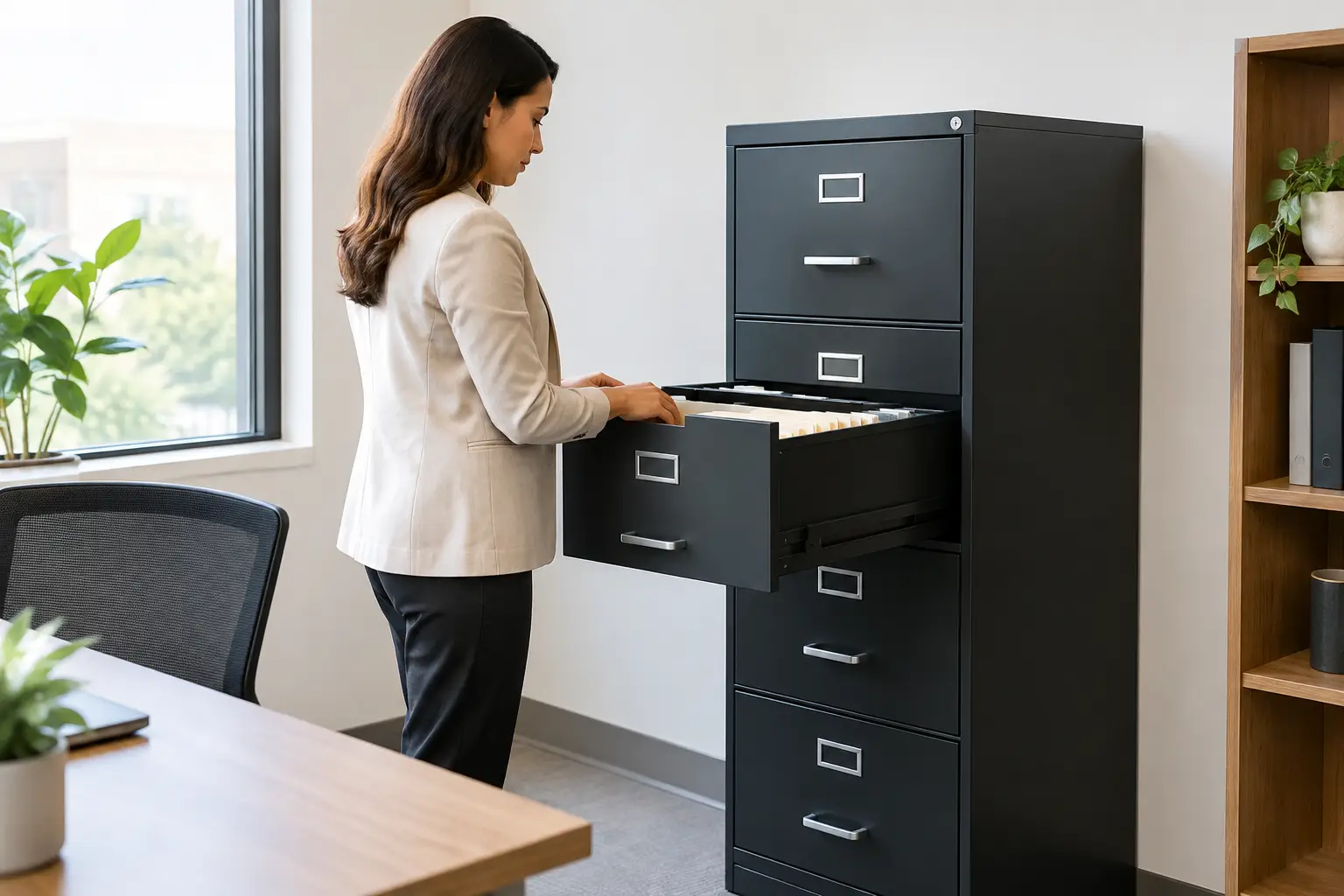
A vertical file cabinet earns its place where floor space is limited but records still need disciplined, secure storage. For offices, schools, healthcare facilities, public departments, and industrial sites, it provides a compact way to keep active files accessible without giving documents their own wall of floor area.
The right cabinet is not simply the one with the most drawers. Procurement teams need to consider file format, drawer loading, security requirements, traffic levels, installation conditions, and the expected service life. A lightweight cabinet may suit low-volume administration. A busy records room, finance department, or shared office typically needs stronger steel construction, reliable drawer runners, and locking that supports everyday control.
What Is a Vertical File Cabinet?
A vertical file cabinet stores files in drawers arranged one above another. This upright format uses a smaller footprint than a lateral cabinet, making it well suited to private offices, workstations, reception areas, compact archive rooms, and modular workplace layouts.
Most vertical models are supplied with two, three, or four drawers. The drawer width is commonly designed for letter-size or legal-size hanging folders, although dimensions vary by market and project specification. The key advantage is density: the cabinet builds storage upward instead of outward.
That efficiency comes with a practical trade-off. A tall, fully loaded cabinet concentrates considerable weight in a narrow footprint. It should be positioned on level flooring, loaded correctly, and fitted with an anti-tip arrangement when required. For high-use applications, select a cabinet designed to prevent more than one drawer from opening at a time.
Start With the Files, Not the Furniture
The first selection question is simple: what exactly will be stored? Many purchasing mistakes begin when a cabinet is chosen by external dimensions before the file type and archive volume are confirmed.
Letter-size files are common in US office environments, while legal-size documents require longer drawer depth. Some organizations also need space for folders, binders, patient records, plans, or document boxes. A cabinet that accepts hanging folders may not be the right answer for bulky binders, so internal drawer dimensions and rail configuration should be checked before an order is approved.
Estimate both the current filing volume and expected growth. If a department is already filling three drawers, purchasing another three-drawer unit may only postpone a space problem. In contrast, a four-drawer vertical cabinet can add meaningful capacity without expanding the furniture footprint. It depends on whether the storage is for active working files or long-term archives that employees access less frequently.
Match the Cabinet to the Available Footprint
Vertical filing is particularly effective where every square foot matters. It can sit beside a desk, in a shared work zone, or along a short wall where a wider storage unit would restrict movement. Measure more than the cabinet body, however. The drawer must open fully without blocking circulation routes, workstation chairs, or door swings.
Height also matters. A four-drawer unit can provide substantial capacity, but the top drawer may be less convenient for some users. In customer-facing areas or workspaces with frequent retrieval, two- and three-drawer cabinets can be easier to operate and can also serve as a practical surface for printers, trays, or supplies when the load rating allows it.
For larger filing projects, a mix often works best. Use vertical cabinets at individual workstations for active documents and place higher-capacity storage in a centralized records area. This approach keeps frequently used files close to users while avoiding unnecessary cabinet duplication across the facility.
Construction Determines Service Life
A filing cabinet is opened, closed, loaded, and relocated repeatedly. Its useful life depends on the details that are not always obvious in a product image: steel thickness, drawer body design, reinforced corners, runner quality, weld consistency, and powder-coated finish.
Metal construction is a practical choice for commercial environments because it withstands routine use, is easy to clean, and maintains a professional appearance over time. A quality powder coating helps resist scratches and corrosion, especially in facilities where cabinets may be exposed to dust, humidity, or regular cleaning routines.
Drawer runners deserve close attention. Smooth extension improves access to files at the back of the drawer and reduces strain during daily use. For heavily loaded drawers, runner strength and alignment are essential. Drawers that bind, sag, or close poorly create a daily frustration and can shorten the cabinet’s working life.
Do not judge strength by cabinet weight alone. A well-designed vertical file cabinet needs balanced construction, stable drawer movement, and sufficient load capacity for fully populated folders. Ask the supplier for drawer load ratings and construction details when the cabinet will be used for dense records or high-frequency access.
Security Should Fit the Documents Inside
Not every file requires the same level of protection. General administrative folders may only need a basic central lock to prevent casual access. Personnel files, financial records, contracts, healthcare information, and controlled documents may require stricter key management or integration into a secured room.
A central locking system that secures all drawers from one lock is efficient for many workplaces. It reduces the number of keys in circulation and makes end-of-day checks easier. For projects with multiple departments, confirm whether keyed-alike, keyed-different, or master-keyed options are needed before production begins.
Physical security is only one part of the decision. Fire resistance, for example, is a separate performance category and should not be assumed from standard steel construction. If records must remain protected during a fire event, specify a certified fire-rated storage solution rather than treating a conventional metal cabinet as equivalent.
Anti-Tip Protection Is a Core Requirement
A loaded upper drawer can shift a cabinet’s center of gravity forward. That is why anti-tip protection is not an optional detail in active filing areas. Interlock systems allow only one drawer to open at a time, reducing the risk of tipping when files are being reviewed or replenished.
Depending on the cabinet design and installation location, wall anchoring may also be appropriate. This is especially relevant in schools, healthcare facilities, public-facing offices, and areas where cabinets may be used by many different people. Installation guidance should be followed, and the cabinet should never be relocated while drawers are full.
Users also need straightforward operating rules. Load heavier files into lower drawers, close one drawer before opening another, and avoid placing heavy equipment on top of a cabinet unless the manufacturer confirms it is suitable. These small practices protect staff as well as the furniture investment.
Standard Cabinets or Custom Manufacturing?
Standard vertical filing cabinets are often the right choice when dimensions, colors, locking, and delivery schedules are straightforward. They support faster purchasing decisions and simplify replacement planning across multi-site operations.
Custom manufacturing becomes valuable when a project has fixed space constraints, unusual document formats, specified color requirements, or a need to coordinate filing cabinets with lockers, office cabinets, shelving, and other metal storage. Custom work can also address special plinth heights, drawer configurations, ventilation requirements, and facility-wide keying plans.
The decision is commercial as well as technical. Customization should solve a real operational requirement, not add complexity without value. Loxmet supports both standard and project-based metal storage requirements, allowing buyers to align cabinet construction and configuration with the environment where it will be used.
Questions to Settle Before Ordering
A clear specification prevents delays and reduces the risk of receiving a cabinet that looks right but does not work for the filing system. Confirm these points with the purchasing team, users, and supplier:
- Required file format and internal drawer dimensions
- Number of drawers and expected document weight per drawer
- Overall cabinet height, width, depth, and drawer clearance space
- Locking method, keying requirements, and access control needs
- Anti-tip mechanism, anchoring needs, and installation responsibilities
- Steel construction, finish, color, and warranty terms
For distributor orders or multi-location projects, also standardize the product code and specification. This makes repeat purchasing easier and helps facilities teams maintain consistent keys, finishes, and replacement parts.
Make Filing Storage Work Harder
The best vertical file cabinet is not necessarily the largest model or the lowest-priced option. It is the cabinet that supports the filing workflow, fits the available space, protects sensitive records, and continues operating reliably after years of loaded drawers and daily use.
Treat filing furniture as part of the workplace infrastructure. When the specification is based on real document volumes, user behavior, security needs, and installation conditions, the cabinet becomes one less operational issue for the facility team to manage.