


Highlights
4 Drawer File Cabinet for Commercial Offices

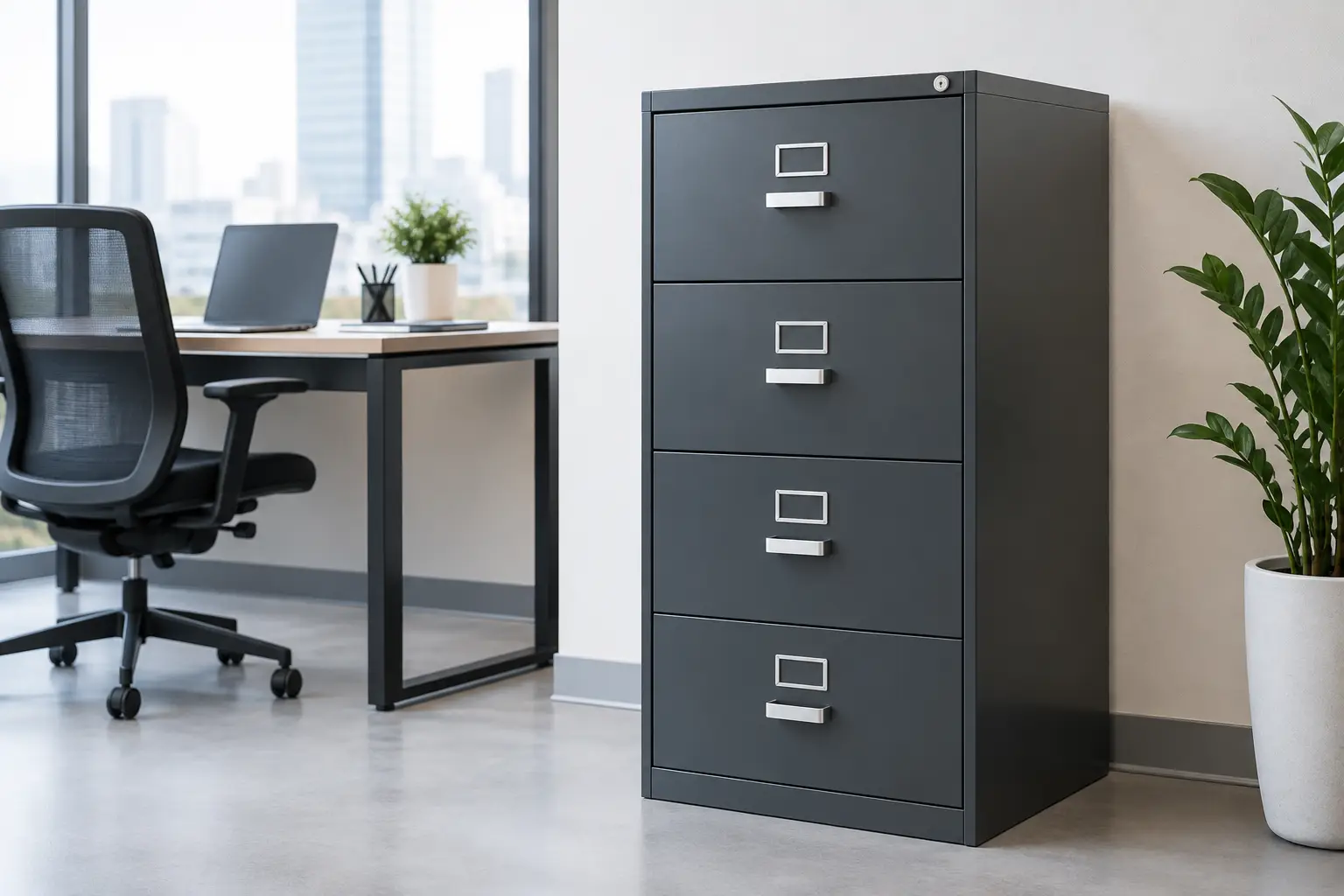
A 4 drawer file cabinet is a practical answer to a familiar facility problem: records need to remain accessible, secure, and organized without consuming valuable floor space. For offices, schools, healthcare settings, government departments, and industrial administration areas, the right cabinet protects daily workflows as much as it stores paper. A poorly specified unit can create access issues, safety risks, and replacement costs long before its useful life should end.
For commercial buyers, the decision is not simply about drawer count or exterior appearance. Load capacity, steel thickness, anti-tip performance, locking configuration, filing format, and delivery requirements all affect whether the cabinet will perform in a real working environment.
Why a 4 Drawer File Cabinet Still Has a Place
Digital systems have reduced some paper volumes, but they have not removed the need for physical document retention. Personnel files, contracts, invoices, medical records, compliance paperwork, drawings, and archived correspondence often require controlled storage for defined periods. A vertical four-drawer cabinet concentrates that capacity in a compact footprint.
This format is especially useful where floor area is limited but records must remain close to the people who use them. Rather than adding low, wide storage across a wall, a vertical cabinet uses height efficiently. It can fit into administrative offices, records rooms, reception back offices, and departmental work areas without redesigning the entire space.
The trade-off is access. A lateral cabinet can provide a broad filing surface and may suit high-volume teams working with open files throughout the day. A four-drawer vertical model is often the stronger choice when density, controlled access, and a smaller footprint matter more than simultaneous drawer access.
Choosing a 4 Drawer File Cabinet for Daily Use
A commercial cabinet should be selected around the documents, users, and room conditions it will serve. Product photographs alone do not show the details that determine long-term performance.
Match the filing format and internal capacity
Start with the file format. Letter-size, legal-size, A4, and foolscap documents each require different internal dimensions and rail arrangements. Buying a cabinet that only fits one format can become a problem when departments manage mixed records or operate across international document standards.
Ask whether the drawers support front-to-back or side-to-side filing, and confirm the usable internal width, depth, and height rather than relying only on outside dimensions. Suspended file rails should hold the intended folders securely and allow staff to remove or reposition them without bending or jamming.
Drawer load rating matters just as much. Paper is heavy. A drawer filled with archived files can place sustained stress on runners, drawer bottoms, and the cabinet frame. For shared records or long-term archives, specify a steel cabinet with a stated load capacity appropriate for full drawers, not occasional light use.
Evaluate steel construction, finish, and runners
For business environments, welded or reinforced steel construction provides a clear advantage over lightweight storage products. Look for formed steel drawer bodies, rigid cabinet sides, reinforced bases, and quality drawer slides designed for repeated opening under load. These features reduce racking, sticking, and premature wear.
The finish also has a functional role. A durable powder-coated surface helps resist scratches, corrosion, and routine cleaning chemicals. This is relevant in high-traffic offices, educational facilities, workshops, healthcare administration areas, and spaces where cabinets are moved or cleaned frequently.
Drawer movement should be tested against the expected use pattern. Ball-bearing slides generally provide smoother operation for heavily loaded drawers, while simpler runner systems may be sufficient for lower-frequency archive access. Neither option is automatically right for every project. The operating volume and file weight should determine the specification.
Specify security and access control
A central locking system is standard for many filing applications, but its suitability depends on who needs access. One lock securing all drawers works well for individual users and small teams. Larger departments may require keyed-alike groups, master-key arrangements, or separate cabinet locks by function.
Security also includes drawer control. A mechanism that prevents more than one drawer from opening at a time improves stability and reduces the risk of a loaded cabinet tipping forward. This is particularly valuable in shared offices, public-facing administration areas, and locations where staff may open drawers quickly during busy periods.
For sensitive records, consider the cabinet as one layer of a wider document-control process. Locking hardware helps manage physical access, but placement, key management, retention policies, and room security remain part of the overall requirement.
Dimensions, Placement, and Safety Requirements
Measure the full operating area, not only the position where the cabinet will stand. A four-drawer unit needs clearance in front for drawers to extend and for users to retrieve files safely. Doorways, corridors, desk layouts, wheelchair routes, and emergency access must remain unobstructed when a drawer is open.
Floor conditions deserve attention. Cabinets carrying full paper loads should sit level on a stable surface. Uneven floors can affect drawer alignment and make a tall cabinet less stable. In some settings, especially where seismic considerations, public access, or intensive use apply, floor or wall anchoring may be appropriate.
Do not overlook delivery access. Confirm elevator dimensions, stair routes, door widths, loading-dock procedures, and final installation points before ordering. A cabinet may fit the office perfectly but still create avoidable delays if it cannot reach the required floor or room without special handling.
Procurement Questions That Prevent Costly Mismatches
A commercial filing project benefits from a clear specification before quotations are compared. Price is relevant, but a lower-priced cabinet can become more expensive if runners fail, locks are inconsistent, delivery is delayed, or replacement units do not match the original installation.
Provide suppliers with the cabinet quantity, required filing format, preferred color, lock requirements, expected use level, delivery site details, and any installation constraints. For multi-site organizations, confirm whether the same model can be supplied consistently over time. This matters when new offices, departments, or branches need a matching storage standard.
For distributors and fit-out contractors, manufacturing flexibility can be just as important as the standard catalog. A manufacturer with metal fabrication capability can support project-specific dimensions, finishes, lock configurations, and broader storage packages where appropriate. Loxmet supplies heavy-duty office cabinets alongside lockers, shelving, and other metal storage products, helping commercial buyers coordinate related requirements through one production partner.
Warranty terms should be reviewed with care. A long warranty is meaningful when it is supported by clear product specifications, reliable manufacturing controls, and a process for resolving issues with locks, runners, finishes, or transit damage. Confirm what is covered and how replacement components are handled in your market.
A Practical Specification Checklist
Before approving a four-drawer filing cabinet, procurement teams should document these distinct requirements:
- File format, hanging-file orientation, and usable drawer dimensions
- Maximum load expected in each drawer and the required slide performance
- Steel construction details, powder-coat finish, and corrosion resistance needs
- Lock type, keying plan, and anti-tip or single-drawer opening mechanism
- External dimensions, installation clearances, delivery route, and anchoring needs
This information turns a general request into a comparable commercial specification. It also gives facilities teams a stronger basis for evaluating samples, managing tender responses, and maintaining consistency across locations.
The best 4 drawer file cabinet is the one that fits the records you hold, the space you operate, and the working life you expect from your furniture. Specify it as a long-term operational asset, and it will keep documents controlled, accessible, and protected through years of daily use.