


Highlights
Mobile Phone Locker Selection for Business Sites

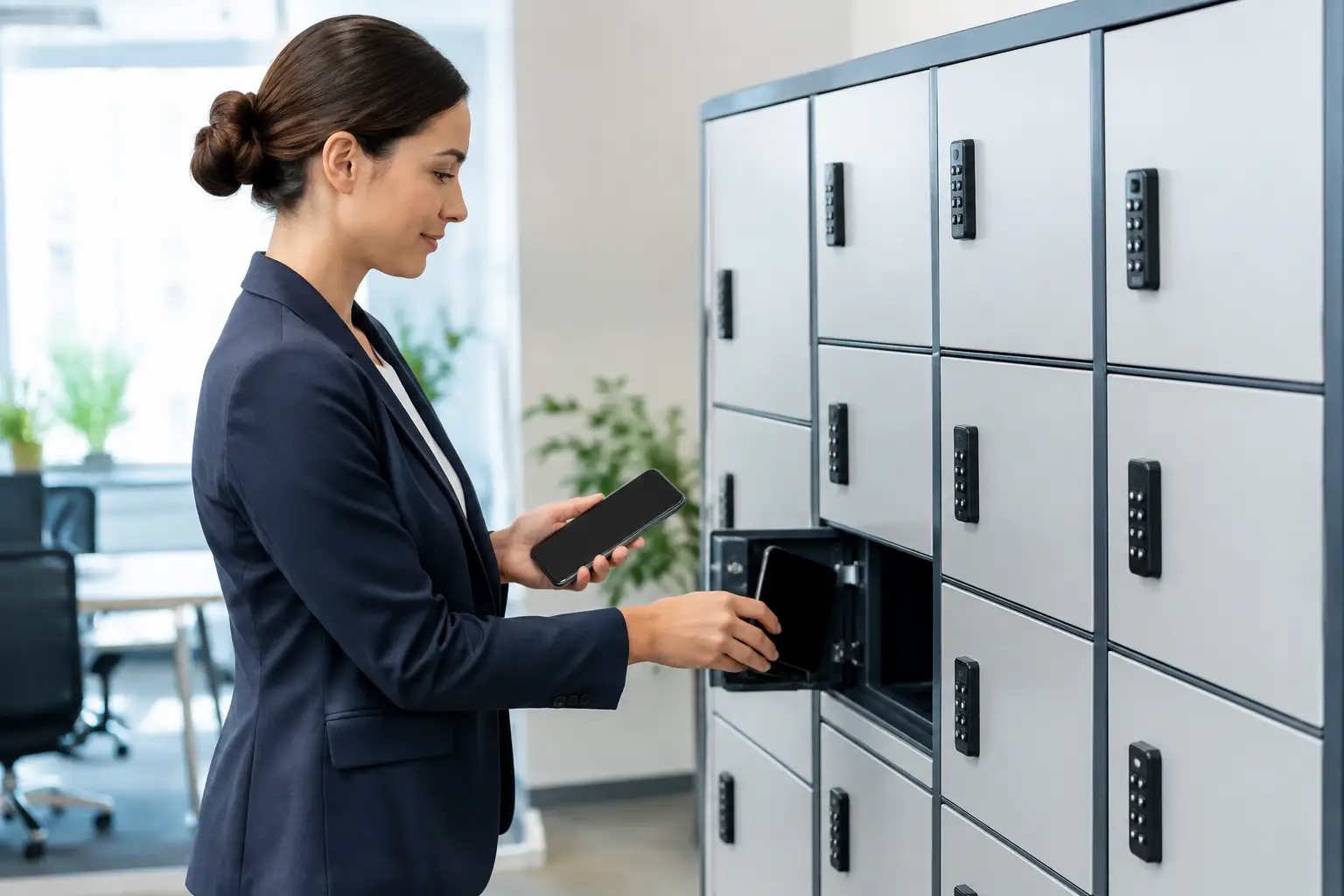
A mobile phone locker is not simply a cabinet with small doors. For an employer, school, gym, or public facility, it is part of how people secure personal devices, manage access, protect sensitive areas, and keep shared spaces organized. The right specification reduces disputes over lost property and gives users a clear, dependable place for their phones during a shift, class, workout, or visit.
The buying decision should start with the operating environment. A locker that works well in an office reception area may not be suitable for a factory entrance, a school corridor, or a high-traffic leisure facility. Capacity, lock type, charging requirements, steel construction, and installation all affect whether the system will perform over time.
When a Mobile Phone Locker Is the Right Choice
Phone lockers are especially useful where personal devices must be stored temporarily or are restricted during working hours. Production sites may use them to reduce distractions and protect confidential processes. Schools can provide a controlled storage point during lessons or examinations. Healthcare facilities, warehouses, laboratories, and secure offices may need employees to leave phones outside designated areas.
They also serve a practical visitor-management role. Rather than asking contractors, guests, or event attendees to carry phones or leave them unattended, a facility can assign a compartment for the duration of their visit. This creates a more professional arrival process and reduces the burden on reception staff.
A mobile phone locker should not be selected on compartment count alone. Buyers need to consider who will use it, how long devices will be stored, and whether the lockers are assigned or shared. These details determine the most appropriate locking and charging configuration.
How to Specify a Mobile Phone Locker
Set capacity around real usage
Start with the maximum number of users expected at one time, not the total number of employees or students on record. Shift patterns, visitor volumes, and staggered breaks often mean a lower or higher simultaneous demand than expected. It is usually sensible to include a margin for growth, temporary staff, and replacement compartments during maintenance.
Compartment dimensions also matter. Standard phone-sized doors are efficient where users only store a handset. If users may also need to store keys, access cards, wallets, or compact personal items, a slightly larger compartment avoids overcrowding. For schools and workplaces with mixed device sizes, verify that the internal depth and opening dimensions suit phones in protective cases.
Modular locker banks are valuable when needs may change. A facility can begin with a practical quantity and add matching units later, provided the manufacturer maintains consistent dimensions, finishes, and locking options.
Choose locks for the way people use the system
The lock should reflect the access model. Key locks are straightforward and economical for assigned users, but key control can create work for administrators. Combination locks remove the need for keys but require a reliable reset procedure. Digital locks can support short-term or shared use, depending on the model and management requirements.
For facilities with fixed staff assignments, a keyed or mechanical combination solution may be sufficient. For visitor areas, gyms, and shared spaces, a lock designed for temporary occupancy is often more appropriate. In these settings, users should be able to secure a compartment, retrieve their device, and leave the locker available for the next person without staff intervention.
There is a trade-off between simplicity and control. More advanced locking can improve auditability and user convenience, but it may require power, software, credentials, or defined emergency access procedures. Procurement teams should establish who can open a locker if a user forgets a code, loses a key, or leaves a device behind.
Decide whether charging is necessary
A charging mobile phone locker can add real value where users store devices for extended periods. It is useful in training centers, offices, education settings, staff break areas, and facilities where employees cannot keep phones with them during a shift. However, charging should be specified as an operational requirement, not assumed as a standard feature.
First, determine the charging method. USB outlets, integrated cables, and power sockets each have different advantages. Integrated cables are convenient but must match the devices in use and may need replacement after heavy use. USB charging can be more flexible. Power sockets allow users to bring their own chargers, although that can create a less uniform appearance and requires more internal space.
Electrical safety and heat management require attention. The cabinet should be designed for its intended electrical configuration, with appropriate cable routing, ventilation where needed, and service access. Charging units should be installed in suitable indoor locations and maintained by qualified personnel in line with local requirements.
If devices are generally stored for only 30 to 60 minutes, charging may offer limited return. If storage covers a full shift, a school day, or a long event, it can be a meaningful benefit that improves user acceptance.
Specify construction for the environment
For commercial use, steel construction is central to long-term value. Thin, lightly built cabinets may look acceptable at installation but can deform under repeated door impacts, forced use, or heavy daily traffic. Door alignment, hinge durability, reinforced fixing points, and finish quality have a direct effect on service life.
Powder-coated steel is a practical choice for many indoor environments because it provides a clean, durable finish that is easy to maintain. Color can support wayfinding, departmental identification, or a facility’s interior standard. In industrial sites, buyers should consider exposure to dust, moisture, and cleaning chemicals before choosing the coating and location.
Ventilation may be useful where lockers hold devices for long periods or include charging equipment. It is less critical for short-term non-charging storage, but the final design should still avoid creating a cramped, difficult-to-clean installation.
Plan the installation before ordering
A well-made locker can still perform poorly if installed in the wrong place. Position units where users can access them without blocking entrances, fire routes, corridors, or workstations. Consider peak traffic: a bank that serves 40 people at shift change needs enough surrounding space for users to open doors and move safely.
Wall fixing is often recommended for stability and security, particularly for taller banks or areas open to the public. Floor conditions, wall construction, power supply for charging models, and cable access should be checked before delivery. This prevents site delays and avoids costly adjustments after the units arrive.
Accessibility also deserves early attention. The position of compartments, clear floor space, and reach range should be reviewed against the needs of the facility and applicable regulations. A mix of mounting heights can make the system more practical for a broader user group.
Avoid Common Procurement Mistakes
The most frequent mistake is treating a phone locker as a low-value accessory. In practice, it is a high-touch product. Doors, locks, and hinges may be used hundreds of times each week, so small weaknesses become visible quickly.
Another issue is buying a fixed configuration without considering future capacity. A modular layout provides more flexibility than a single oversized unit, especially for growing workforces and multi-site programs. It also makes replacement and phased expansion easier.
Finally, do not separate the locker decision from the operating policy. Employees and visitors need to know when lockers are required, whether they are assigned, what happens to uncollected items, and who manages lock issues. Clear rules protect both the investment and the user experience.
A Practical Standard for Long-Term Use
For business buyers, the best solution is usually a steel locker system built for frequent use, matched to actual device storage needs, and supported by a clear access plan. Standard products can be the fastest route for straightforward projects, while custom compartment sizes, colors, lock options, and charging layouts can be justified for specialized facilities.
Loxmet manufactures heavy-duty metal storage systems for projects that require dependable construction, flexible specifications, and scalable supply. The final choice should make storage easier for users and simpler for the facility team to manage every day.