


Highlights
How to Choose a Heavy-Duty Lateral File Cabinet

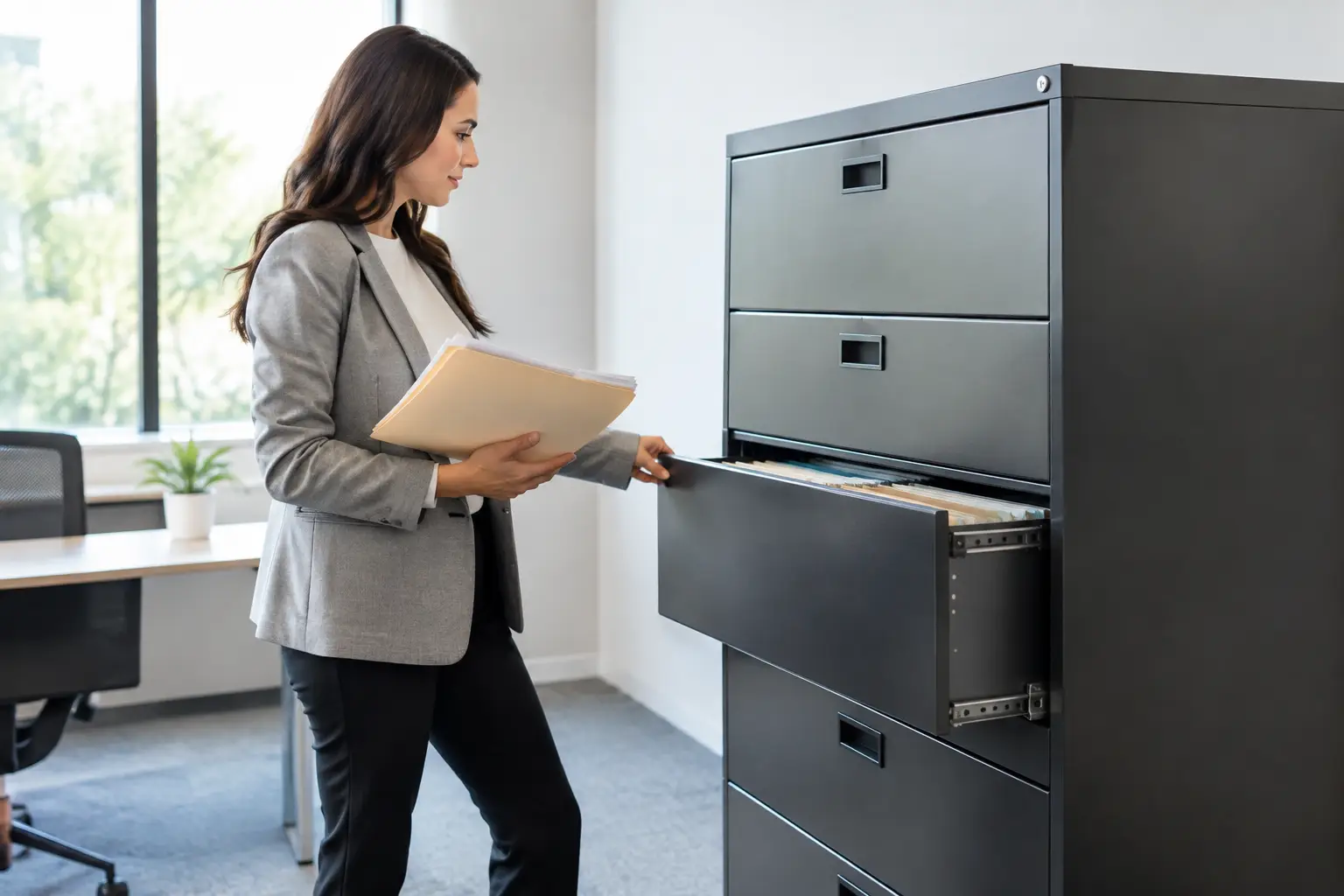
A lateral file cabinet can solve a document storage problem without consuming the floor depth required by tall vertical filing units. For offices, healthcare facilities, schools, public institutions, and commercial projects, that difference affects aisle clearance, workstation planning, and day-to-day access to records. The right cabinet should do more than hold files. It should carry heavy loads safely, protect confidential information, and remain reliable through years of frequent use.
For procurement teams, the decision is not simply about selecting a drawer count or finish. Cabinet dimensions, steel quality, drawer suspension, locking configuration, anti-tip protection, and file compatibility all determine whether the product fits the operation. A well-specified metal filing cabinet becomes a dependable part of the workplace infrastructure rather than a recurring replacement cost.
Why Choose a Lateral File Cabinet?
A lateral file cabinet stores folders side by side across the width of each drawer. This creates broad, shallow drawers that work efficiently along walls, beneath counters, or in shared administrative areas. Compared with a vertical cabinet, it usually needs more wall width but less room in front of the unit when drawers are opened.
This layout suits teams that need to view a large volume of files at once. Personnel files, patient records, project folders, financial documents, permits, and archived correspondence can be organized in long filing runs with clear labeling. A two-drawer cabinet may provide substantial capacity while remaining low enough to support a printer, scanner, or document preparation area.
The trade-off is weight. Wide drawers can become very heavy when fully loaded, particularly with dense paper files. That is why drawer slides, cabinet structure, and anti-tip systems deserve close attention. A light-duty office cabinet may look acceptable at delivery but perform poorly when every drawer is filled with legal or letter-size folders.
Start With File Format and Storage Capacity
The first specification should be the type of document being stored. Letter-size and legal-size folders require different internal arrangements, and some facilities use A4 folders or mixed formats. The cabinet should be configured to accept the required filing direction without improvised rails or wasted drawer space.
Ask how many active files must remain immediately accessible, how quickly the archive will grow, and whether inactive records can move to separate storage. This prevents two common problems: purchasing a cabinet that is full within months or buying oversized units that occupy valuable workspace unnecessarily.
Drawer quantity should follow workflow, not only total capacity. A two-drawer lateral cabinet is often practical for individual offices, reception points, and smaller departments. Three- and four-drawer configurations provide higher density for central administration, records rooms, and facilities with long retention periods. Lower cabinets can also be combined in rows to create a consistent storage run while preserving sightlines and usable wall space.
Before approving dimensions, measure the full operating footprint. Include the depth of an open drawer, walking clearance, nearby doors, desk chairs, and access to electrical panels or safety equipment. A filing cabinet that fits the floor plan on paper can still disrupt movement if the drawer opening zone has not been considered.
Construction That Supports Daily Use
For commercial environments, steel construction is generally the right starting point. Metal cabinets tolerate repeated opening, high paper loads, routine cleaning, and relocation better than lightweight alternatives. However, not all steel cabinets are built to the same standard.
Review the body construction, drawer fronts, reinforcement points, and the method used to join panels. A rigid cabinet frame helps drawers stay aligned over time. Reinforced drawer bases and sides are particularly valuable when staff store full folders, binders, or boxed documents rather than light paper files alone.
Drawer suspension is equally important. Ball-bearing slides provide smooth extension and dependable movement under load. Full-extension drawers allow users to reach files at the back without removing front folders, which improves access and reduces filing errors. For high-use records areas, this is a practical feature rather than a cosmetic upgrade.
The finish should match the environment. Powder-coated steel offers a durable surface that resists everyday scuffs and supports a professional appearance in offices, schools, clinics, and public buildings. In industrial or shared facilities, select a finish that is easy to clean and appropriate for the surrounding furniture, lockers, shelving, and workstations.
Load Rating Is Not a Minor Detail
A drawer’s stated load capacity should reflect the real contents, not an empty-cabinet estimate. Paper is heavy. A fully loaded wide drawer can place significant strain on slides and the cabinet frame, especially when files are regularly removed and returned.
For procurement projects, request clear information on drawer load ratings and intended use. If the cabinet will store binders, technical manuals, samples, or dense archival files, specify that requirement early. A manufacturer can often recommend a stronger drawer configuration, additional reinforcement, or a cabinet size better suited to the load.
Safety and Security Requirements
A lateral file cabinet must remain stable when users access stored documents. Anti-tip protection is essential because opening multiple loaded drawers can shift the center of gravity forward. Interlocking systems that allow only one drawer to open at a time are a dependable solution for busy offices and shared record areas.
The cabinet should also be positioned on a level surface. Uneven flooring can affect drawer alignment and stability, particularly across long runs of cabinets. Where required by the project or local facility policy, units can be secured to walls or floors using appropriate fixing methods.
Security depends on the sensitivity of the documents. A central locking system is practical when one authorized person manages a full cabinet. Individual drawer locks may suit departments where separate teams require controlled access. For healthcare, HR, finance, legal, and education environments, clarify who needs access and how replacement keys or lock changes will be managed.
A lock is only one part of document protection. Consider the cabinet’s location, visibility, room access controls, and retention procedures. Confidential files left in an unlocked cabinet in an open reception area remain exposed regardless of cabinet quality.
Selecting Dimensions for the Workplace
Width, height, and depth should work with the room rather than compete with it. Wide cabinets make effective use of long walls and can reduce the number of units required for a given filing volume. Lower models can create useful work surfaces, while taller cabinets increase capacity where wall height is available.
In compact offices, a lateral configuration may improve circulation because it reduces the distance drawers project into the room. In narrow corridors or spaces with frequent foot traffic, however, even a shallow open drawer can create an obstruction. The correct choice depends on when files are accessed, how many people work in the area, and whether the cabinet is used throughout the day or mainly for archive retrieval.
For fit-out professionals and distributors, consistency matters across larger projects. Using coordinated cabinet sizes, colors, and lock systems simplifies installation, replacement, and future expansion. It also produces a more orderly appearance in administrative departments, shared service centers, and institutional offices.
When Customization Adds Value
Standard cabinets are often the fastest route for straightforward office storage. Custom production becomes worthwhile when the project has specific dimensional limits, unusual document formats, brand color requirements, special lock needs, or a need to match other metal furniture.
A manufacturer with metal fabrication capability can adapt cabinet dimensions, internal fittings, handles, colors, and locking arrangements to the project. This is useful where filing cabinets must integrate with lockers, shelving systems, counters, or secure storage zones. It can also reduce installation compromises in renovated buildings where standard sizes do not fit existing alcoves or wall layouts.
Customization should be defined clearly before production. Provide cabinet location drawings, required filing format, expected drawer loads, finish requirements, access control needs, and quantity. This allows the supplier to confirm feasibility and produce a cabinet that supports the actual workflow.
A Practical Procurement Checklist
Before placing an order, confirm the file format, number of drawers, external dimensions, and available operating clearance. Verify drawer load capacity, slide type, anti-tip protection, and locking method. Review the steel construction and coating specification, particularly for high-use or institutional environments.
Also consider delivery access. A fully assembled metal cabinet must pass through doors, elevators, corridors, and installation routes. For multi-site projects, consistent specifications and labeling can simplify receiving and deployment. Warranty terms and spare key or lock support should be part of the supplier discussion, not an afterthought.
Loxmet supports commercial storage projects with heavy-duty metal office cabinets, standard product availability, and custom manufacturing options for specialized requirements. For buyers managing multiple storage categories, working with one manufacturing partner can also help maintain consistency across the wider facility.
The best lateral file cabinet is the one that remains stable under a full load, keeps records accessible to the right people, and fits the workplace without creating friction. Specify it around the documents, the users, and the space, and it will continue doing its job long after the filing system changes.