


Highlights
Steel Office Cabinets for Demanding Workplaces

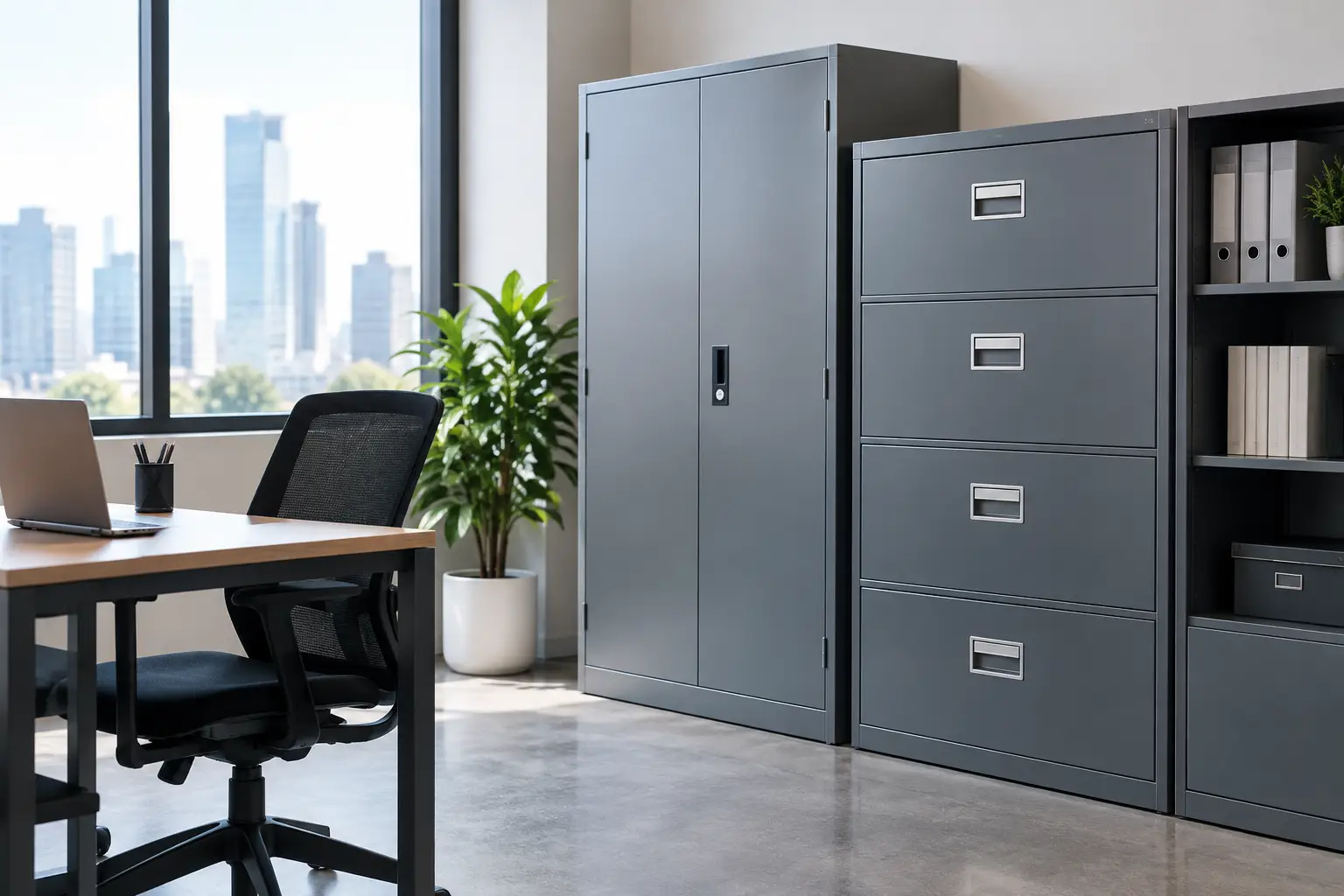
A cabinet that bends, jams, or exposes sensitive files creates a small problem every day and a larger operational problem over time. Steel office cabinets are built for workplaces where storage must withstand frequent use, support better organization, and protect documents, supplies, equipment, or personal belongings without requiring constant replacement.
For procurement teams and facility managers, the right cabinet is not simply a piece of office furniture. It is part of the working system. It affects how quickly employees find what they need, how securely information is stored, how efficiently floor space is used, and how well a facility performs as staffing or storage needs change.
What Steel Office Cabinets Do Better
Steel is a practical choice where cabinets receive daily use, carry significant loads, or serve shared work areas. Unlike lightweight storage designed mainly for occasional use, a well-made steel cabinet maintains its form under repeated opening, closing, loading, and moving. Doors stay aligned, shelves remain stable, and the cabinet continues to present a professional appearance in busy environments.
This matters in offices, schools, healthcare facilities, workshops, warehouses, public institutions, and staff areas. Each setting has different storage needs, but all benefit from a cabinet that can handle high traffic and remain dependable over a long service life.
Metal construction also supports better security. Lockable doors and drawers help control access to contracts, personnel files, devices, tools, medication records, consumables, and other workplace materials. The level of security should match the contents. A general office supply cabinet may need a basic key lock, while administrative records or controlled equipment may require a more deliberate access arrangement.
Durability should not mean accepting an industrial-looking workspace. Powder-coated steel cabinets are available in clean, consistent finishes that suit administration areas, reception zones, technical offices, and back-of-house rooms. The right color and door configuration can help create an organized visual standard across a site.
Choosing Steel Office Cabinets by Use Case
The best cabinet starts with the contents, not the catalog page. Buyers should define what will be stored, who needs access, how often items are retrieved, and where the cabinet will be installed. Those answers determine the correct dimensions, lock type, shelf configuration, and door style.
Documents and administrative records
Document storage requires orderly access as much as security. Cabinets for files, binders, archived paperwork, and departmental records need shelf spacing that accommodates the formats used by the team. Adjustable shelves are useful when requirements change between archive boxes, binders, and office supplies.
For active files, consider how often employees open the cabinet. Swing doors may be suitable in a private records room, while sliding doors can be a better choice where aisle space is limited. The trade-off is simple: sliding doors save clearance space, but hinged doors can provide full access to the cabinet interior at once.
Shared supplies and equipment
Printers, stationery, cables, small tools, uniforms, and cleaning supplies are commonly stored in shared areas. Here, visibility and access speed often matter more than high-security locking. A cabinet with adjustable shelves allows one product type to be stored today and another next quarter without replacing the unit.
Check the expected shelf load rather than assuming every shelf performs the same. Paper cartons, technical equipment, and packaged consumables can become heavy quickly. Shelf capacity, shelf reinforcement, and cabinet stability should be confirmed for the intended load.
Employee storage in office settings
Modern offices increasingly need secure storage for hybrid staff, personal items, laptops, and work materials. A multi-compartment cabinet or locker-based configuration can be more practical than a large shared cabinet when individual access is required.
This is where a broader metal storage program can simplify purchasing. An organization may combine office cabinets for departments with lockers for staff areas, charging lockers for devices, and shelving for central supplies. Using compatible products creates a more consistent layout and can reduce sourcing complexity across a project.
Technical and controlled areas
IT rooms, maintenance offices, laboratories, and production support areas may need cabinets for tools, components, PPE, or controlled materials. These spaces place more emphasis on load capacity, secure locking, ventilation requirements, and compatibility with site safety procedures.
A standard office cabinet is not automatically suitable for every technical application. Chemical products, batteries, and hazardous materials can require purpose-built storage with specific safety features. Matching the cabinet to the risk is essential. A general storage cabinet is an efficient solution for general items, but it should not be used as a substitute for specialized safety storage.
Specifications That Matter During Procurement
Product images rarely tell the full story. A cabinet may look similar to another model but differ significantly in steel thickness, door construction, shelf support, lock quality, coating process, or assembly method. Procurement decisions should focus on the details that affect lifecycle value.
Start with dimensions, including not only cabinet width, height, and depth, but also usable internal space. External measurements can be misleading if large frame sections or door mechanisms reduce the storage area inside. Confirm whether shelves are adjustable and whether their load rating suits the planned contents.
Then review the construction. Welded bodies can provide rigidity and reduce installation time, while knock-down designs may be preferred where shipping volume, building access, or on-site assembly are important considerations. Neither option is automatically better. The right choice depends on delivery conditions, project scale, and the facility’s installation resources.
Locking options also deserve attention. Key locks are familiar and cost-effective for many applications. Central locking can simplify control across multiple doors or drawers. For larger employee-storage projects, digital or RFID access may offer better administration, though it adds system complexity and should be selected only when the operational benefit justifies it.
Finish quality has a direct effect on appearance and maintenance. A durable powder coating helps resist scratches and everyday wear, particularly in corridors, shared offices, and industrial-adjacent environments. Specify a finish appropriate to the workspace rather than treating color as a final cosmetic decision.
Plan the Space Around the Cabinet
Even a high-quality cabinet performs poorly if it blocks circulation or creates difficult access. Measure the available wall space, but also account for door swing, aisle width, evacuation routes, workstation clearance, and cleaning access. In a compact office, a cabinet with the wrong door arrangement can create daily frustration for every user.
Placement should reflect how materials move through the facility. Active supplies belong close to the people who use them. Archive materials can be placed in less accessible areas. Secure records should be located where access can be monitored. This reduces unnecessary movement while supporting better control over workplace assets.
For multi-site rollouts, standardizing cabinet sizes and configurations can make future planning easier. Replacement units, additional storage, and internal relocations become more manageable when each location follows a consistent specification. However, standardization should not override genuine site differences. A headquarters administration floor and a maintenance office may need different cabinet solutions even when they use the same supplier.
Custom Cabinet Solutions for Project Requirements
Standard products are often the fastest route for common office storage needs. They can support shorter lead times and simpler comparison during purchasing. But projects with unusual room dimensions, specific compartment sizes, branded color requirements, or specialized locking needs may benefit from custom metal fabrication.
Customization is most valuable when it solves a defined operational issue. A cabinet made to fit an underused wall recess, accommodate a particular archive format, or separate materials by department can improve daily efficiency for years. Custom work without a clear use case can add cost and lead time without improving the result.
Loxmet supports both standard and project-based metal storage requirements, allowing buyers to combine proven cabinet formats with tailored specifications when the workplace calls for them. This approach is particularly useful for distributors, fit-out professionals, and organizations managing phased facility upgrades.
A Better Buying Standard for Long-Term Storage
The lowest purchase price is rarely the only meaningful measure. A cabinet that needs adjustment, replacement, or repair after limited use can cost more through downtime, procurement effort, and inconsistent workplace standards. Evaluate steel office cabinets on their expected service life, load performance, access control, finish durability, and suitability for the actual environment.
Ask for clear product specifications, confirm the warranty terms, and assess whether the manufacturer can support repeat orders as your needs grow. For high-volume or multi-location projects, production capacity and delivery reliability matter as much as the individual cabinet design.
Choose storage that makes work easier to manage. When cabinets are correctly specified, employees spend less time looking for materials, managers gain better control over assets, and the workplace remains orderly long after installation.