


Highlights
Choosing a 2 Drawer Lateral File Cabinet

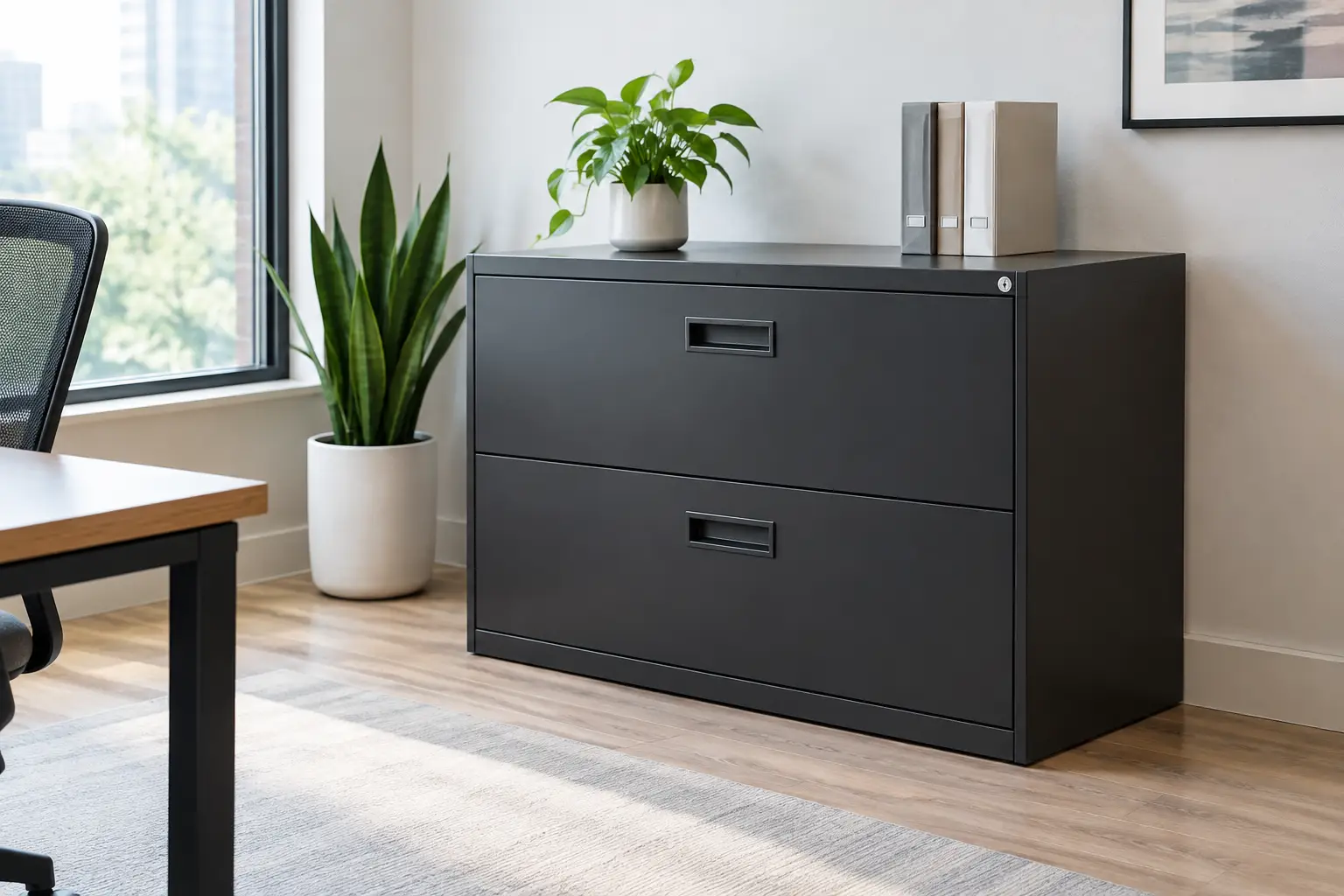
A 2 drawer lateral file cabinet solves a familiar workplace problem: records need to stay accessible without allowing paperwork to take over valuable floor space. For offices, schools, healthcare facilities, public departments, and commercial sites, the right cabinet keeps active files organized, protected, and easy for authorized staff to retrieve.
The cabinet itself is simple. Selecting one for a business environment is not. Drawer width, load capacity, locking requirements, document format, finish, and installation conditions all affect whether the unit will perform reliably for years or become a weak point in the filing system.
Why Choose a 2 Drawer Lateral File Cabinet?
A lateral cabinet stores files side to side rather than front to back. This gives each drawer a wide filing area and makes it easier to organize records in a compact, low-height format. Compared with taller vertical filing units, a two-drawer lateral cabinet can also provide a useful top surface for a printer, tray, display item, or daily administrative materials.
For many facilities, two drawers are the practical middle ground. The cabinet provides meaningful document capacity without the height and weight of a larger multi-drawer unit. It fits well under worktops, beside shared desks, in reception areas, and along office walls where a tall cabinet may feel intrusive.
This format is particularly effective for active records. Human resources teams can separate personnel files from policy documents. School offices can divide student records from administrative paperwork. Facility teams can store maintenance logs, safety documentation, and equipment information in a defined location. The purpose is not simply to store paper. It is to make routine work faster and more controlled.
Start With the Available Space and File Format
The first purchasing decision is not color or lock type. It is the actual installation space. Measure the width, depth, and height of the intended location, then account for the drawer extension needed for staff to access files safely. A cabinet may fit against a wall when closed but still block a walkway when its drawer is fully open.
Check the working clearance
Lateral drawers are wide, which is an advantage for access but requires clear space in front of the cabinet. In a narrow office aisle or busy reception area, drawer operation must not obstruct circulation, emergency routes, or other storage doors. If several cabinets will be installed in one room, consider whether users can open drawers at the same time.
The top surface also needs consideration. A low lateral cabinet is often used as an auxiliary workstation. If a printer, scanner, or document tray will sit on top, confirm that the cabinet construction and top panel are designed to support the expected load. Avoid treating filing furniture as general equipment storage unless its specification supports that use.
Match the drawer configuration to your records
Letter-size and legal-size records do not require the same internal arrangement. Some operations need side-to-side filing, while others require front-to-back rails or adjustable dividers. The cabinet should suit the format already used by the organization, not force staff to change a filing process that is otherwise working.
Procurement teams should also think beyond the first installation. A cabinet purchased for one department may later move to another department with different filing needs. Adjustable hanging rails and compatible internal accessories can make that transition easier and extend the useful life of the unit.
Construction Details That Affect Long-Term Performance
A filing cabinet is opened, loaded, closed, and sometimes moved hundreds of times each year. Thin materials and weak drawer slides may appear acceptable at delivery but become problematic when drawers are filled with paper. Paper is heavier than many buyers expect, especially in a wide lateral drawer holding dense archived records.
Steel body and reinforced drawers
For commercial applications, metal construction provides a stable foundation for daily use. A quality steel cabinet should have a rigid carcass, reinforced drawer fronts, reliable connection points, and a finish that resists scratches and routine cleaning. Powder-coated surfaces are commonly selected because they offer a consistent professional appearance and practical resistance to everyday wear.
Drawer suspension is equally important. Smooth-running slides reduce effort for users and help prevent drawers from binding under load. Full-extension access can be useful where staff need to reach files at the back of the drawer, but the selected slide system must be rated for the intended filing weight.
Locking and controlled access
Not every document requires the same level of security. General administration may only need a central lock that secures both drawers. Personnel, financial, medical, legal, or compliance records may require tighter key control, master-key planning, or a different level of access management.
A central locking system simplifies use because one key secures the cabinet. However, buyers should confirm how keys will be managed across the facility. Large projects benefit from a clear key schedule that identifies cabinet locations, authorized users, spare keys, and replacement procedures. Security is strongest when the furniture and the operating process support each other.
Anti-tip protection matters
A fully loaded lateral drawer creates forward weight. Anti-tip mechanisms are therefore a serious safety requirement, particularly in shared workplaces, schools, and public-facing offices. Many cabinets are designed to limit the opening of multiple drawers at once, reducing the risk of imbalance.
Where site conditions require it, the cabinet should also be secured to the wall or floor according to the manufacturer’s installation guidance. This is especially relevant in high-traffic spaces and locations with strict health and safety procedures.
Where Two-Drawer Lateral Cabinets Work Best
The 2 drawer lateral file cabinet is well suited to departments that need immediate access to a controlled volume of documents. It is a strong fit for individual offices, shared administrative zones, reception areas, payroll departments, clinic offices, and records rooms with limited floor space.
It may be less suitable for a large archive with long retention periods. In that situation, shelving, high-density archive systems, or larger filing banks may deliver a better cost-per-file capacity. The correct choice depends on how often documents are retrieved, how confidential they are, and how quickly the file volume is expected to grow.
For commercial fit-out projects, consistency also matters. Matching filing cabinets with metal office cabinets, lockers, shelving, and other storage units creates a more orderly environment and simplifies future procurement. Working with a manufacturer such as Loxmet can help project buyers align finishes, dimensions, locking needs, and production requirements across multiple storage categories.
Specify the Cabinet Clearly Before Ordering
A clear specification prevents delays, incorrect deliveries, and unsuitable substitutions. Rather than requesting a generic filing cabinet, define the operating requirement in procurement documents. At minimum, include the following details:
- External dimensions, including the maximum permitted depth in the installed position.
- Required file format and the preferred hanging-file orientation.
- Drawer load capacity based on expected paper volume and usage frequency.
- Lock type, keying arrangement, and any master-key requirement.
- Steel thickness, finish color, and corrosion resistance appropriate to the site.
- Anti-tip features, anchoring needs, and installation responsibilities.
For distributor orders and multi-site projects, standardization can be more valuable than selecting the lowest unit cost. A common cabinet specification makes replacement, expansion, key management, and facility maintenance easier over time. It also gives purchasing teams a dependable basis for comparing quotes.
Custom fabrication may be appropriate when a standard cabinet does not fit the space or workflow. Examples include nonstandard widths, special colors, integrated worktops, alternative lock systems, or configurations designed to align with existing office furniture. Customization should support a clear operational need, since unnecessary variations can add cost and complicate future replacement planning.
Plan for Installation and Everyday Care
Even a heavy-duty cabinet needs correct installation. Place it on a level floor, maintain clear drawer travel, and follow anchoring instructions where required. Before files are loaded, test each drawer, lock, and anti-tip function. This is the simplest time to identify a transport issue or installation adjustment.
Routine care is straightforward. Keep drawer tracks free from loose paper clips and debris, avoid slamming loaded drawers, and redistribute files if one drawer is consistently heavier than the other. Periodic checks of locks, handles, slides, and anchoring points help facility teams address small issues before they interrupt access to important records.
A well-selected filing cabinet should fade into the background of daily operations. Staff should find the right file quickly, managers should know confidential records are controlled, and the facility should gain organized capacity without sacrificing usable space.