


Highlights
Choosing a Seating Bench for Locker Rooms

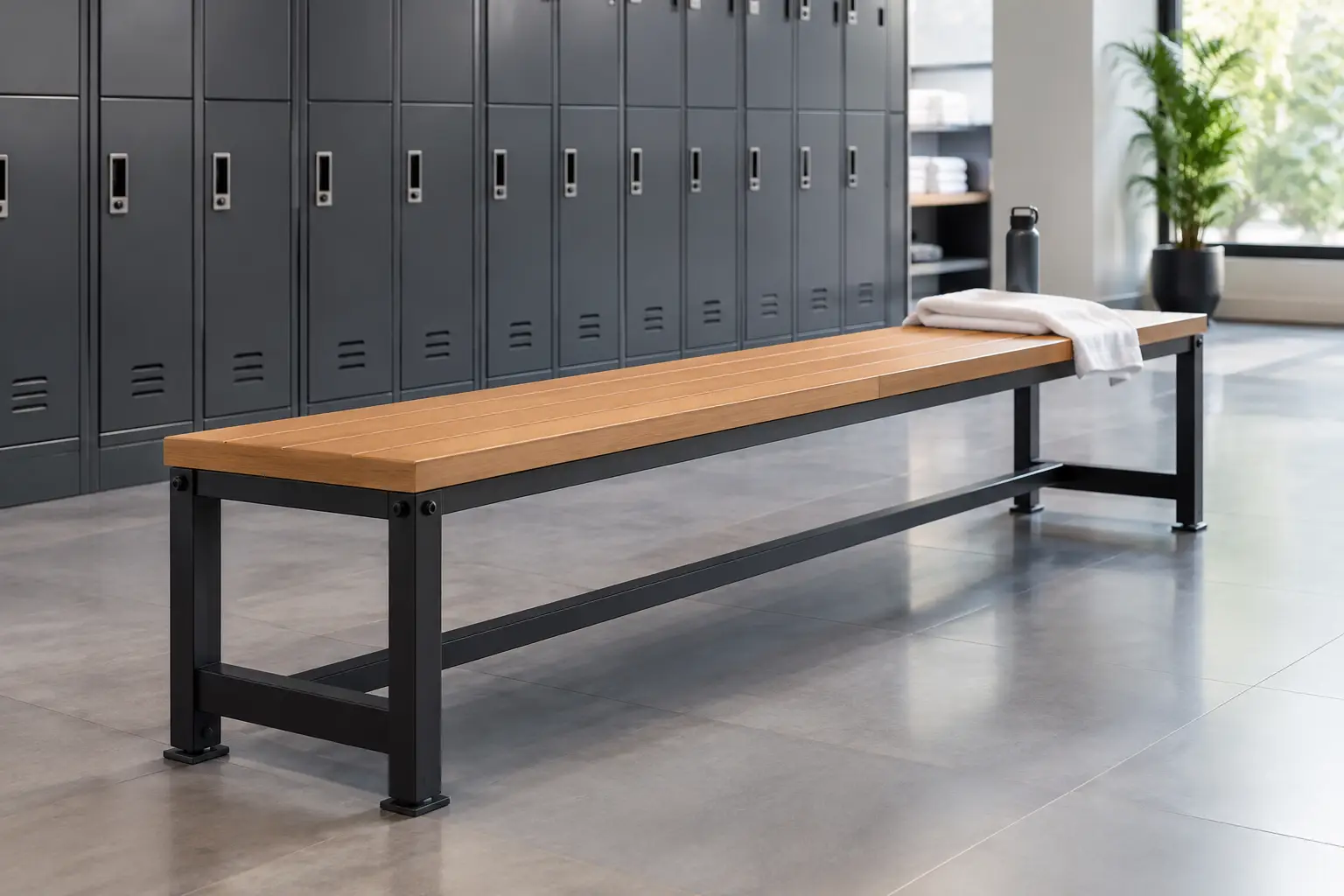
A seating bench for locker rooms is not a secondary furnishing. It is part of the daily workflow around employee lockers, gym changing areas, schools, healthcare facilities, and industrial sites. When the bench is too light, too narrow, or poorly positioned, users struggle to change comfortably and facility teams inherit unnecessary maintenance work. The right specification supports orderly traffic, protects the locker installation, and remains stable through years of repeated use.
For commercial buyers, the decision should begin with the operating environment rather than appearance alone. A compact staff changing room, a high-traffic fitness facility, and a PPE issue area may all use metal lockers, but they place very different demands on seating.
What a Seating Bench for Locker Rooms Must Deliver
A commercial bench needs to handle concentrated loads, frequent cleaning, and constant contact with bags, workwear, footwear, and personal items. It must also fit the room without reducing access to locker doors or creating unsafe circulation routes.
The most dependable designs use a steel support structure paired with a practical seating surface. Steel frames provide the strength needed for shared facilities and allow the bench to remain stable when users sit, lean, or place equipment on it. The seating material should match the conditions. Wooden slats can create a warm, traditional locker room appearance, while compact laminate or durable coated surfaces may be a better fit where moisture resistance and simple sanitation are priorities.
The key is to specify the bench as a working component of the locker room. A bench that looks suitable in a catalog but cannot withstand wet shoes, heavy uniforms, and continuous use will become a replacement cost rather than a long-term asset.
Start with the User Load
Consider how many people will use the room during its busiest period, not the average day. Shift-change facilities, schools between classes, and gyms after peak sessions can place intense short-term demand on benches. A bench should provide enough seating for users to change without blocking lockers or standing in the main aisle.
Longer benches usually improve seating density and can simplify the room layout. However, they need appropriate intermediate supports to prevent flexing. Shorter modules offer more flexibility where rooms have columns, door swings, or irregular wall lengths. For large projects, modular sizing can make future reconfiguration easier if locker banks are expanded or moved.
Choose Dimensions That Support Safe Movement
Bench dimensions affect both comfort and compliance with the overall floor plan. Seating depth must give users a secure place to sit without taking too much aisle space. Height should be comfortable for adults putting on footwear or changing work clothing. The exact dimensions depend on the project, but the bench should be specified alongside the locker depth, door opening, and available circulation area.
Leave sufficient clearance in front of lockers for doors to open and for people to pass behind seated users. In narrow rooms, a central island bench may create congestion even when it provides more seats. Wall-side benches can be more efficient, particularly when lockers are arranged opposite them. Where users need access from both sides, a double-sided bench may be the better use of the floor area.
Selecting the Right Bench Construction
Construction details determine whether a bench stays stable and presentable after years of use. Procurement teams should look beyond the top surface and assess the frame, joints, finish, and anchoring method.
A heavy-duty steel frame is a practical choice for locker rooms serving employees, students, athletes, or visitors. It should be designed with adequate cross-bracing and securely welded joints. A powder-coated finish helps protect steel against scratches and everyday moisture exposure. For wet areas, finish quality and material selection deserve additional attention because corrosion can begin at damaged edges, weld points, or poorly protected fixings.
The seat surface should be smooth, easy to wipe down, and resistant to splintering or cracking. Slatted tops can allow water and debris to fall through, which is useful in changing rooms and shower-adjacent spaces. Solid tops may be easier to sanitize in controlled environments, provided the material is suited to moisture and cleaning products.
Leg design also matters. Open-frame benches allow easier floor cleaning underneath. Models with adjustable feet can help compensate for uneven floors, while floor-fixed benches provide added security in public or high-abuse locations. Neither option is automatically better. The right choice depends on whether mobility, cleaning access, theft prevention, or permanent layout control is the primary requirement.
Add Storage Where It Improves the Layout
In many facilities, seating and storage should work together. A bench with an integrated lower shelf gives users a place for shoes, bags, helmets, or folded workwear. This keeps the aisle clearer and reduces the likelihood that belongings are placed against locker doors or on the floor.
Under-bench shelving is particularly useful in employee changing rooms, sports facilities, and industrial locker areas where users carry more than a small personal bag. It is less appropriate where strict cleaning protocols require open, easy-to-inspect floor areas or where stored items could create a trip hazard. The shelf height and clearance should therefore be considered as part of the operational plan, not treated as an automatic upgrade.
For sites with limited footprint, coordinated locker and bench dimensions can recover valuable space. Benches can be produced to align with locker bays, room walls, and existing furniture runs. This produces a more organized installation and avoids the improvised gaps that collect dirt and make cleaning harder.
Plan the Locker Room as a Complete System
The best bench specification is connected to the full storage project. Before ordering, confirm the locker configuration, room measurements, access routes, floor condition, cleaning routine, and expected user group. A bench that works well in a dry office locker area may not be suitable for a factory changing room where workers wear safety boots and carry PPE.
Facility managers should also consider delivery and installation access. Long welded bench sections can reduce on-site assembly but may be difficult to move through narrow doors, elevators, or stairways. Knock-down or modular construction can simplify access, although it introduces assembly requirements. For multi-site projects, standardizing bench sizes and finishes can reduce purchasing complexity and make replacement planning more straightforward.
Custom fabrication becomes valuable when standard dimensions do not fit the room or the operational flow. Common requirements include non-standard lengths, special frame colors, integrated shelves, double-sided layouts, and configurations that align with specific locker sizes. A manufacturer with both standard products and custom production capability can help maintain consistency across the entire facility rather than forcing buyers to compromise around one unsuitable component.
Questions to Ask Before You Specify a Bench
Before approving a seating bench, ask whether it is designed for the expected number of users and the heaviest daily use. Confirm that its dimensions preserve clear access to every locker door. Review the frame material, seat finish, and cleaning compatibility for the environment. Finally, determine whether the bench should be movable, floor-fixed, wall-side, central, single-sided, or double-sided.
These questions prevent the common mistake of buying benches separately from the lockers. When both are planned together, the result is a more efficient room, a cleaner layout, and a better experience for the people using it.
Loxmet supplies heavy-duty locker room furniture for commercial and institutional projects, with standard options and custom metal fabrication for site-specific requirements. The most effective bench is the one that supports your locker layout, user flow, and maintenance routine from the first day of operation.