


Highlights
Glass Door Office Cabinet Selection for Workplaces

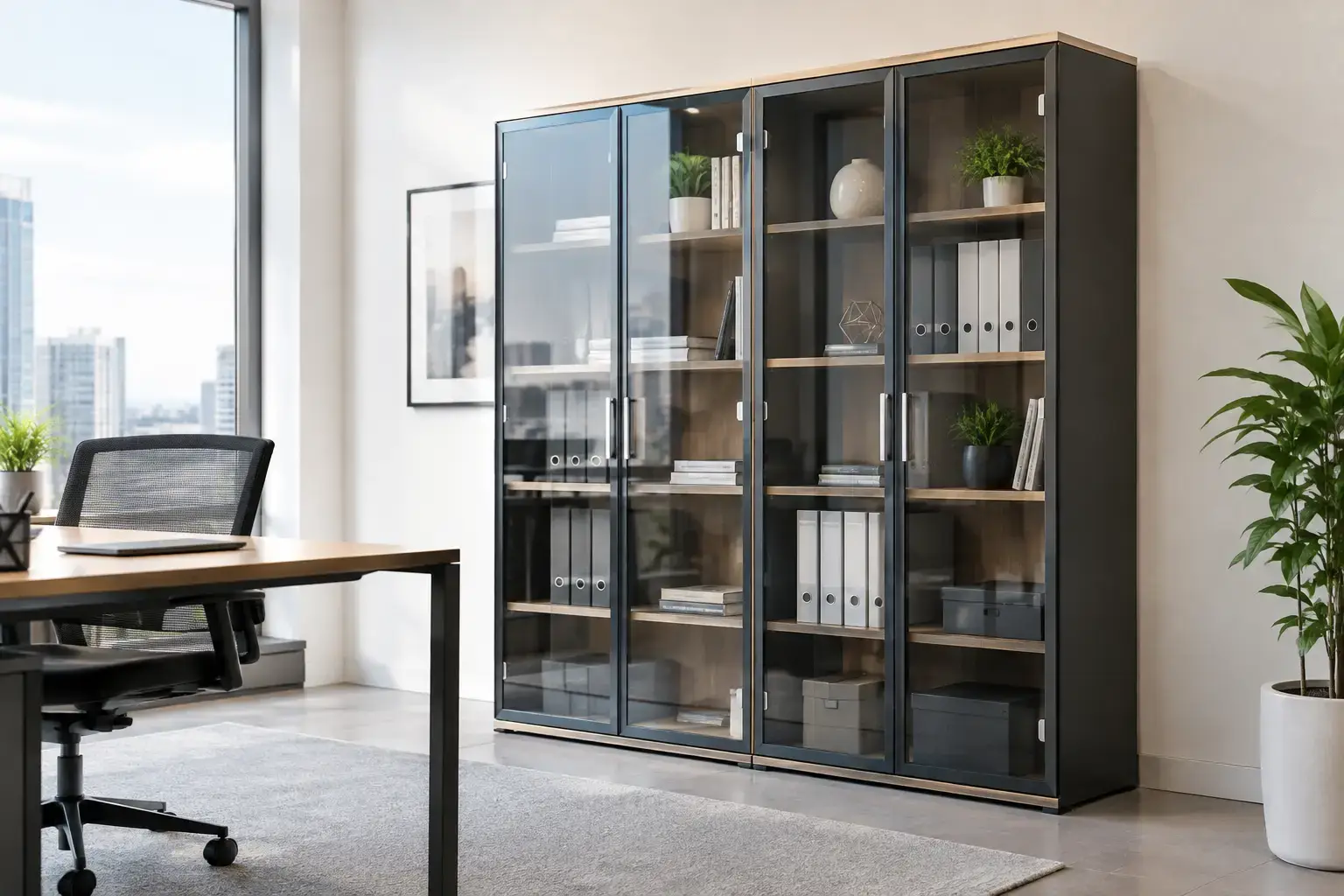
A glass door office cabinet solves a practical workplace problem: teams need to see stored files, supplies, and shared equipment without leaving them exposed or disorganized. For procurement and facility teams, the right cabinet improves access control, reduces search time, and gives office storage a more orderly appearance. The wrong one can create security gaps, wasted floor space, or shelves that do not support the daily load.
For commercial environments, selection should begin with construction and use case, not appearance alone. Glass doors add visibility, but the cabinet body, locking system, shelf capacity, and installation location determine whether the unit will perform reliably over years of use.
Where Glass Door Office Cabinets Work Best
Glass-front cabinets are particularly effective where employees need visual access to shared materials. Administrative offices can use them for binders, stationery, archived folders, and printer supplies. Schools and training centers may store teaching materials, records, or equipment that must be identified quickly. In healthcare administration areas, they can support organized storage of non-sensitive paperwork and general supplies.
They are also useful in reception areas, management offices, and meeting spaces where storage needs to look controlled rather than purely industrial. A steel cabinet with glazed doors maintains the strength expected in a commercial facility while allowing contents to remain visible.
That visibility has a trade-off. A glass door office cabinet is not the best choice for every item. Confidential documents, personal employee belongings, sensitive devices, and high-value assets may require solid doors, higher-security locking, or a dedicated charging and security cabinet. The best storage plan often uses glass-door units for shared inventory and solid-door cabinets for restricted materials.
Start With the Required Storage Load
A cabinet should be specified around what it must store, not simply the available wall space. Files stored upright, boxed archives, office consumables, and equipment cases place different demands on shelf depth, shelf spacing, and load capacity.
Before requesting a quotation, determine the approximate number of folders, boxes, or supply containers that will be held in each cabinet. Consider whether contents will change throughout the year. A cabinet that appears sufficient on installation day may become inadequate once departments add records, seasonal materials, or new equipment.
Shelf adjustability matters when contents vary. Adjustable shelves allow a facility to create taller bays for binders or cartons and smaller spaces for stationery and consumables. Fixed shelves can be appropriate for a consistent use case, but they limit future flexibility.
For heavier paper storage, verify the load rating of each shelf rather than relying on the overall cabinet size. Paper is deceptively heavy, especially when several shelves are filled with lever-arch files or document boxes. Steel shelving, reinforced shelf edges, and stable shelf supports make a measurable difference in long-term use.
Measure More Than Width and Height
Cabinet dimensions affect aisle clearance, door swing, cleaning access, and evacuation routes. Measure the wall location, but also account for the fully opened doors. Hinged glass doors need clear space in front of the cabinet, while sliding-door designs can be more suitable for narrow corridors or compact workrooms.
Height also affects daily usability. Tall cabinets increase vertical storage capacity, yet frequently used items should remain within comfortable reach. In shared offices, placing heavy archive boxes on upper shelves can introduce unnecessary handling risk. A mix of tall cabinets for low-frequency storage and lower units for daily supplies is often more efficient.
Choose a Steel Body That Matches Commercial Use
For business buyers, the cabinet body is the working structure. A powder-coated steel construction provides impact resistance, dependable support for loaded shelves, and a finish that is easier to maintain than many lightweight alternatives. It is particularly suited to busy offices, public institutions, education facilities, and operational areas where furniture receives regular use.
Look for formed steel panels, stable corners, and doors that align consistently. Poor alignment can cause glass doors to bind, rattle, or fail to close correctly. Quality hinges and properly fitted door frames are equally important, especially in environments where multiple employees access the cabinet every day.
The finish should match both the environment and maintenance expectations. A durable powder-coated surface resists routine scuffs and is simple to clean. Neutral cabinet colors usually integrate well into offices, while custom colors can support facility standards, department identification, or larger fit-out projects.
Glass specification also deserves attention. Clear glazing provides the strongest visibility, while frosted or patterned glass can reduce visual clutter and provide a modest level of privacy. For high-traffic settings, buyers should ask about the glass type and its suitability for the intended location. Safety glass is a sensible specification where accidental impact is more likely.
Locking and Access: Visibility Does Not Mean Open Access
Glass doors make contents visible, but they should not make storage freely accessible. A central locking system is often appropriate for shared files, office stock, and controlled supplies. It allows one authorized user to secure both doors while keeping the contents easy to identify.
The required lock depends on how the cabinet will be managed. Key locks are straightforward and effective for small teams. Master-key arrangements can simplify administration across a larger office or multi-room facility. Where access must be traceable or frequently updated, electronic locking may be more appropriate, although it adds cost and requires a clear maintenance plan.
Do not treat a glass-front cabinet as a document-security product unless its lock, door construction, and intended application support that purpose. For confidential records, procurement teams should consider data protection requirements alongside physical storage needs. A visible cabinet works best for materials that benefit from quick identification and controlled shared access.
Plan the Cabinet Layout as Part of the Room
Office storage is most effective when it is placed around workflow. A cabinet used for shared stationery should be close to the team that uses it, while archive storage can sit in a lower-traffic records area. Keeping frequently accessed items close reduces interruptions and prevents staff from creating informal storage piles on desks and counters.
In open-plan offices, glass doors can make a storage wall feel lighter than solid-front units. However, visible contents need a basic organization standard. Matching file boxes, labeled folders, and consistent shelf zones prevent the cabinet from becoming a display of clutter. The cabinet supports organization, but it cannot replace a sensible storage process.
For larger projects, standardizing cabinet dimensions across departments can simplify ordering, replacement, and future expansion. It also creates a more consistent facility appearance. Where rooms have unusual dimensions, recesses, or specific capacity requirements, custom metal fabrication can be a better commercial decision than forcing a standard product into an unsuitable space.
Questions to Ask Before Ordering a Glass Door Office Cabinet
A clear specification reduces delays and prevents unsuitable substitutions. Procurement teams should confirm the cabinet’s external dimensions, internal shelf dimensions, number of shelves, shelf load capacity, door type, lock type, glass specification, finish, and delivery requirements.
It is also useful to establish whether the cabinet will be delivered assembled or requires installation. For multi-floor offices, access through elevators, doorways, and service routes should be checked before delivery. Large cabinets are durable assets, but their size can complicate placement if site access is not considered early.
For distributors and project buyers, supplier capability matters alongside the product specification. The ability to source standard cabinets quickly, order in flexible quantities, and request modifications for a particular workplace can reduce the complexity of a broader storage project. Loxmet supports this approach with industrial metal storage production, standard product availability, and custom options for operational requirements.
A Cabinet That Supports Daily Control
The best glass-front storage is not chosen because it looks lighter than a solid cabinet. It is chosen because staff can find what they need, managers can maintain order, and the structure continues to perform under daily commercial use. Specify the load, access level, dimensions, and finish first. Then select a glass door office cabinet that gives the workplace visibility without giving up strength or control.