


Highlights
Clear Vision Door Locker for Smarter Storage

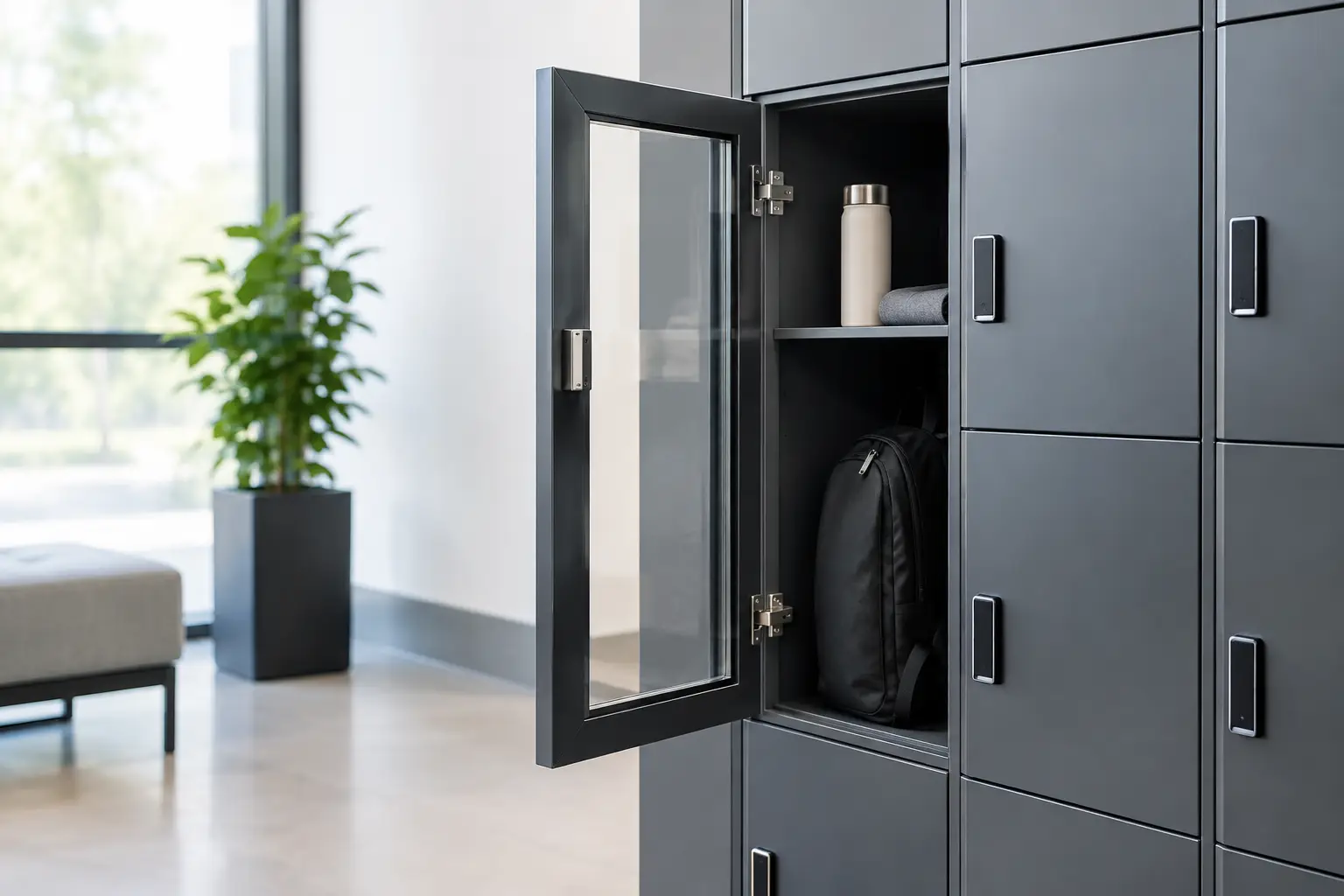
A clear vision door locker solves a common facility problem: staff need secure personal storage, while supervisors need to confirm that lockers are being used correctly without opening every door. The result is better accountability, faster checks, and a cleaner visual standard across changing rooms, schools, warehouses, gyms, and controlled work areas.
For commercial buyers, the value is not simply the transparent panel. A good locker must still perform as industrial furniture. It needs a strong steel body, reliable locking, practical ventilation, stable installation, and a layout that fits the number of users and the items they carry. Clear-view doors are a useful specification when they support those operational requirements rather than replace them.
What Is a Clear Vision Door Locker?
A clear vision door locker is a metal locker fitted with a transparent or partially transparent door panel. Depending on the required level of visibility and privacy, the panel may be clear, tinted, frosted, perforated, or made from impact-resistant transparent material. The locker body is typically powder-coated steel, while the door frame and reinforcement maintain rigidity around the viewing area.
These lockers are used where visual inspection matters. A facility manager can quickly see whether a compartment is occupied, whether items are stored appropriately, or whether a locker has been left open. This can reduce routine inspection time in busy locations with dozens or hundreds of compartments.
The design also changes how a locker room feels. Solid steel doors create a closed, uniform wall. Clear or translucent doors make the space feel more open while preserving the organized appearance expected in professional facilities. That said, transparency is not suitable for every site. Employees, students, and members may need greater privacy for personal belongings, making tinted or partial-vision door options a better fit.
Where Clear Vision Door Lockers Work Best
Clear-view lockers are especially practical in environments with clear storage policies. In schools, they can support safety procedures and discourage prohibited items from being stored out of sight. In industrial workplaces, they help supervisors confirm that PPE, workwear, or issued equipment is returned to the correct compartment at the end of a shift.
Gyms and sports facilities can use clear vision doors to make empty lockers easier to identify during peak periods. In employee changing rooms, a translucent panel can offer a balanced approach: it indicates occupancy and keeps the locker bank visually light without fully exposing personal contents.
They are also useful in controlled-access settings, such as distribution centers, manufacturing plants, laboratories, and clean work zones. Here, the purpose is often operational rather than decorative. Visible storage can help enforce rules on what may enter or leave a specific area.
A clear door is less appropriate where workers store highly personal items, sensitive documents, medication, or valuables. In those cases, a standard steel door, a small inspection window, or a mixed locker configuration may provide a more appropriate level of discretion.
Clear Vision Door Locker Specifications That Matter
The door panel gets attention first, but buyers should assess the complete construction. A lightweight transparent panel in a weak door frame will not provide the durability expected from commercial locker furniture. The steel door should be formed and reinforced to resist flexing around the viewing area, particularly on tall compartments or frequently used locker banks.
Door Material and Impact Resistance
Transparent locker panels are commonly made from materials selected for strength, clarity, and day-to-day durability. The right material depends on the risk level of the site. A low-traffic office changing area has different requirements from a school corridor or a factory locker room where bags, footwear, and equipment may strike the doors.
Ask how the panel is fixed into the door and whether it can be replaced if damaged. A replaceable panel can lower long-term maintenance costs. However, the panel must be securely retained so it cannot be easily removed or loosened through repeated use.
Steel Thickness and Door Reinforcement
Locker durability is determined by more than the door surface. Check the steel grade and thickness used for the body, frame, shelves, and doors. Reinforced door edges, concealed hinges, and a rigid carcass help prevent sagging, misalignment, and forced entry over time.
For high-use facilities, specify a construction designed for repeated cycles. A locker used by one office employee has a lighter duty profile than a compartment used across multiple shifts in a manufacturing facility. Procurement teams should match the product specification to actual use, not only the initial purchase price.
Ventilation and Interior Condition
Visibility does not replace ventilation. Locker rooms used for uniforms, safety footwear, sports gear, or wet clothing need airflow to reduce odor and moisture buildup. Ventilation slots or perforated sections should be positioned to support circulation without compromising security.
If workwear must dry between shifts, consider deeper compartments, hanging rails, shelf arrangements, or a dedicated drying solution. A clear vision door locker is best used as part of a practical storage plan, not as a one-size-fits-all answer to every changing-room requirement.
Choosing the Right Locking Method
The lock should match who uses the locker, how often access changes, and whether users are assigned a fixed compartment. Cam locks remain a straightforward option for assigned employee lockers, especially where key management is already established. Hasps can work where users supply their own padlocks, although this places more responsibility on the end user.
Combination locks reduce key administration, while digital or RFID locks can suit larger sites with frequent user turnover. These systems are useful in gyms, visitor areas, and shared workplaces, but they add cost and may require battery replacement, system management, or emergency override procedures.
For sites with clear-door lockers, avoid treating visibility as a substitute for security. A transparent panel may deter misuse and simplify checks, but valuable items still require a well-built door, dependable locking, and secure anchoring of the locker bank where required.
Layout, Capacity, and Installation Planning
The right number of doors depends on the items being stored. Full-height single-door lockers suit coats, uniforms, bags, and hanging workwear. Two-door models provide a practical balance for staff areas. Multi-door configurations increase user capacity in limited floor space but are better for smaller personal items than bulky gear.
Before ordering, measure more than the wall. Allow for door opening clearance, benches, traffic flow, accessible routes, cleaning access, and any requirements for plinths or raised bases. In wet or frequently washed areas, a suitable base arrangement can make cleaning easier and protect the locker body from standing water.
Banks of lockers should also be planned around the room’s usage pattern. A long uninterrupted run may maximize capacity, but separate zones for departments, shifts, or user groups can improve daily management. End panels, sloping tops, bench seating, and numbering systems should be considered at the specification stage rather than added as an afterthought.
Custom Options for Project Requirements
Standard locker dimensions and door configurations are often the fastest route for a straightforward order. Custom production becomes valuable when a project has unusual room dimensions, a specific brand color, special lock preparation, mixed compartment sizes, or a requirement to coordinate lockers with cabinets, benches, and shelving.
For example, a manufacturing site may need a combination of full-height compartments for PPE and smaller visible compartments for issued devices. A school may need numbered locker banks sized to a narrow corridor. A sports facility may prefer tinted clear panels with RFID lock compatibility and integrated bench seating.
Loxmet supports standard and custom heavy-duty storage requirements, allowing commercial buyers to build a coordinated locker solution rather than source each element separately. The best specification is the one that fits the users, the room, and the facility’s operating rules.
Questions to Ask Before You Buy
A supplier should be able to answer practical questions clearly: What is the panel material? How is it retained in the door? Is the door reinforced? Which locks are compatible? Can the locker be supplied in the required number of compartments and color? What installation method is recommended for the floor and wall conditions?
Also confirm lead time, packaging for delivery, spare lock or panel availability, and warranty coverage. These details matter when lockers are being purchased for a new opening, refurbishment, or multi-site rollout. A low-cost unit that is difficult to maintain can become an expensive procurement decision over its service life.
Clear-view storage works best when visibility has a clear purpose. Specify the door style, security level, and interior layout around the real workflow of the people using it, and the locker bank will remain useful long after the project handover.