


Highlights
Plexiglass Door Locker Options for Busy Facilities

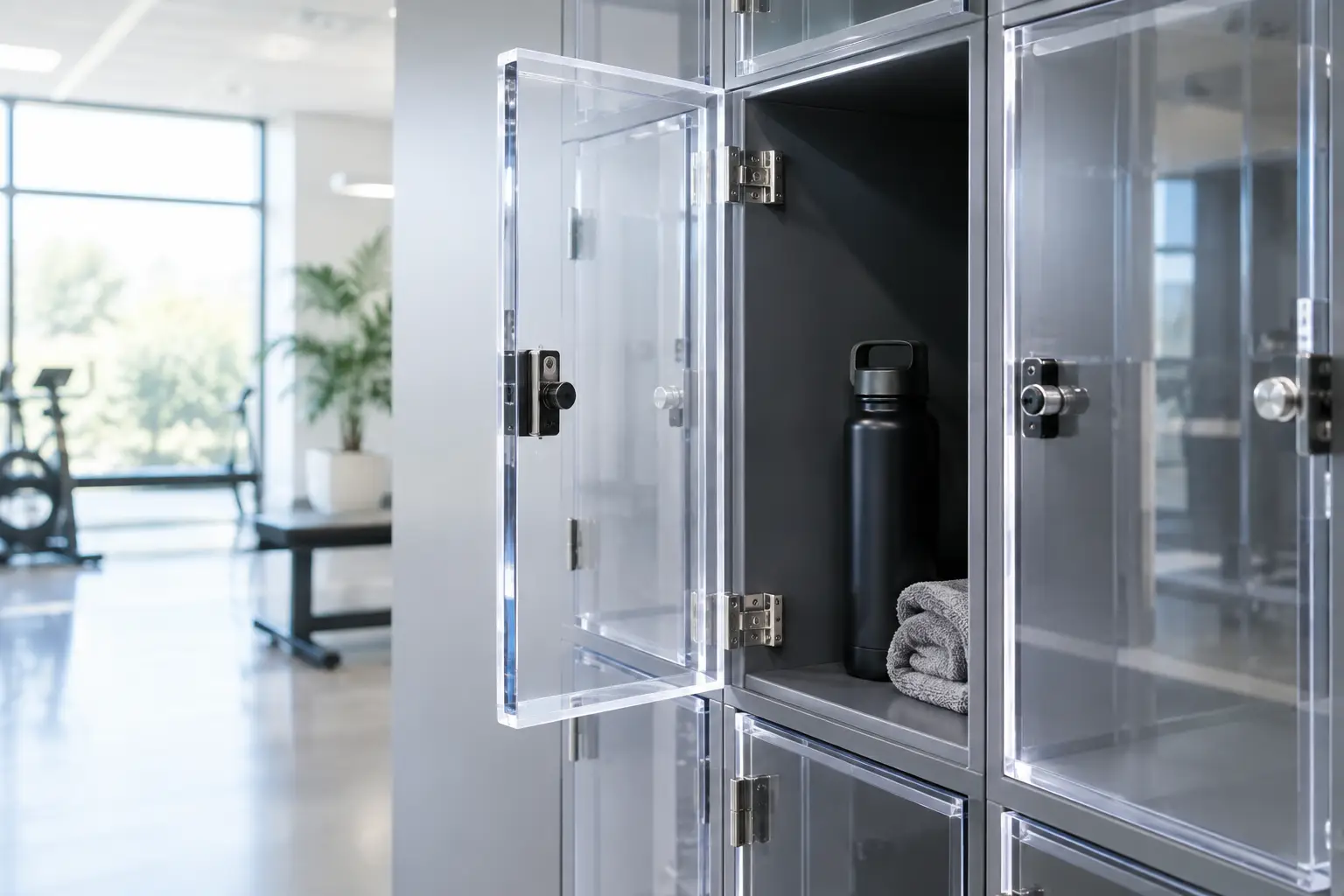
A locker door should not create uncertainty for the people managing a facility. A plexiglass door locker gives staff a clear view of stored items while keeping each compartment individually secured. For schools, gyms, workplaces, distribution centers, and shared-use areas, that visibility can reduce lost-property disputes, simplify inspections, and support better daily organization.
The right specification is rarely just a transparent door added to a standard locker body. Commercial buyers need to consider the door material, steel construction, lock type, ventilation, compartment dimensions, and the way the unit will be used over years of repeated access. A clear door can be a practical operational feature, but only when the entire locker is designed for the environment.
Where a Plexiglass Door Locker Makes Sense
Transparent-door lockers are most useful where contents need to be easy to identify without opening every compartment. In a school setting, they can support clear storage policies and help staff verify that lockers are being used correctly. In offices and factories, they can make it easier to locate shared equipment, uniforms, PPE, documents, or issued tools.
Gyms and sports facilities use clear-door configurations to provide visible personal storage while maintaining an orderly appearance. They can also work well in visitor areas, training centers, event venues, and controlled-access spaces where a facility operator needs oversight without sacrificing individual lockable storage.
Visibility is not appropriate for every application. Employees may prefer opaque doors for personal belongings, and facilities handling confidential documents, sensitive equipment, or higher-value items may need fully enclosed steel doors. The decision depends on what is stored, who can view the lockers, and whether visual control adds genuine value to the operation.
Start With the Metal Locker Body
The clear panel gets attention, but the metal structure determines long-term performance. A commercial locker should use a rigid steel carcass, reinforced door frames, dependable hinges, and a durable powder-coated finish. These elements control how well the unit resists impact, daily wear, corrosion, and door misalignment.
For demanding workplaces, specify steel thickness and reinforcement according to the expected use. A lightly used office locker does not face the same pressure as a unit in a manufacturing plant, school corridor, or busy changing room. Heavy-duty construction is especially important when lockers are installed in banks, stacked, or subjected to frequent opening and closing.
The door frame should protect the plexiglass panel and prevent flexing around the lock area. A poorly supported transparent panel may look acceptable at installation but become vulnerable to damage as usage increases. A purpose-built metal frame provides strength where users pull, push, and secure the door every day.
Plexiglass, Polycarbonate, and Practical Trade-Offs
Plexiglass is commonly used as a general name for clear acrylic panels. It offers a clean appearance, good visibility, and a smooth surface that is easy to wipe down. It is suitable for many controlled indoor environments where users need to see contents quickly.
However, material selection should reflect the risk of impact. Acrylic can be more prone to cracking under sharp impact than polycarbonate. If the lockers will be installed in high-traffic areas, school corridors, industrial changing rooms, or public facilities, polycarbonate may be the better choice because of its higher impact resistance.
Polycarbonate can cost more and may show surface scratches over time if it is not specified with an appropriate protective finish. Acrylic can provide excellent optical clarity and may be the more cost-effective option for lower-risk applications. Ask the manufacturer which transparent material is being supplied, its thickness, how it is fixed into the frame, and whether replacement panels are available for future maintenance.
Choose Security Around the Actual User Journey
A plexiglass door locker is only as useful as its locking system. The lock should match whether the compartment is assigned to one person, shared by rotating users, or managed by facility staff.
Cylinder key locks are a practical option for assigned lockers and straightforward access control. Combination locks remove the need for physical keys, which can reduce key administration in gyms and shared-use environments. Digital or RFID locks can support managed access, audit requirements, and flexible user allocation, particularly in modern offices and larger facilities.
For staff-managed storage, master-key access or emergency override should be considered from the start. This is not simply a convenience feature. It allows authorized personnel to address forgotten codes, maintenance needs, or safety incidents without damaging the door or disrupting an entire locker bank.
The lock must also be installed in a reinforced section of the door. Transparent panels should never be expected to carry the stress created by locking and unlocking. The lock body, cam, and strike point need a secure connection to the metal structure.
Plan Compartments Around What Will Be Stored
Locker dimensions should be based on real items, not an assumed standard. A compact compartment may work for phones, wallets, badges, and small personal effects. It will not work for work boots, helmets, bags, folded uniforms, or larger protective equipment.
Before selecting a configuration, measure the largest item users must store and allow reasonable clearance for daily access. For PPE storage, consider whether garments need hanging space, shelves, hooks, or separation between clean and used items. For device storage, account for charging access, cable management, airflow, and the heat generated by multiple devices.
Multi-door locker banks maximize capacity in limited floor space, while larger compartments improve user convenience. There is no universal best layout. High-density facilities often benefit from a mix of sizes, with small lockers for temporary storage and larger units for staff assigned to longer shifts or personal equipment.
Ventilation and Cleanliness Matter
Clear doors make clutter easier to spot, but they do not replace good locker ventilation. Clothing, shoes, uniforms, and PPE can retain moisture and odor, especially in gyms, industrial sites, and shift-based workplaces. Ventilation slots or perforated areas should allow air movement without compromising the door frame or creating easy access to contents.
Cleaning should also be addressed at the specification stage. Powder-coated steel surfaces are durable and simple to maintain. Transparent panels require compatible cleaning products to avoid haze, scratching, or chemical damage. Facility teams should avoid abrasive pads and harsh solvents unless the panel supplier confirms they are suitable.
If hygiene is a priority, choose a layout with accessible interiors and minimal dirt-trapping joints. The most attractive locker design loses value if cleaning crews cannot service it efficiently.
Installation, Layout, and Daily Management
A well-made locker can still underperform if it is installed without considering traffic flow. Doors need adequate clearance to open without blocking walkways, exits, or adjacent equipment. Locker banks should be anchored appropriately, especially in public areas, schools, and workplaces where users may pull on open doors or place weight against the unit.
Consider sightlines as well. A transparent-door installation supports supervision, but it should not expose personal belongings to unnecessary public view. Positioning lockers in a managed changing area, staff room, or access-controlled zone can provide the right balance between visibility and privacy.
For larger projects, standardizing lock types, compartment sizes, color finishes, numbering, and replacement parts makes administration easier. It also supports future expansion. A manufacturer with both standard ranges and custom metal fabrication capability can help buyers match locker dimensions and configurations to an existing layout rather than forcing the facility to adapt to a limited catalog.
Questions to Ask Before You Request a Quote
Commercial buyers should confirm the intended setting, number of users, compartment size, lock preference, and transparent-panel material before finalizing a project. It is also useful to ask about steel thickness, door reinforcement, hinge design, ventilation, powder-coat finish, anchoring requirements, lead time, and warranty coverage.
For a custom order, provide floor plans, available wall dimensions, door-clearance space, and any special requirements such as numbering, branding, charging provision, or separate clean and dirty storage. These details prevent late changes that can affect delivery schedules and installation costs.
Loxmet supports project buyers with heavy-duty metal storage solutions built around operational needs, from standard locker configurations to tailored production requirements. The goal is not simply to add transparent doors. It is to provide controlled, durable storage that remains practical after years of daily use.
A clear door is valuable when it helps people find, manage, and protect what is inside. Specify the locker around that purpose, and the result will support the facility long after the initial installation is complete.