


Highlights
How to Choose a 3 Drawer Lateral File Cabinet

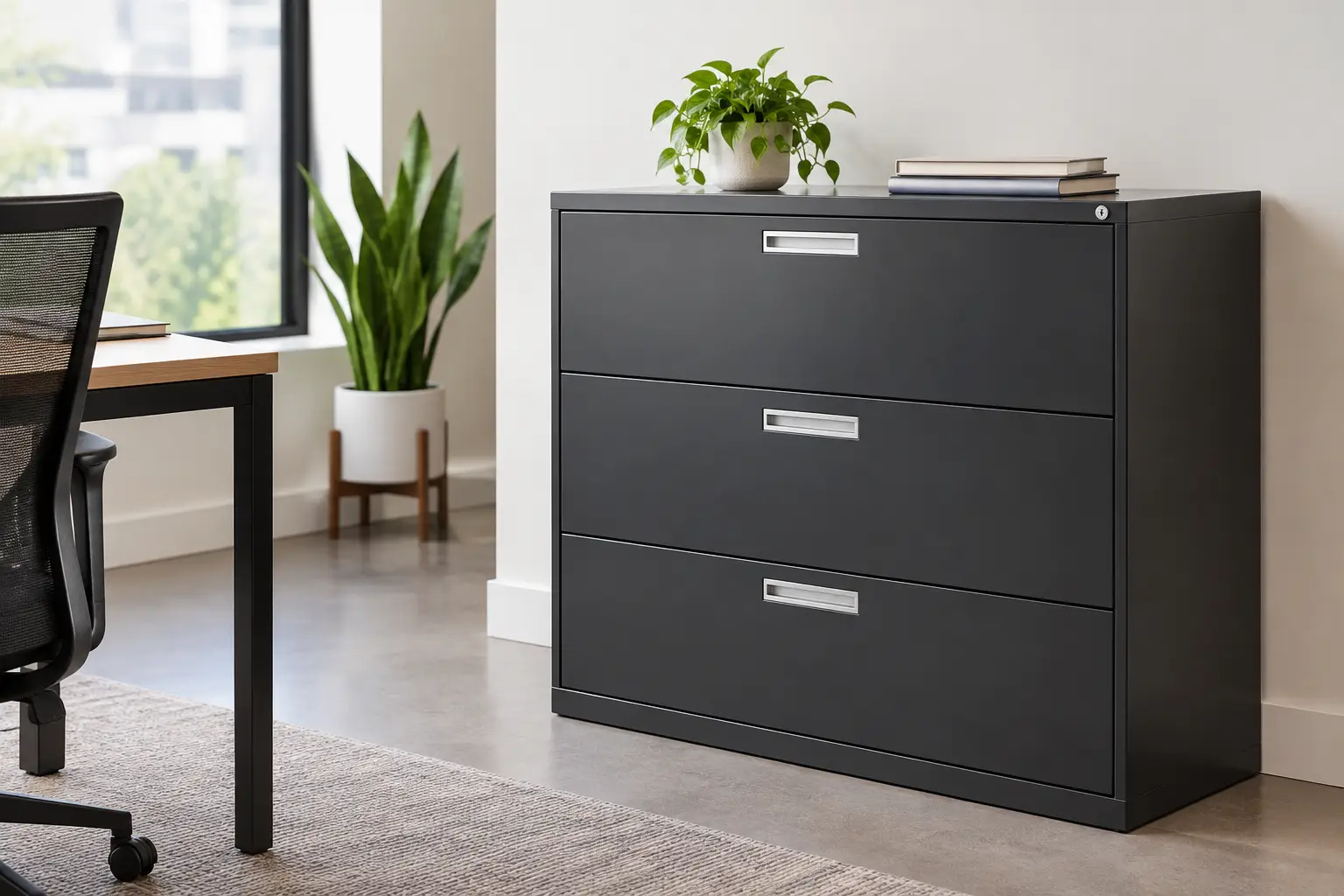
A 3 drawer lateral file cabinet solves a common workplace problem: active files need to stay accessible without consuming valuable floor space. Its wide drawer format supports high document capacity, while three drawers provide practical separation for departments, record types, or retention periods. For offices, schools, healthcare facilities, public institutions, and industrial administration areas, the right cabinet can improve filing discipline and protect documents that still need a physical home.
The product category looks straightforward, but cabinet specifications vary significantly. Drawer load ratings, steel thickness, locking arrangements, internal filing width, and anti-tip design all affect daily performance. Procurement teams should assess the cabinet as a working storage asset, not simply a piece of office furniture.
Start With the Filing System
A lateral cabinet is designed for files to be stored side to side across the width of the drawer, rather than front to back as in a vertical cabinet. This makes it particularly useful where staff need a broad view of folders, frequent access to records, or filing by large alphabetic or numeric ranges.
Before selecting dimensions, confirm how records are currently organized. Letter-size and legal-size folders require different clearances, and mixed file formats can create wasted drawer space if the cabinet is not configured correctly. Some operations also need dividers, compressor bars, or adjustable file rails to keep partially filled drawers orderly.
Three drawers are often the practical middle ground. One drawer can hold current working files, another can store prior-year material, and the third can be assigned to confidential, archived, or departmental records. This separation reduces searching time and gives teams a clear filing routine without installing a wall of cabinets.
Measure the Cabinet Location, Not Just the Cabinet
The footprint of a lateral cabinet is only part of the space requirement. A fully loaded drawer needs room to extend, and staff need safe standing space in front of it. In a narrow aisle, a cabinet that fits against the wall may still obstruct movement when open.
Measure the available width, depth, and height, then allow for drawer travel and doorways along the delivery route. Check baseboards, wall outlets, radiators, columns, and desk overhangs. In facilities with planned refurbishments, it is also worth considering whether the cabinet needs to fit under a work surface or align with existing storage banks.
Cabinet width affects both capacity and stability. Wider drawers hold more files, but they also carry greater weight when fully extended. A properly engineered unit balances storage capacity with a stable cabinet body, controlled drawer movement, and anti-tip protection.
Plan for growth without overbuying
Buying for current records alone can lead to an early storage shortage. Review retention policies, expected staffing changes, and the volume of new paper records generated each month. A cabinet with unused capacity is not inefficient if it prevents files from moving into unsecure boxes or overcrowded desk drawers.
At the same time, more capacity is not always better. If records are rarely accessed, high-density archive storage may be a better use of space. A 3-drawer unit is best suited to files that require routine retrieval and controlled access.
Evaluate Steel Construction and Drawer Capacity
Commercial filing cabinets experience repeated heavy loading, particularly in shared offices and administrative departments. The cabinet body, drawer fronts, runners, and suspension system should be specified for regular use rather than occasional home-office filing.
Steel construction is a strong choice for high-use environments because it resists impact, maintains drawer alignment, and supports substantial file weights. A quality powder-coated finish adds protection against scratches and everyday wear while providing a clean, professional appearance for office and public-facing areas.
Ask suppliers for the drawer load capacity and whether it applies to evenly distributed weight. Paper files become heavy quickly. A drawer filled with records can place much more stress on runners than expected, especially when folders are packed tightly. Full-extension runners are valuable when staff need access to files at the back of a drawer, but they must be paired with reliable slide hardware.
Pay attention to drawer action during evaluation. Drawers should open smoothly, close consistently, and remain aligned under load. Poor drawer performance wastes staff time and often becomes a maintenance issue long before the cabinet body reaches the end of its service life.
Make Security Fit the Records
A lock is not a universal security solution. The appropriate level depends on what is stored inside. General administrative files may only require basic controlled access, while personnel records, financial documents, patient information, examination materials, or contractual files may require stronger key management and access procedures.
A central locking system that secures all drawers from one lock is efficient for most office applications. It allows authorized staff to secure the full cabinet at the end of the day and prevents a drawer from being unintentionally left open. For larger facilities, consider how replacement keys, master key access, and lock numbering will be managed across multiple departments.
Security also includes cabinet behavior. An interlock mechanism prevents multiple drawers from opening at the same time, reducing the risk of a loaded cabinet tipping forward. This feature is especially relevant in busy offices, schools, healthcare environments, and locations where users may open drawers quickly without considering load distribution.
Choose a 3 Drawer Lateral File Cabinet for Daily Use
The best 3 drawer lateral file cabinet is not necessarily the one with the largest stated capacity. It is the model that matches your documents, space, security needs, and expected frequency of use. A procurement specification should clearly define the required filing format, external dimensions, steel finish, lock type, drawer suspension, and anti-tip requirements.
For project purchases, standardization matters. Ordering the same cabinet configuration across offices or facilities simplifies installation, key control, replacement planning, and staff training. It also creates a more consistent appearance in administrative areas.
Customization may be justified when a standard cabinet does not fit the operational environment. Examples include specific color requirements, customized dimensions, alternative lock options, internal filing arrangements, or integration with a wider metal storage program. For multi-site projects, working with a manufacturer that can supply both standard products and tailored configurations reduces sourcing complexity.
Consider the environment around the cabinet
Office filing cabinets are often placed in areas that receive more use than expected: reception back offices, print rooms, shared administration spaces, workshops, and staff rooms. In these locations, durability and ease of cleaning matter as much as filing capacity.
Humidity, dust, and uneven floors also deserve attention. Metal cabinets should be installed on a stable surface, with leveling considered where necessary. Avoid placing a cabinet where open drawers block emergency routes or where repeated contact with carts and equipment can damage drawer fronts.
Specify for Delivery, Installation, and Service
Large filing cabinets are heavy, especially when made from commercial-grade steel. Confirm whether delivery includes placement, whether the cabinet is supplied assembled, and what access is available through entrances, elevators, corridors, and internal doors. These details can determine whether a suitable product reaches the intended room without disruption.
For larger orders, request consistent specifications and documented quality controls. The finish should be uniform across units, locks should be clearly managed, and drawers should be tested for operation before dispatch. A long warranty is meaningful when it is supported by manufacturing capability, available parts, and clear after-sales communication.
Loxmet manufactures heavy-duty metal storage solutions for commercial projects where durability, configurable specifications, and dependable supply are central to the purchase decision. For buyers managing multiple storage categories, aligning file cabinets with lockers, office cabinets, shelving, and other metal furniture can also improve consistency across the facility.
A well-specified filing cabinet quietly supports better work every day. When drawers open reliably, documents stay protected, and the layout reflects how teams actually retrieve records, filing stops being a daily obstacle and becomes a controlled part of the operation.