


Highlights
Metal Office Cabinet With Glass Doors: Buyer Guide

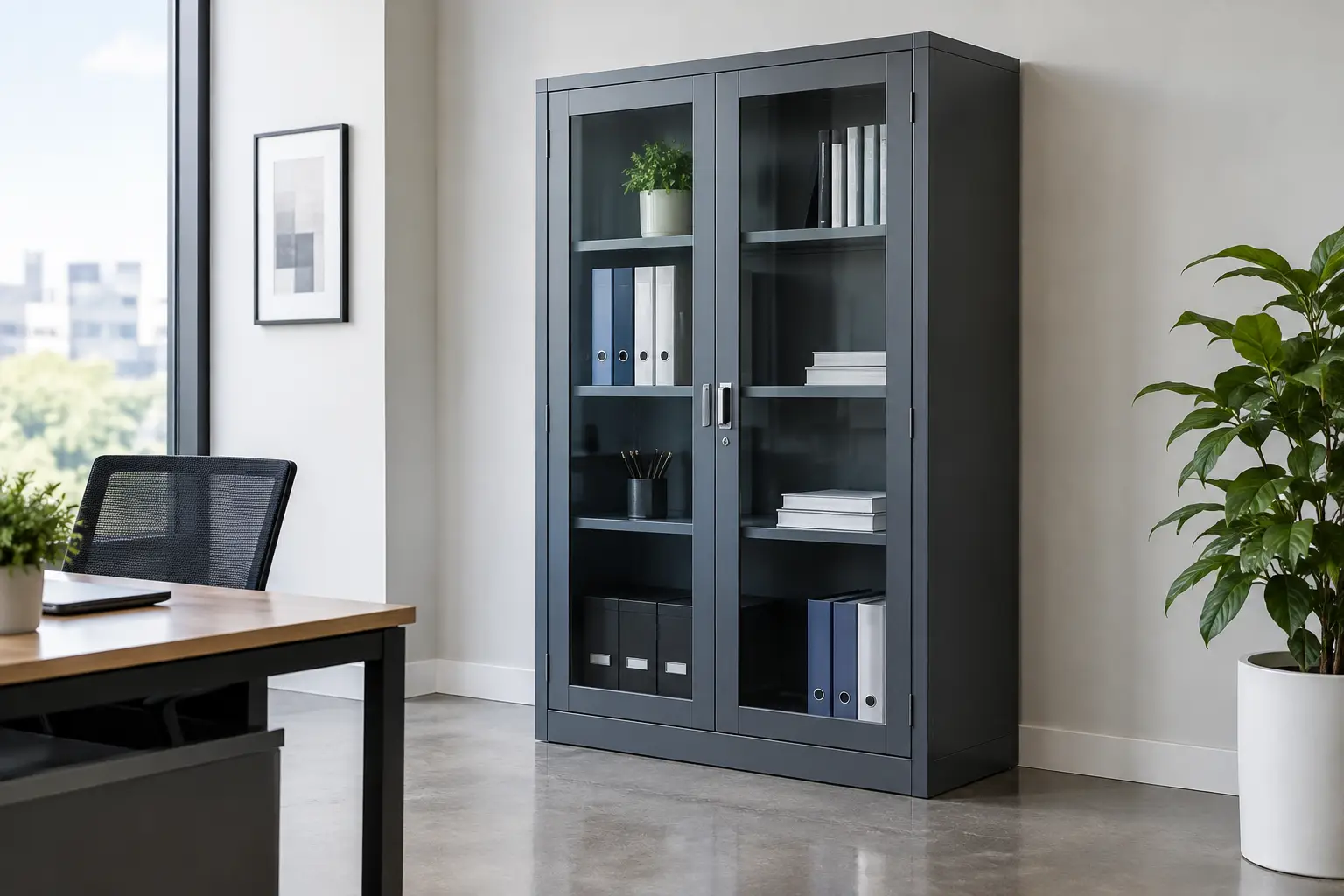
A metal office cabinet with glass doors solves a common workplace problem: teams need to see what is stored without leaving documents, equipment, samples, or shared supplies exposed. It creates a controlled storage point that is easier to audit than open shelving and more presentable than a closed utility cabinet.
For procurement teams and facility managers, the right cabinet is not selected on appearance alone. Steel thickness, door construction, locking requirements, shelf capacity, dimensions, finish, and installation conditions all affect long-term performance. The best specification depends on what the cabinet will hold, who needs access, and how often it will be used.
Where Glass-Door Metal Cabinets Add Value
Glass-door office cabinets are suited to areas where visibility supports faster work. Administrative offices can organize binders, forms, and stationery. Schools can store teaching materials and controlled supplies. Healthcare facilities can keep non-sensitive consumables visible for stock checks. Laboratories, workshops, and technical departments can display tools, samples, or manuals while keeping them protected.
The glass panel reduces unnecessary door opening. Staff can check availability before accessing the cabinet, which helps maintain order in shared storage areas. It also gives supervisors a quick view of stock levels without turning every cabinet inspection into a manual task.
There is a trade-off. Glass doors reveal what is inside, so they are less suitable for confidential files, high-value devices, or visually cluttered storage. In those cases, a solid-door metal cabinet, or a mixed cabinet layout with both glass and solid compartments, is usually the better choice.
What to Specify in a Metal Office Cabinet With Glass Doors
A cabinet should be specified as a working asset, not simply as furniture. Start with the storage load and access pattern, then select the construction and features that match the site.
Steel body and door strength
The cabinet body should use quality sheet steel with formed edges and reinforced sections where needed. This improves resistance to dents, door misalignment, and daily wear. For busy offices, schools, warehouses, or public-sector facilities, welded or strongly assembled cabinet bodies provide more reliable service than lightweight units designed for occasional use.
Pay close attention to the doors. Framed glass doors generally offer better protection for the glass panel and support consistent alignment over repeated opening and closing. Hinges should be durable and positioned to carry the full door weight without sagging. A cabinet can have a strong steel body but still become difficult to use if its doors are poorly supported.
Glass type and safety requirements
Glass is not one universal specification. Tempered safety glass is a practical choice for commercial environments because it is more resistant to impact than ordinary glass and breaks into smaller fragments if damaged. Depending on the application, buyers may also consider laminated glass, which holds together when broken.
The right choice depends on the environment. A quiet executive office may have different requirements from a school corridor, manufacturing office, or high-traffic reception area. If the cabinet will be placed where carts, equipment, or frequent movement create impact risk, glass safety should be a central part of the specification.
Locks and access control
A glass-front cabinet can still provide controlled access. Standard key locks are often appropriate for stationery, records, and departmental materials. Where multiple staff members need access, master-key arrangements can simplify facilities management. For higher control, consider cam locks with different keying options or an electronic access solution where the project requires it.
Security should match the contents. A lock prevents casual access, but it does not turn a display cabinet into a high-security safe. If the cabinet will hold personal data, controlled substances, expensive devices, or critical documentation, assess the wider security process rather than relying on a cabinet lock alone.
Shelves, load capacity, and adjustment
Shelf layout determines whether the cabinet remains useful after the first month. Adjustable steel shelves let departments accommodate binders, boxed stock, manuals, or small equipment as needs change. Fixed shelves can be suitable when the stored items are standardized and the required spacing is known.
Ask for the distributed load capacity of each shelf, not only the overall cabinet capacity. Heavy archive binders, paper stock, technical components, and boxed supplies can create significant weight. Overloaded shelves may bend, affect door clearance, or make the cabinet unstable. For dense storage, specify adequate shelf reinforcement and ensure the floor can support the loaded unit.
Select Dimensions Around the Room, Not Just the Product
A cabinet that fits an available wall on a drawing can still obstruct a room in daily use. Measure the full footprint, door swing, circulation routes, access to electrical panels, fire equipment, and cleaning space. In narrow rooms, door opening clearance is especially important.
Height also affects usability. Tall cabinets increase storage capacity without expanding the floor footprint, but upper shelves may require step access and should not be used for heavy items. Lower cabinets can double as work surfaces or printer stands, provided the top load is considered. Wide cabinets reduce the number of units required, while narrower cabinets can fit between workstations or in smaller administrative rooms.
For multi-site projects, standardized dimensions can make planning easier. The same cabinet range across offices, schools, or departments supports consistent layouts, replacement planning, and simpler staff use.
Finish Matters in Commercial Environments
Powder-coated steel is a practical finish for office storage because it provides an even surface that is easier to maintain than untreated metal. It also allows cabinets to align with workplace color schemes, departmental zoning, or project interiors without sacrificing the strength of steel construction.
Color selection should remain practical. Light colors can make compact offices feel less crowded and reveal dust or damage quickly. Darker colors may better suit workshops or high-touch areas, though fingerprints can be more visible on some finishes. For institutional projects, a standard color can simplify future purchasing and ensure additions match the existing installation.
Also consider cleaning procedures. In healthcare, education, and shared workplaces, cabinet surfaces should tolerate routine cleaning without premature finish deterioration. Request finish details when the site uses specific cleaning chemicals or has demanding hygiene protocols.
Installation and Stability Are Part of the Purchase
A fully loaded steel cabinet has a high center of gravity, particularly when tall and narrow. Anti-tip fixing should be considered wherever cabinets may be loaded unevenly, placed on uneven floors, or used in active shared spaces. Wall anchoring is often a sensible measure for tall units, subject to wall construction and site conditions.
Leveling matters as well. A cabinet that is not level can cause doors to drift, bind, or fail to close correctly. Installation teams should confirm clearances, anchors, floor condition, and door operation before handover. This is a small step that prevents avoidable service issues later.
For project orders, buyers should also confirm delivery access. Check loading bays, elevators, corridor widths, and internal door openings against the packaged and assembled cabinet dimensions. A well-specified cabinet still needs to reach its final room safely.
When Custom Manufacturing Is the Better Route
Standard models are efficient when the application is straightforward and lead time matters. However, custom manufacturing is valuable when a project needs non-standard widths, specific shelf spacing, branded colors, alternative lock systems, ventilation, plinths, or a combination of glass and solid doors.
Customization is especially useful for fit-out contractors, distributors, and organizations managing a defined storage standard across several locations. Rather than adapting workflows around an unsuitable cabinet, the cabinet can be built around the actual materials, room constraints, and access requirements.
A manufacturer with broad metal storage capability can also coordinate related products such as lockers, shelving, PPE storage, and office cabinets under one project specification. This reduces variation in finish, quality expectations, and supplier coordination. Loxmet supports this approach with standard heavy-duty storage products and custom metal fabrication for commercial projects.
Questions to Settle Before Requesting a Quote
A clear request produces a more accurate proposal and fewer changes during procurement. Confirm the required external dimensions, number of shelves, expected shelf load, glass type, lock type, finish color, quantity, delivery requirements, and whether wall fixing is required. If the cabinet is replacing an existing unit, include photos and measurements of the installation area.
It is also useful to define the intended contents. “Office storage” can mean lightweight stationery, dense archive files, medical supplies, technical tools, or product samples. Those uses require different shelf loads, security levels, and internal layouts.
A metal office cabinet with glass doors works best when visibility and protection are treated as equal requirements. Specify it around real workplace routines, and it will remain organized, secure, and useful long after the initial installation.