


Highlights
Mop and Broom Storage Cabinet for Busy Facilities

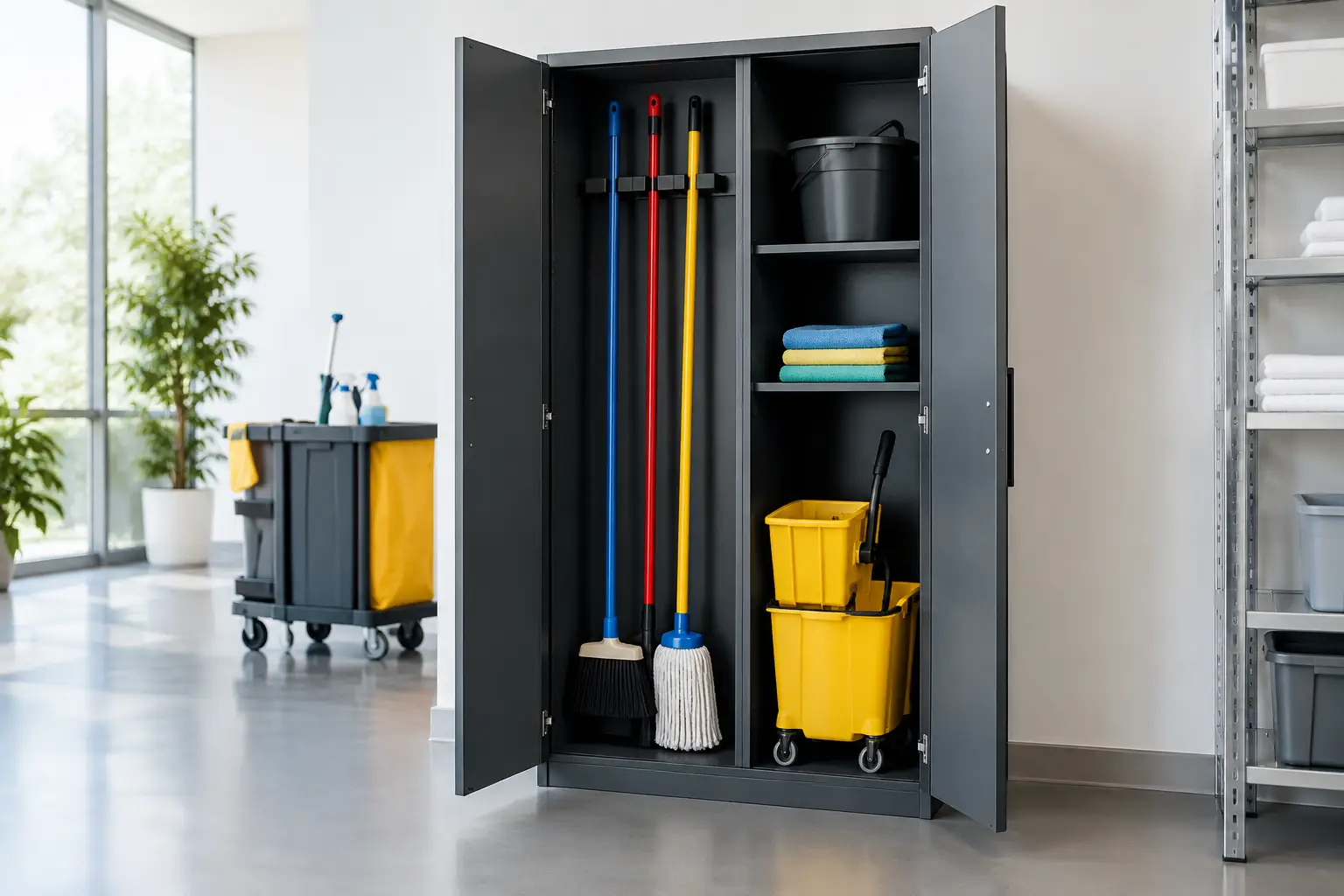
A mop and broom storage cabinet is a small but practical part of facility operations. When long-handled cleaning tools are left in utility closets, hallways, or maintenance rooms without a defined storage point, they fall, block access, collect moisture, and disappear when staff need them. A purpose-built metal cabinet keeps equipment contained, accessible, and protected between cleaning cycles.
For procurement teams and facility managers, the right cabinet is not simply a place to hang a broom. It is a durable storage asset that supports housekeeping standards, makes better use of limited back-of-house space, and helps maintain a safer working environment.
Why a Mop and Broom Storage Cabinet Matters
Cleaning equipment is used frequently and often stored under demanding conditions. Janitorial rooms may experience wet floors, chemical exposure, temperature changes, and heavy daily traffic. Open shelving or improvised hooks can work in low-use spaces, but they rarely provide the control required in schools, healthcare facilities, factories, offices, gyms, hospitality properties, and public buildings.
A dedicated cabinet separates cleaning tools from general supplies. This helps teams establish clear ownership of equipment and maintain a consistent location for mops, brooms, dusters, handles, squeegees, and related accessories. In shared facilities, that consistency reduces time spent searching for tools at the start of a shift.
Enclosed storage also improves appearance. A well-organized utility area gives staff and visitors a stronger impression of operational discipline. This matters in customer-facing environments, but it is equally valuable in industrial sites where clear storage practices support safer movement and better housekeeping.
The cabinet should support the actual work pattern of the facility. A small office may only need room for a few cleaning tools. A school, warehouse, or healthcare campus may need multiple cabinets positioned by zone, floor, or department. Standardized metal units make it easier to repeat a proven storage setup as the operation grows.
What to Look for in a Mop and Broom Storage Cabinet
The best specification depends on the equipment being stored, available room dimensions, and expected frequency of use. However, several requirements should be reviewed before selecting a model.
Internal height and usable layout
Long-handled tools require sufficient internal height. Measure the longest item that will be stored, including the handle and any attached head or blade. A cabinet that is tall on paper may still have limited usable space if shelves, rails, or structural components reduce the clear internal height.
The layout should also prevent tools from leaning against one another in an unstable way. Tool clips, retaining brackets, hanging rails, or a dedicated vertical compartment can hold handles in position. This protects bristles and mop heads while allowing staff to remove one item without pulling several tools forward.
Some facilities need a mixed layout. One side may hold upright brooms and mops, while shelves on the other side store cloths, gloves, spray bottles, paper products, or small cleaning accessories. This approach works well where the cabinet serves a compact cleaning station rather than a tool-only locker.
Steel construction and finish
A mop and broom storage cabinet should be manufactured for repeated commercial use. Steel construction provides the rigidity needed for daily opening, closing, loading, and relocation. Compared with lightweight storage alternatives, a properly built metal cabinet is less likely to crack, deform, or become unstable under routine use.
The surface finish matters as much as the frame. Powder-coated steel provides a clean, durable finish that is easier to maintain in busy utility areas. For environments with moisture, regular washdowns, or demanding hygiene requirements, buyers should discuss the operating conditions with the manufacturer. The correct material grade and finish depend on the exposure level, cleaning methods, and expected service life.
Door construction should also be assessed. Reinforced doors, durable hinges, and reliable closing mechanisms are valuable in high-traffic locations where cabinets are opened many times each day. A cabinet is only efficient when staff can use it quickly without dealing with sticking doors or damaged hardware.
Ventilation and moisture management
Wet mops should not be sealed into an unventilated compartment for long periods. Moisture can create odors, affect adjacent supplies, and make cleaning areas harder to maintain. Ventilation openings can improve airflow and support better drying conditions, especially when tools are stored after use.
Ventilation is not a substitute for proper cleaning procedures. Mop heads should be washed, dried, and replaced according to the facility’s hygiene standards. Still, a cabinet with suitable airflow is a practical part of a more controlled storage process.
Where wet equipment is stored, consider the floor area around the cabinet as well. A moisture-resistant base, an easy-to-clean floor surface, and adequate drainage can help prevent water from collecting in a confined utility space.
Security and access control
Not every cleaning cabinet requires a lock, but many commercial sites benefit from controlled access. Cleaning chemicals, replacement supplies, and specialized equipment may be stored alongside tools. In these cases, a lockable cabinet helps limit access to authorized personnel.
The appropriate locking system depends on the site. A simple key lock may be suitable for a small office or workshop. Larger organizations may prefer keyed-alike arrangements, master-key management, or other access solutions that fit existing facility procedures. The goal is not to make routine cleaning difficult. It is to provide reasonable control without slowing down authorized staff.
Capacity without clutter
Overloading is one of the most common cabinet failures. When too many handles, boxes, or supplies are forced into a narrow space, staff stop using the cabinet as intended. Doors may not close correctly, tools can be damaged, and retrieving an item becomes unnecessarily slow.
Specify capacity based on a real inventory. Count the tools assigned to the room, then allow space for replacement items and normal movement inside the cabinet. If the facility operates multiple shifts, plan for enough capacity to support the full cleaning team rather than only one employee’s equipment.
Planning the Right Cabinet Configuration
Before requesting a quote, assess the storage location and the operating need. Start with room dimensions, door swing clearance, wall access, and any obstruction such as utility pipes or electrical panels. A tall cabinet uses vertical space efficiently, but it must not interfere with ventilation, emergency access, or service routes.
Then identify what will be stored inside. Separate long-handled tools from chemicals whenever possible. Chemical products may require dedicated chemical storage cabinets with suitable containment, labeling, ventilation, and safety features. A mop and broom cabinet is designed for equipment organization; it should not be assumed to meet chemical storage requirements without confirming the specification.
For larger projects, standardization has clear advantages. Selecting one cabinet size, color, lock type, and internal arrangement across multiple locations simplifies ordering, installation, staff training, and future replacement. It also allows distributors and procurement teams to forecast inventory with greater confidence.
Customization is useful when standard dimensions do not fit the room or workflow. Common requirements include adjusted cabinet height, additional shelves, specific door configurations, color matching, ventilation changes, and alternative locking arrangements. Custom fabrication should solve a defined operational issue, not add complexity without a measurable benefit.
Installation and Daily Use Considerations
A cabinet must be installed on a stable, level surface. In busy workplaces, wall anchoring is often recommended to improve stability and prevent movement during use. This is particularly relevant for tall units, cabinets placed on uneven surfaces, or installations where staff may pull tools out quickly.
Place the cabinet where cleaning teams can reach it without crossing busy work zones. A utility room is usually the best location, but the cabinet should still be close enough to the area it serves. If staff must walk across a large building every time they need a broom or mop, equipment is more likely to be left in corridors or stored informally.
Daily use should remain simple. Tools should return to the same position after each shift, shelves should be kept free of unnecessary stock, and damaged handles or mop heads should be removed promptly. A cabinet supports good housekeeping, but it cannot replace a clear cleaning equipment policy.
Loxmet supplies heavy-duty metal storage solutions for commercial projects where durability, practical layouts, and dependable manufacturing are part of the purchasing decision. For buyers managing multiple facility needs, combining cleaning tool cabinets with lockers, shelving, PPE storage, and office cabinets can also simplify project sourcing.
The most effective cabinet is one that staff use without thinking about it: tools stay upright, supplies remain organized, access is controlled where needed, and the utility room stays ready for the next shift.