


Highlights
Small Lockers for Mobile Phones at Work

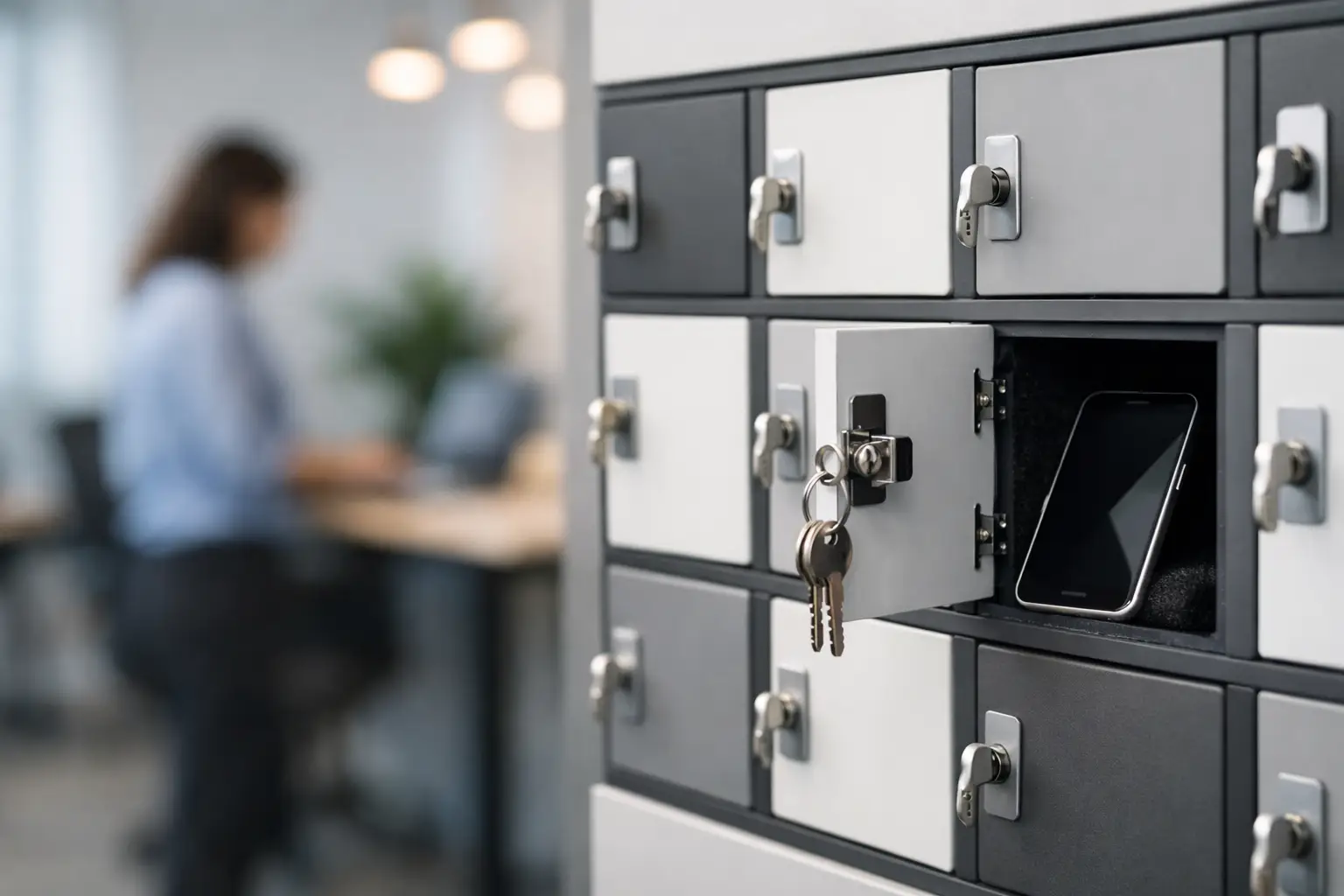
A phone left on a desk can become a security issue, a productivity problem, or simply another item with no clear place to go. Small lockers for mobile phones solve that quickly. For businesses and institutions, they create controlled storage for personal devices without taking up the floor space of full-height lockers.
The demand is straightforward. Employees, visitors, students, and contractors all carry phones, and many facilities now need a defined policy for where those devices should be stored. In some settings, the goal is theft prevention. In others, it is privacy, exam control, clean desk compliance, or reducing distractions on the work floor. The right locker system supports those policies without adding unnecessary complexity.
Where small lockers for mobile phones make sense
This type of storage is most useful where many people need compact, individual compartments in a limited area. Offices use them in reception areas, shared workspaces, and staff zones where workers do not need phones at the workstation. Schools and training centers install them to support testing rules and classroom discipline. Gyms and leisure facilities use them for short-term secure storage where a full-size locker would waste space.
Industrial facilities are another strong fit. On manufacturing lines, in warehouses, and in controlled production areas, personal phones may be restricted for safety or process reasons. A bank of small phone lockers near an entry point keeps devices secure and out of operational zones. Healthcare environments may also require controlled storage to reduce contamination risks or protect sensitive areas from unauthorized recording.
The common factor is density. When the item being stored is only a phone, plus perhaps keys or a badge, large compartments are inefficient. Smaller units allow more users per wall section and better use of the available footprint.
What buyers should expect from small lockers for mobile phones
At first glance, a phone locker seems simple. In practice, the details determine whether it performs well in daily use. Compartment size matters, but so do door strength, lock quality, airflow, coating durability, and how the unit is mounted or installed.
A well-designed metal unit should provide individual security without feeling flimsy. Doors need to resist bending under repeated use. Hinges should hold alignment over time. The frame should remain rigid when all compartments are opened and closed throughout the day. In high-traffic environments, these points affect service life more than appearance.
Lock choice also changes the suitability of the product. Key locks are familiar and cost-effective, especially where users are assigned permanent compartments. Cam locks can work well for staff use, while hasp lock options suit operations that prefer user-supplied padlocks. For public or rotating use, mechanical combination locks may reduce key management, but they also require more planning around resets and user instructions. There is no single best option. It depends on whether the facility is managing fixed users, daily turnover, or temporary visitors.
Size and compartment layout
Most buyers focus first on the number of compartments, and that is reasonable. Capacity drives the project. But the internal dimensions still need to match real devices. Modern phones vary in size, and many users carry them in protective cases. If compartments are too tight, users force doors shut or struggle to retrieve the phone. That creates frustration and unnecessary wear.
A practical layout should account for current device dimensions and a margin for future changes. Some facilities also want space for a charger, access card, or wallet. Others want the smallest possible footprint and prefer a phone-only compartment. This is where custom production can be useful. A standard product may fit most applications, but project requirements often benefit from adjusted sizing, door numbering, or unit configuration.
Wall-mounted or freestanding
Installation format is another important decision. Wall-mounted units are ideal where floor space is limited and circulation must stay clear. They suit corridors, receptions, staff entry points, and office support areas. Freestanding models are better when the wall structure does not support mounting or when the locker bank needs higher capacity in a self-contained unit.
Neither is automatically better. Wall-mounted products save floor area, but they depend on suitable installation surfaces and careful fixing. Freestanding units offer flexibility in placement, though they occupy more room. For distributors and project buyers, this often comes down to site conditions, user volume, and cleaning requirements.
Security is not only about the lock
When buyers evaluate phone lockers, they often start and end with the lock type. That is only part of the picture. Real security also depends on body construction, anchoring method, door fit, and resistance to tampering.
A thin cabinet with a decent lock is still a weak solution. In busy schools, gyms, and commercial buildings, doors will be pulled, slammed, and tested. Industrial-grade steel construction gives the product a longer service life and reduces failure in demanding use. Powder-coated metal surfaces also help protect against daily wear, especially in shared environments where cleaning and repeated contact are expected.
Anchoring matters as well. A compact locker unit must be fixed properly so it cannot be moved or destabilized. This is especially relevant in public-access spaces or where multiple users open doors at the same time. Stability is not just a safety issue. It affects user confidence and the perceived quality of the installation.
Charging capability changes the use case
Some buyers are looking for storage only. Others need charging while devices are stored. That difference should be defined early because it affects cabinet depth, cable management, ventilation, electrical planning, and cost.
If the goal is simply to remove phones from the workplace floor, a standard non-charging locker is often the most efficient option. It is simpler, lower maintenance, and easier to deploy at scale. If users need their devices charged during a shift, then a charging locker may be the better specification. This is common in offices, schools, hospitality back-of-house areas, and transport facilities.
Charging versions bring clear value, but they also add considerations. Power distribution must be reliable. The design should prevent cable clutter and reduce the risk of damage to connectors. Ventilation becomes more relevant where multiple devices charge at once. For many projects, the decision comes down to whether charging is a true operational requirement or just a convenience.
Procurement factors that matter in real projects
Commercial buyers rarely select storage based on appearance alone. They need a product that fits the building, the policy, the budget, and the timeline. That is why specification support is important.
Lead time can be as important as technical features, especially in fit-out projects or school installations with fixed opening dates. Standard products with fast delivery help when the requirement is clear and common. Custom manufacturing is valuable when the site has unusual dimensions, branding needs, or a specific lock requirement. The trade-off is that customization typically requires more approval time and project coordination.
Minimum order flexibility also matters. Some buyers need a full-site rollout. Others are testing one location before standardizing across multiple facilities. A manufacturer that can support both standard and project-based requirements is easier to work with over time.
For distributors, consistency is another factor. The product must arrive with stable build quality, repeatable dimensions, and dependable finish standards. That reduces installation issues and protects margin. For facility managers, long-term durability and parts support are often more important than achieving the lowest upfront price.
How to choose the right unit
The fastest way to narrow the options is to answer four practical questions. How many users need storage at peak time? Is the phone the only item being stored? Is charging required? Will the unit be wall-mounted or freestanding?
From there, look at lock management. Permanent users can work well with key or assigned lock systems. Temporary users may need resettable access methods. Then review the installation environment. A school corridor, office reception, gym lobby, and production entry point all have different demands for durability, supervision, and cleaning.
This is also where finish and labeling become useful. Numbered doors, color consistency, and clear compartment identification support daily operation. In larger projects, even small details like numbering sequence and replacement key control can save time after installation.
For many buyers, the best result comes from treating phone lockers as part of a wider storage plan rather than as an isolated product. A facility may need phone storage at entry points, charging lockers in shared areas, PPE lockers in operations, and office cabinets in administrative zones. Working with a manufacturer that understands the full storage environment can simplify specification and supply. That is why businesses sourcing from Loxmet often look beyond a single unit and plan for long-term consistency across the site.
Small phone lockers are not complicated products, but they do affect daily behavior. When the storage is secure, appropriately sized, and built for constant use, people follow the system more easily and the facility runs with fewer interruptions. That is usually the real value – not the locker itself, but the control it brings to the space around it.