


Highlights
How to Choose a Phone Charging Cabinet

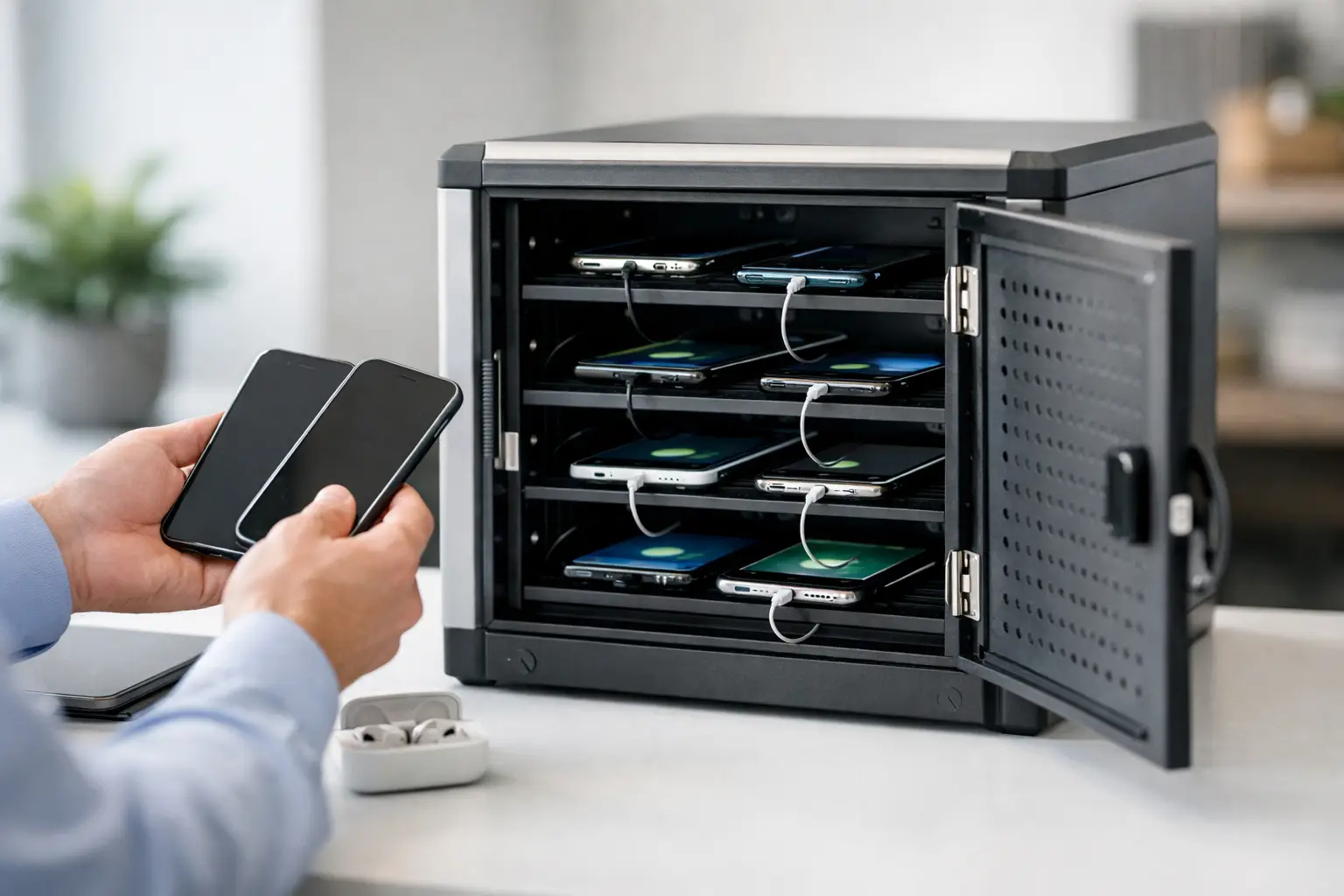
A phone charging cabinet solves a very specific operational problem: people need their devices charged, but loose cables, open shelves, and unsecured charging stations create clutter, loss risk, and avoidable downtime. For businesses and institutions, the right cabinet is not just a convenience item. It is part of workplace organization, device control, and daily workflow.
For procurement teams, facility managers, and project buyers, the decision usually comes down to four factors – security, capacity, durability, and fit for the environment. A cabinet that works well in an office reception area may not be the right choice for a factory break room, school corridor, or fitness center. That is why selection should start with use case, not appearance.
What a phone charging cabinet needs to do
At a basic level, a phone charging cabinet stores multiple devices while supplying power in a controlled and secure way. In practice, commercial buyers usually expect more than that. They need a unit that reduces cable mess, supports regular daily use, protects devices from unauthorized access, and holds up in a demanding environment.
That last point matters more than many buyers expect. A cabinet in a low-traffic executive office faces very different wear than one installed in a student area or staff changing room. Door hinges, locking systems, ventilation, cable routing, and steel thickness all affect long-term performance. If the cabinet will be opened dozens of times per day, light-duty construction often becomes a problem quickly.
A good product should also support straightforward management. If users are confused about which compartment is theirs, or if staff need extra time to reset locks and manage cables, the cabinet adds friction instead of removing it. Simple compartment layout, clear numbering, and practical charging access are small details, but they shape daily usability.
Where a phone charging cabinet makes sense
The strongest applications are environments where many people need temporary, secure charging during the day. Offices use these cabinets in shared spaces, break rooms, and reception zones. Schools and training centers use them for student and staff device storage. Gyms and leisure facilities use them to give visitors a safer alternative to carrying phones across activity areas. Industrial sites may use them in controlled staff areas where personal devices need to be stored and charged during shifts.
There is also a growing need in healthcare, hospitality, and public-facing service environments. Staff often work long shifts and rely on mobile devices before and after work hours. Visitors may need charging access without leaving devices unattended. In these cases, the cabinet has to balance convenience with strong access control.
This is where project requirements start to differ. In a staff-only area, a master key system may be practical. In public or semi-public environments, each compartment may need independent locking. Neither approach is always better. It depends on who uses the cabinet, how often devices turn over, and how much supervision the area has.
How to size a phone charging cabinet correctly
Capacity is usually the first specification buyers request, but the wrong question is often being asked. Instead of asking how many compartments a cabinet has, ask how many users will realistically rely on it during the busiest period of the day.
For example, a 10-door unit may be enough for a small office team if not everyone needs charging at once. The same capacity may be too small for a gym reception area with peak-hour visitor traffic. Oversizing can waste floor space and budget, but undersizing creates queues, shared compartments, and user complaints.
Compartment dimensions also matter. Not every phone is stored without a case, and some users may carry compact accessories. If the compartment is too tight, cables become awkward and doors are more likely to be forced shut. That increases wear over time. Buyers should look at the actual internal usable dimensions, not just the external cabinet footprint.
Floor-standing and wall-mounted formats both have a place. Wall-mounted units help preserve floor space in tighter areas. Floor-standing models often provide higher capacity and a stronger presence in shared commercial environments. The right choice depends on traffic flow, available wall structure, and how permanent the installation needs to be.
Security features that matter
Security is one of the main reasons to install a phone charging cabinet instead of open charging shelves. But security should be judged by real operating conditions, not by a lock type alone.
A cabinet with individual lockable doors is typically the most practical format for shared users. It allows each person to store and charge a phone without depending on staff access. The lock choice should match the environment. Key locks are simple and dependable. Digital locks can improve user convenience in some settings, but they also introduce battery management, reset procedures, and higher replacement cost.
The cabinet body matters as much as the lock. If the frame, doors, or hinge points are weak, a stronger lock does not solve the problem. Commercial buyers should pay attention to steel construction, door reinforcement, and overall rigidity. In busy settings, repeated use is the real test.
Visibility is another trade-off. Solid doors offer more privacy and a cleaner look. Perforated or ventilated door designs can support airflow and quick visual checks, but they may expose stored contents. The right balance depends on whether buyers prioritize discretion, ventilation, or monitoring.
Power, cable management, and ventilation
Charging performance is where many low-quality products fall short. A cabinet can look well built and still create daily frustration if the internal power setup is poorly planned.
Internal power distribution should support safe, organized charging without tangled leads crossing compartments. Cable routing needs to be controlled so users can connect devices easily and close doors without pinching cords. If staff need to keep rearranging adapters and cables, the cabinet is not doing its job efficiently.
Ventilation is equally important. Multiple devices charging in an enclosed steel cabinet generate heat. That does not mean every application needs complex active cooling, but it does mean airflow should be considered at the design stage. Vent slots, perforations, and sensible compartment spacing all help manage temperature during regular use.
Buyers should also think about plug standards and charging configurations early in the project. In international projects, this becomes especially important. A well-made cabinet still needs to match the power requirements and user expectations of the site where it will be installed.
Why material and construction should drive the decision
For commercial use, metal construction is usually the right fit because it offers better durability, security, and long-term value than lighter alternatives. A phone charging cabinet in steel is better suited to high-traffic environments where bumps, repeated door cycles, and cleaning routines are part of normal operation.
Finish quality matters too. Powder-coated surfaces are generally preferred in business environments because they support durability and appearance retention over time. In schools, gyms, and industrial staff areas, that makes a visible difference. The cabinet does not need to look decorative, but it should continue to look professional after years of use.
This is one reason many buyers prefer to work directly with an experienced manufacturer. Standard models can cover common requirements, while custom options may be needed for compartment size, lock type, ventilation pattern, mounting format, or branding. Loxmet, for example, serves buyers who need both catalog products and project-specific metal storage solutions, which is often useful when charging storage has to match a wider facility fit-out.
Customization and project fit
Not every site should use the same charging cabinet. That is where customization has practical value, not just visual value. A distributor may need a standard model with flexible order volumes. A school project may require a specific door count and color. A workplace fit-out may need the cabinet to align with existing locker banks or office storage systems.
The key is to customize only where it improves operational fit. Too many changes can increase lead times and complexity without improving daily use. The best projects usually keep the core construction proven and adapt a few important details to the site.
That might mean changing dimensions to fit a narrow corridor, selecting a lock system that matches existing storage, or adjusting ventilation for heavier charging demand. These are practical decisions that support performance over the long term.
What buyers should ask before placing an order
Before approving a phone charging cabinet, buyers should confirm how many users it serves, where it will be installed, what lock logic fits the environment, and how the power setup will be managed. They should also ask how the cabinet will be maintained. Even a durable product needs practical access for cleaning, inspection, and occasional replacement of charging components.
Lead time and replacement support also matter. If the cabinet is part of a larger facility rollout, delays can affect the broader project schedule. If the product will be deployed across multiple sites, consistency becomes just as important as price.
A charging cabinet should not create another facility problem to manage. It should reduce clutter, improve control, and support daily use with minimal attention. When the construction is strong, the charging layout is sensible, and the capacity matches real demand, it becomes a reliable part of the workplace rather than an item staff have to work around.
The best choice is usually the one that fits the site, holds up under real use, and keeps the daily routine simple for everyone who depends on it.