


Highlights
How to Choose the Right Safety Cabinet

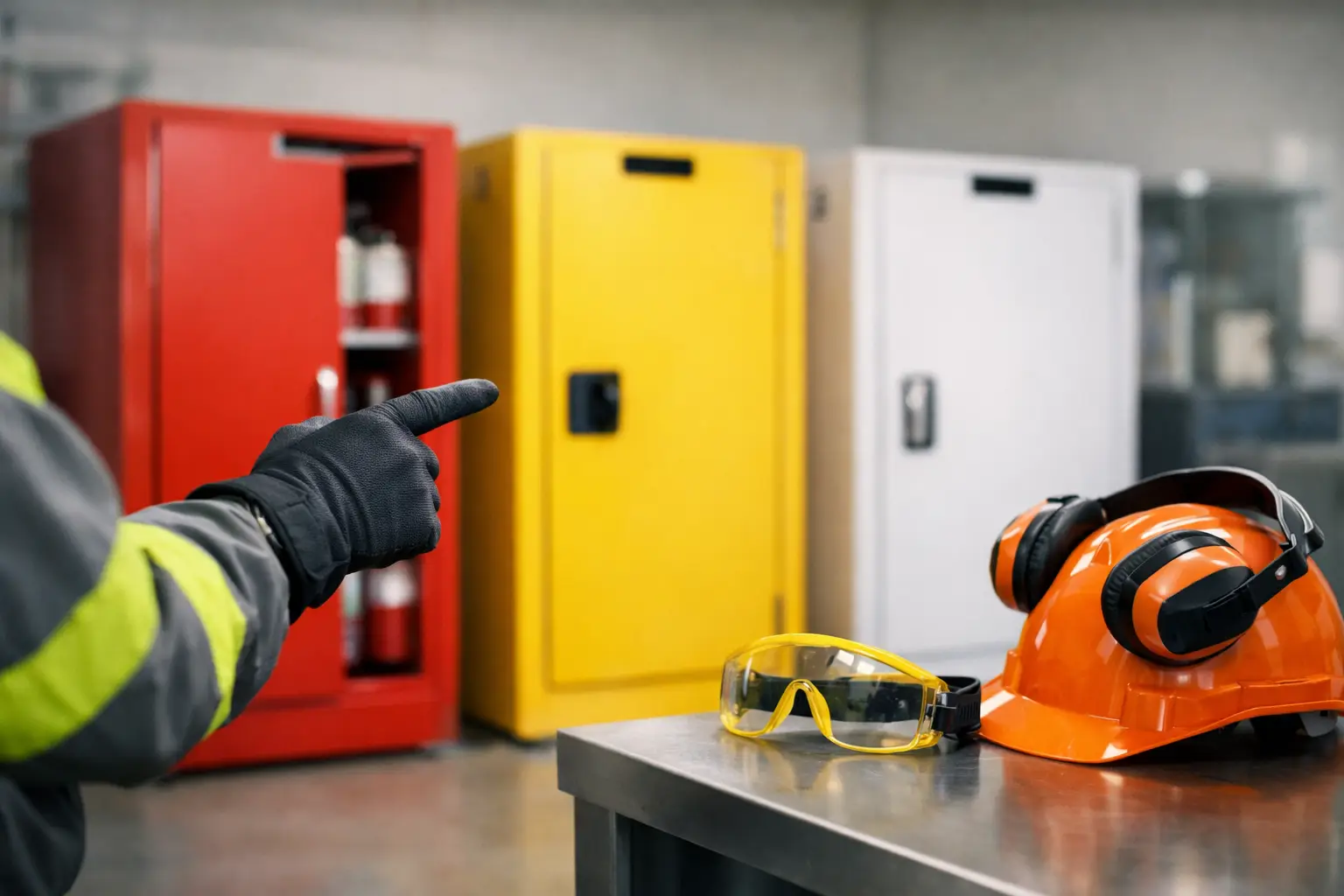
A safety cabinet is rarely a standard purchase. In most facilities, it sits at the point where compliance, daily workflow, and risk control meet. Choose the wrong model and the problem shows up fast – poor chemical segregation, wasted floor space, damaged contents, or a cabinet that does not match how the site actually operates.
For procurement teams, facility managers, and distributors, the right decision starts with a simple rule: buy for the real use case, not just the label. A safety cabinet for solvents is not the same as one for corrosives, PPE, batteries, or controlled documents. The cabinet has to match the material being stored, the environment around it, and the way employees access it every day.
What a safety cabinet is expected to do
At a basic level, a safety cabinet is designed to store materials that require more control than a standard storage unit. That may mean reducing fire risk, containing leaks, limiting unauthorized access, protecting contents from contamination, or keeping hazardous and operational items properly organized.
In practice, buyers usually need a cabinet to do more than one job. A manufacturing site may need secure chemical storage with spill retention. A healthcare facility may need PPE storage that keeps supplies protected, visible, and easy to issue. An office or lab may need lockable metal storage for sensitive materials that should not be left in open shelving.
That is where specification matters. Material thickness, door construction, lock type, shelf load capacity, ventilation options, and internal layout all affect whether the cabinet performs well over time or becomes a weak point in the workspace.
Start with the stored material, not the cabinet
The fastest way to narrow options is to define exactly what will go inside. Buyers often begin with dimensions or budget, but storage type should come first.
Chemical storage safety cabinet needs
If the cabinet will hold flammable liquids, corrosive chemicals, or cleaning agents, the selection criteria become more technical. Compatibility matters. A cabinet intended for one class of chemical may not be appropriate for another. Internal spill trays, corrosion-resistant finishes, warning labels, and controlled access are often part of the requirement.
This is also where volume matters. Storing small daily-use containers near a workstation is different from storing bulk quantities in a utility room or production area. The use pattern changes the right format. Frequent access may favor a more compact cabinet close to operations, while larger reserves may require a higher-capacity unit with a different footprint.
PPE and operational supply storage
Not every safety cabinet is for hazardous chemicals. In many workplaces, the safety issue is availability and protection of equipment such as gloves, masks, face shields, or first-response supplies. In those cases, the cabinet should support stock visibility, controlled distribution, and fast access during shifts.
A poorly designed unit can create delays. Shelves that do not fit packaged items, doors that obstruct access in narrow corridors, or layouts that make replenishment slow all add friction to daily operations. For PPE storage, clean organization and repeatable access often matter as much as lockability.
Secure document or restricted-item storage
Some buyers use safety cabinets for items that are not chemically hazardous but still require protection. This might include controlled tools, records, maintenance products, or high-value workplace assets. Here, the priority shifts toward security, durability, and internal configuration. Reinforced metal construction, reliable locking systems, and long service life tend to matter more than specialized chemical-resistant features.
Key factors when comparing a safety cabinet
Once the storage purpose is clear, the comparison becomes more practical. Most commercial buyers assess cabinet quality through a few core criteria.
Construction and material quality
Metal construction remains the preferred choice for demanding environments because it handles impact, repeated use, and heavy loads better than lighter alternatives. The gauge of steel, weld quality, door alignment, and surface finish all affect long-term performance.
This is one area where a lower upfront price can become expensive. Cabinets used in warehouses, schools, workshops, healthcare facilities, and industrial sites are opened constantly. Weak hinges, thin doors, or poor coating quality tend to show wear early. For project buyers and distributors, that means callbacks, replacement costs, and avoidable dissatisfaction.
Size and footprint
The right size depends on more than storage volume. Floor space, aisle width, door swing, and the surrounding workflow all matter. A larger cabinet may increase storage capacity but reduce movement efficiency around it. A smaller cabinet may fit the room but force operators to store overflow items elsewhere, which defeats the safety purpose.
It helps to assess both current and near-term demand. If usage is likely to grow, buying only for immediate volume may create a second procurement cycle too soon. On the other hand, oversizing the cabinet for a small site can waste valuable space.
Internal layout
Shelving flexibility makes a noticeable difference. Adjustable shelves, spill-retaining trays, separate compartments, and clear load capacity ratings help the cabinet adapt to actual storage needs. This is especially useful in multi-product environments where container sizes vary.
A fixed layout can work when the use case is stable. If product mix changes often, flexibility usually offers better long-term value.
Locking and access control
Not every workplace needs the same level of access restriction. Some sites need simple keyed locking for basic control. Others need tighter access management because of hazardous materials, audit requirements, or shared facilities. The right lock type depends on risk level, user count, and how access is monitored internally.
Ease of use matters too. A cabinet that is secure but inconvenient often leads to workarounds, and workarounds create risk.
Why compliance should be part of the buying process
A safety cabinet is not just a storage product. In many settings, it is part of the site’s broader compliance strategy. That includes fire safety, hazardous material handling, workplace organization, and internal operating procedures.
Requirements vary by market, sector, and stored substance, so there is no single rule that fits every buyer. That is why procurement teams should confirm what standards, labeling, and construction features are expected before placing an order. It is better to define that at specification stage than to discover gaps during installation, inspection, or operation.
For international buyers, this becomes even more important. Product suitability may depend on local regulations as well as internal company standards. A dependable manufacturing partner should be able to align product configuration with the intended application rather than pushing a one-size-fits-all model.
Standard product or custom safety cabinet?
This decision usually comes down to speed, budget, and site-specific needs. Standard cabinets are often the right choice when the application is common, dimensions are straightforward, and lead time matters. They simplify ordering and can support repeat purchases across multiple sites.
Custom production makes sense when the operating environment is unusual or the cabinet needs to fit a specific layout, process, or storage profile. That may include non-standard dimensions, reinforced shelving, ventilation details, compartment separation, or a finish suited to the environment.
For many commercial projects, the best result is not fully custom or fully standard. It is a proven base design with targeted modifications. That keeps the product practical to manufacture while solving the actual site requirement.
What business buyers should ask before ordering
A good supplier conversation should move quickly past general descriptions. Ask what the cabinet is designed to store, what load it is built to carry, how the interior can be configured, and what options are available for locking, labeling, and finish. Confirm lead times, packaging for export or project delivery, and whether the cabinet can be aligned with broader storage systems on site.
If you are buying for distribution, consistency matters just as much as specification. Product reliability, repeatable manufacturing quality, and stable supply performance are often more valuable than a long feature list. Buyers looking for a long-term partner typically need both standard range coverage and the ability to adapt products when project requirements change. That is one reason manufacturers such as Loxmet are often selected for industrial and institutional storage projects.
The right safety cabinet should make the workplace easier to manage, not harder to work around. When the cabinet matches the stored material, the space, and the daily routine, it stops being just a box in the corner and starts doing the job it was bought for.