


Highlights
Choosing a Metal Bench for Locker Room Use

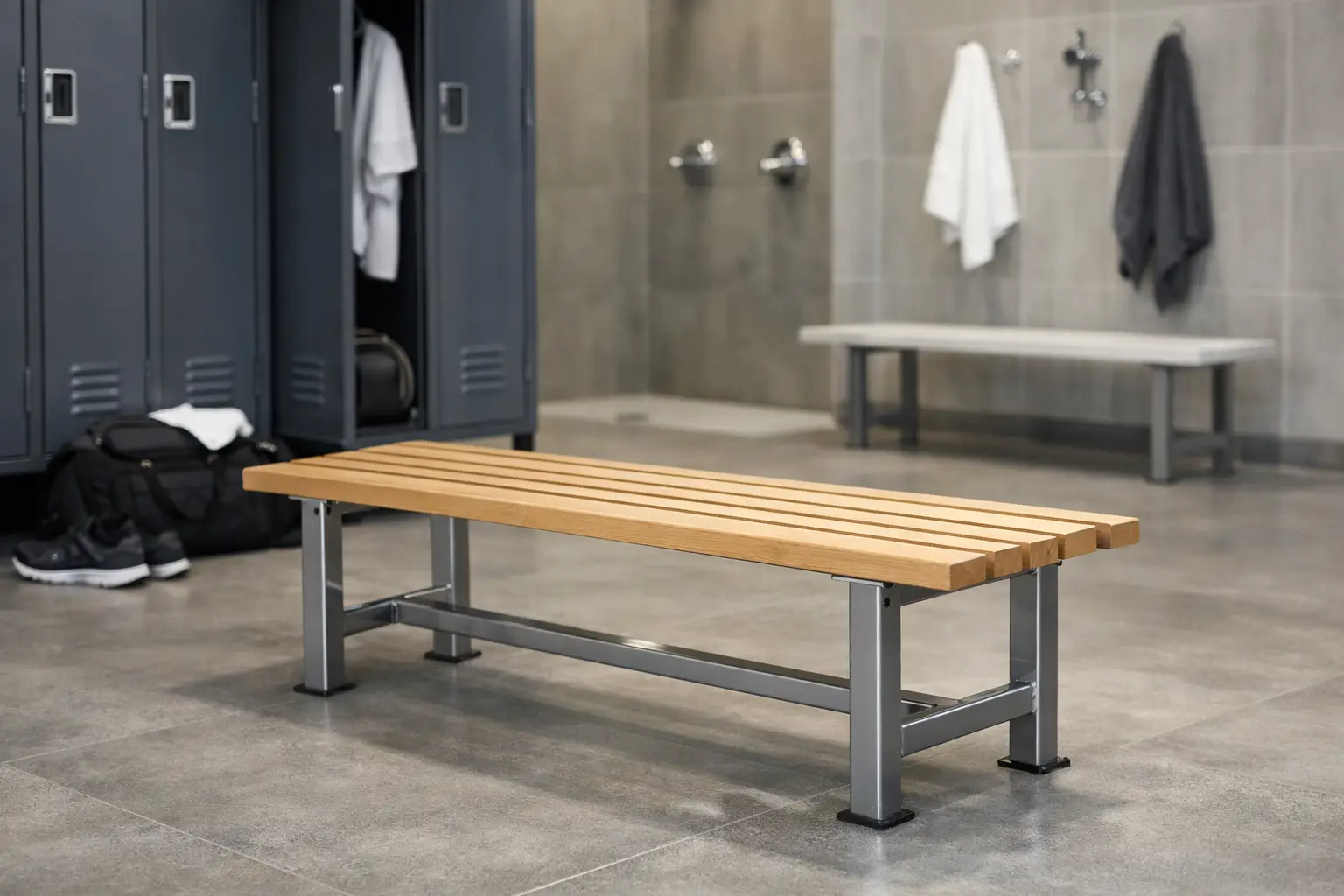
A locker room fails fast when the bench is an afterthought. Users sit on it while changing, place bags on it, lean gear against it, and expect it to stay stable through constant daily traffic. That is why selecting the right metal bench for locker room use is not just a furnishing decision. It is a durability, hygiene, safety, and layout decision.
For procurement teams, facility managers, and fit-out professionals, the bench has to do more than fill open floor space. It has to match the traffic level, the cleaning routine, the locker configuration, and the expected service life of the room. In commercial and institutional settings, poor bench selection creates maintenance issues early. The right specification reduces replacement cycles and supports a better user experience from day one.
Why a metal bench for locker room projects makes sense
Wood and mixed-material benches may suit some interiors, but metal remains the practical choice for high-use locker environments. It handles repeated impact better, performs well under heavy loads, and supports consistent maintenance standards. In workplaces, schools, gyms, industrial changing areas, and staff facilities, that matters more than appearance alone.
A metal bench also gives buyers more control over specification. Dimensions, frame design, seat type, coating, and accessory options can be aligned with the project instead of forcing the room to adapt to a fixed product. That flexibility is useful when the bench must work with wall-mounted lockers, island lockers, wet zones, or PPE changing spaces.
There is also a supply-side advantage. For larger projects or repeat procurement, metal furniture is easier to standardize across multiple sites. The result is a cleaner purchasing process, more predictable maintenance, and better consistency in shared facilities.
The main selection criteria buyers should review
Bench buying often starts with dimensions, but size alone is not enough. A bench that fits the plan on paper can still fail in daily use if the structure, finish, or installation method is not suited to the environment.
Load capacity and structural stability
The frame is the core of the product. In a busy locker room, users do not interact with the bench carefully. They sit heavily, stack bags, stand briefly while changing, and shift weight unevenly. A metal bench should be designed for that reality.
Look closely at steel gauge, leg construction, reinforcement points, and how the seat is fixed to the frame. A light-duty frame may appear acceptable during installation but show movement after sustained use. That movement becomes a safety issue and shortens product life. For industrial sites, sports facilities, and education settings, a heavy-duty structure is the safer long-term choice.
Seat material and user comfort
Not every metal bench means a fully metal seating surface. Some projects specify a steel frame with compact seat slats or other durable top materials. The right choice depends on the environment.
A fully metal design offers excellent durability and easy cleaning, but comfort can be a trade-off in spaces where users sit for longer periods. Slatted or shaped seat options can improve comfort and drainage, especially in changing areas with moisture exposure. The decision should reflect how the room is actually used, not just what looks durable in a catalog.
Finish and corrosion resistance
This is one of the most common points missed in purchasing. A dry employee changing room and a humid sports facility do not place the same demands on a bench finish. Powder coating is a common choice because it provides a clean appearance and good resistance in standard indoor use. In more demanding environments, the coating system and pretreatment process matter even more.
If the locker room includes wet floors, frequent washdowns, or heavy cleaning chemicals, corrosion resistance should be reviewed carefully. The cheapest option up front can become the most expensive if rust appears around joints, fasteners, or leg bases within a short period.
Cleaning and hygiene
A locker room bench sits at the intersection of shoes, clothing, skin contact, and floor moisture. That means hygiene is not a secondary feature. It is part of the core specification.
Smooth surfaces, accessible gaps, and stable leg designs make routine cleaning easier. Benches with hard-to-reach corners or unnecessary detailing tend to collect dirt. In healthcare, industrial PPE zones, and shared staff facilities, easier cleaning supports better compliance and lower maintenance time. This is one area where simple design usually performs better than decorative design.
Sizing a metal bench for locker room layouts
Bench size has to be planned against traffic flow, not just available wall length. If users cannot pass comfortably behind someone seated, the room quickly becomes inefficient. If bench depth is too narrow, bags end up on the floor. If it is too large, circulation suffers.
The most effective layouts begin with the locker arrangement. Single-sided locker runs, back-to-back islands, and central changing areas all require different bench formats. In some projects, a wall-mounted bench keeps the floor clearer and simplifies cleaning. In others, freestanding benches provide better flexibility and create shared access from both sides.
Length should also reflect occupancy patterns. A bench that technically seats multiple users may still underperform if changing periods are concentrated around shift changes or class schedules. It is often better to plan for peak use instead of average use. That reduces congestion and supports smoother movement through the room.
Fixed vs freestanding installation
A fixed bench gives a more permanent solution. It limits movement, supports a clean layout, and is useful in high-traffic facilities where furniture should stay exactly where planned. It can also improve safety by reducing shifting during use.
A freestanding bench offers more flexibility for multi-use spaces or projects where room layouts may change over time. The trade-off is that it needs a strong, stable frame and should not feel light or temporary. In commercial settings, flexibility is useful only when the product still performs like fixed equipment.
Matching the bench to the locker room type
Not all locker rooms operate the same way. A staff changing area in manufacturing has different demands than a school locker room or a fitness facility. The bench should reflect that.
In industrial and PPE environments, durability and easy cleaning usually take priority. Users may carry work gear, boots, and protective clothing, so impact resistance and load-bearing performance matter. In schools, the main issue is often intensive daily use by a large number of users with less careful handling. Stability and edge safety become especially important.
For gyms and wellness facilities, appearance has a stronger role alongside durability. Buyers may want a cleaner architectural look, but the product still has to hold up under repeated daily use and regular cleaning. In healthcare or hygiene-sensitive facilities, designs that minimize dirt traps and support strict cleaning protocols should lead the decision.
Customization matters more than many buyers expect
Standard sizes work for many projects, but locker room fit-outs often benefit from customization. That may mean adjusting bench length, height, depth, frame profile, color, or seating format. In larger projects, even small dimensional changes can improve circulation and make better use of floor space.
Customization is also valuable when the bench needs to work as part of a broader storage package. If lockers, cabinets, and benches are being sourced together, consistent dimensions and finish quality create a more functional result. This is where a manufacturing partner with both standard production and custom metal fabrication capability offers practical value.
Loxmet serves this type of requirement well because project buyers often need more than a standard bench pulled from stock. They need a bench that fits the room, supports the traffic level, and aligns with the wider locker installation.
Common mistakes when specifying locker room benches
The first mistake is buying on appearance or unit price alone. A bench is a high-contact product, and failures show up quickly. Weak joints, unstable legs, and poor finishes do not stay hidden for long in a busy facility.
The second mistake is underestimating cleaning conditions. If the room is cleaned aggressively or exposed to regular moisture, the bench has to be specified for that environment from the start. A standard indoor finish may not be enough.
The third mistake is ignoring user flow. Bench placement can create bottlenecks even when the room looks spacious on plan drawings. Procurement teams should review how people enter, change, sit, store items, and exit during peak periods.
The final mistake is treating benches as separate from the locker system. In practice, they work together. Bench height, depth, and placement all affect how users access lockers and move through the space.
What good purchasing decisions look like
A well-chosen locker room bench feels stable, cleans easily, resists wear, and fits the room without forcing awkward circulation. It supports the daily routine instead of interrupting it. That is what buyers should aim for.
The best results usually come from clear project information at the start: room type, user volume, cleaning conditions, preferred layout, and whether standard or custom dimensions are needed. With that information, a metal bench becomes a straightforward specification instead of a recurring facility problem.
If the locker room will be used hard, cleaned often, and expected to last, the bench should be specified like any other operational asset. That approach usually pays for itself long before the room needs its first refurbishment.