


Highlights
How Wall Lockers Improve Workplace Storage

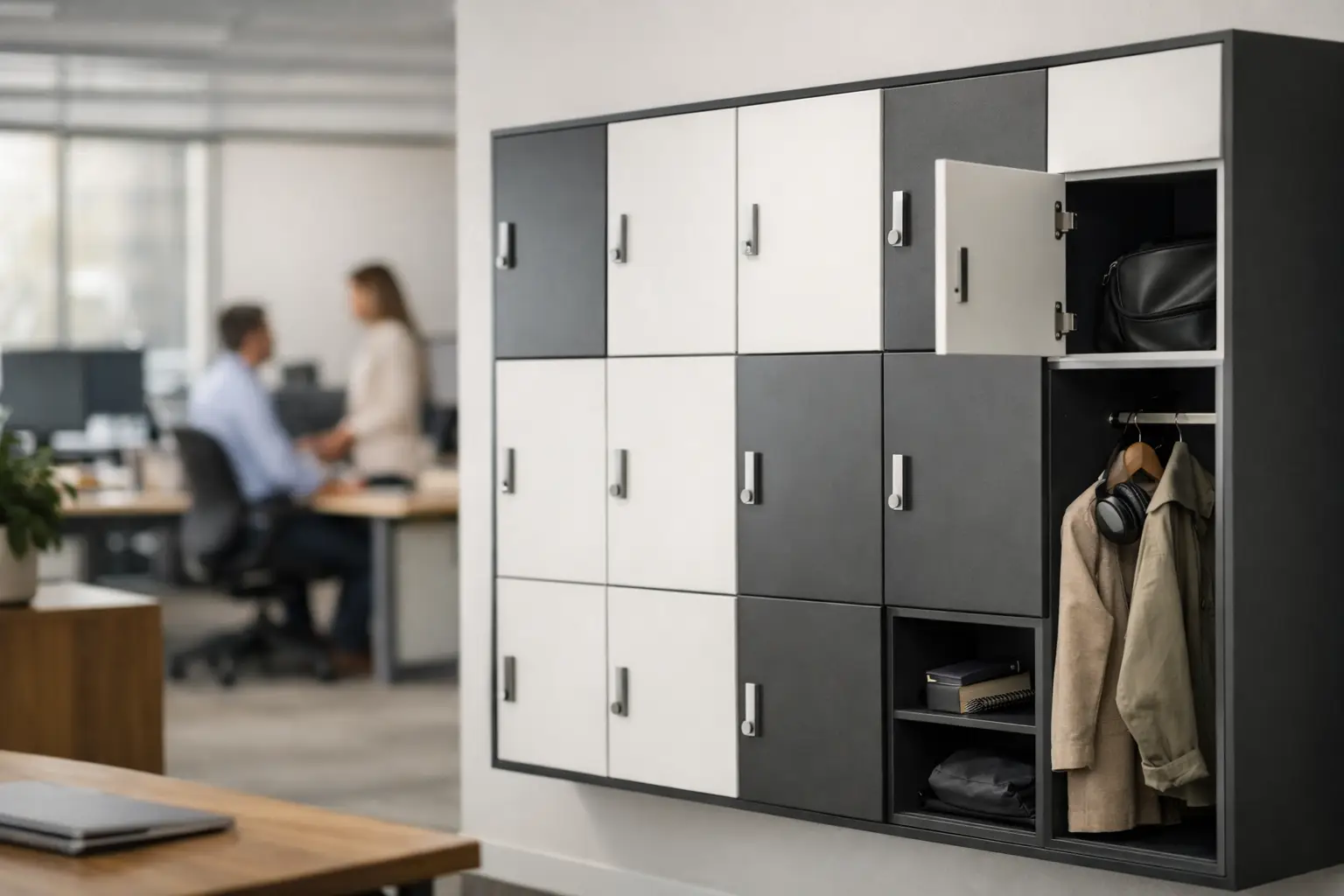
A crowded locker room, maintenance area, or staff corridor can lose valuable working space quickly. Wall lockers provide secure personal storage without filling the floor with freestanding units, making them a practical choice where circulation, cleaning access, and storage capacity must work together. For facility managers and project buyers, the key is not simply selecting a wall-mounted cabinet. It is specifying a locker system that suits the users, wall construction, daily load, and security requirements of the site.
Where Wall Lockers Make the Most Sense
Wall-mounted lockers are most effective in facilities where floor area has a higher operational value than wall area. Employee entrances, production corridors, changing rooms, schools, gyms, healthcare support rooms, and offices with limited footprint are common examples. By moving storage off the ground, a facility can maintain clearer walkways and make floor cleaning less complicated.
They are also useful when users need compact, assigned storage rather than full-height changing-room lockers. Personal items, uniforms, small bags, documents, tablets, keys, protective equipment, and work accessories can all be stored in an appropriately sized wall locker. A shallow compartment may be sufficient for secure item handover or small valuables, while deeper models are better for folded garments and daily work gear.
The trade-off is capacity. A wall-mounted system will not replace a full-depth wardrobe locker where employees need to hang coats, store helmets, or keep large bags. In many projects, the strongest layout combines both: full-height lockers in a dedicated changing area and wall-mounted units at points of use for compact items.
Choosing Wall Lockers by Use Case
The intended contents should determine the compartment dimensions, door configuration, and locking method. Buying based on overall cabinet size alone can lead to lockers that look efficient on a drawing but are too shallow or too narrow for daily use.
Personal storage for staff and visitors
For offices, schools, fitness facilities, and visitor areas, multi-compartment wall lockers can provide a high number of secure spaces within a limited wall length. Several small doors make sense when users store wallets, phones, notebooks, or light personal belongings. Fewer, larger compartments are more suitable for uniforms, lunch containers, or compact backpacks.
Assigned-use lockers usually benefit from a durable mechanical key lock, combination lock, or user-resettable digital lock. Short-term visitor storage may require a different approach, such as a temporary-use lock that resets when the door is opened. The right choice depends on who administers the lockers and how often occupants change.
PPE and operational equipment
Factories, warehouses, laboratories, and service teams may require wall lockers for gloves, eyewear, masks, radios, handheld scanners, or task-specific protective equipment. In these environments, clear identification matters as much as security. Door numbering, name card holders, color coding, and department labels help teams return equipment to the correct location.
For PPE, ventilation can be necessary if equipment is stored after use or if moisture needs to dissipate. Perforated door panels or ventilation slots improve air movement, but they are not appropriate for every item. Sensitive equipment, documents, or valuables may require a more enclosed door design. Storage conditions should always match the item being stored.
Device charging and controlled access
Wall-mounted charging lockers are a practical option for tablets, phones, radios, and other smaller devices. They can create a controlled charging point without placing loose equipment on desks or counters. However, charging creates additional specification requirements: cable routing, socket type, heat management, electrical compliance, and service access all need to be considered before installation.
A standard metal locker should not be assumed suitable for charging equipment without purpose-designed electrical components. For projects involving powered storage, buyers should define device quantities, charging connectors, operating voltage, and responsibility for electrical installation at the planning stage.
Material and Construction Determine Service Life
Commercial lockers experience repeated opening, closing, impacts, and misuse. Thin materials and weak door construction can become costly when hinges loosen, doors distort, or lock areas fail under regular use. For business buyers, the cabinet body, door strength, hinge design, reinforcement, and powder-coated finish are more meaningful measures of value than a low initial unit price.
Steel wall lockers are well suited to high-use workplaces because they offer strength, cleanable surfaces, and long service life. A quality powder coating adds protection against everyday scratches and supports a consistent finish across larger installations. In humid areas, changing rooms, or cleaning-intensive environments, the coating quality and corrosion protection deserve close attention.
Door design also matters. A door that closes cleanly and remains aligned protects the locking mechanism and reduces service calls. Reinforced doors can be particularly worthwhile in schools, industrial facilities, and public-access environments where lockers receive frequent use. Loxmet manufactures heavy-duty metal storage systems for projects where durability and configuration flexibility are both required.
Mounting Is a Safety Requirement, Not an Afterthought
The wall carries the load, so the wall construction must be checked before selecting the locker configuration. Concrete and structural masonry generally provide reliable fixing points when suitable anchors are used. Drywall partitions, lightweight blockwork, and framed walls may require reinforcement or a different installation approach.
A loaded locker weighs substantially more than an empty cabinet. The mounting plan must account for the cabinet weight, expected contents, door movement, and the possibility that users may pull on open doors. Fixing points should be specified by the manufacturer and installed by qualified personnel using anchors appropriate to the substrate.
Installation height needs equal attention. Lockers positioned too high are inconvenient and can create a safety issue if users must reach above shoulder level with stored items. Lower rows should remain accessible for the intended user group, including students, staff with mobility needs, and visitors. A clear layout also leaves enough space for door opening and does not obstruct emergency equipment, exits, or circulation routes.
Specifications Buyers Should Confirm Before Ordering
A clear specification prevents delays and avoids mismatched products arriving on site. Before requesting a quote, procurement teams should establish the number of users, storage purpose, available wall dimensions, and preferred locking system. It is also useful to confirm whether the lockers will be supplied fully assembled or in a format suited to site access constraints.
For most commercial projects, the following details should be defined before production:
- Overall cabinet height, width, depth, and number of compartments
- Steel thickness, door reinforcement, finish, and required color
- Lock type, master-key requirements, numbering, and identification options
- Ventilation, charging components, cable access, or other functional features
- Wall type, fixing responsibility, installation height, and delivery access
Customization is especially valuable when a standard cabinet does not fit the building layout or operating process. A shallow wall recess, a narrow corridor, a branded reception area, or a specific PPE issue point may call for adjusted dimensions, alternative compartment sizes, or a custom door layout. Standard products often provide faster delivery, while custom fabrication gives more control over fit and function. The appropriate route depends on project schedule, quantity, and how costly a poor fit would be over the life of the installation.
Plan the Locker Layout as Part of the Facility
Wall lockers perform best when they are planned as a working part of the facility rather than added after other decisions are complete. Consider user flow from entrance to work area, the times when lockers are busiest, and whether doors will create congestion when open. In a shift-based operation, placing lockers close to access points can reduce changeover time. In a school or gym, spacing and sightlines may be more important for supervision and comfort.
Maintenance access should also be protected. Managers need to reach locks, remove damaged doors, clean behind or below units, and deal with lost keys without disrupting the entire area. Leaving practical clearance around an installation can prevent small service tasks from becoming disruptive work.
The strongest wall locker project starts with real usage data: what people carry, how long they store it, who controls access, and what the wall can safely support. When those answers shape the specification, the result is storage that protects belongings, preserves floor space, and continues to serve the facility long after installation.