


Highlights
1 Door Locker for Secure, Efficient Facilities

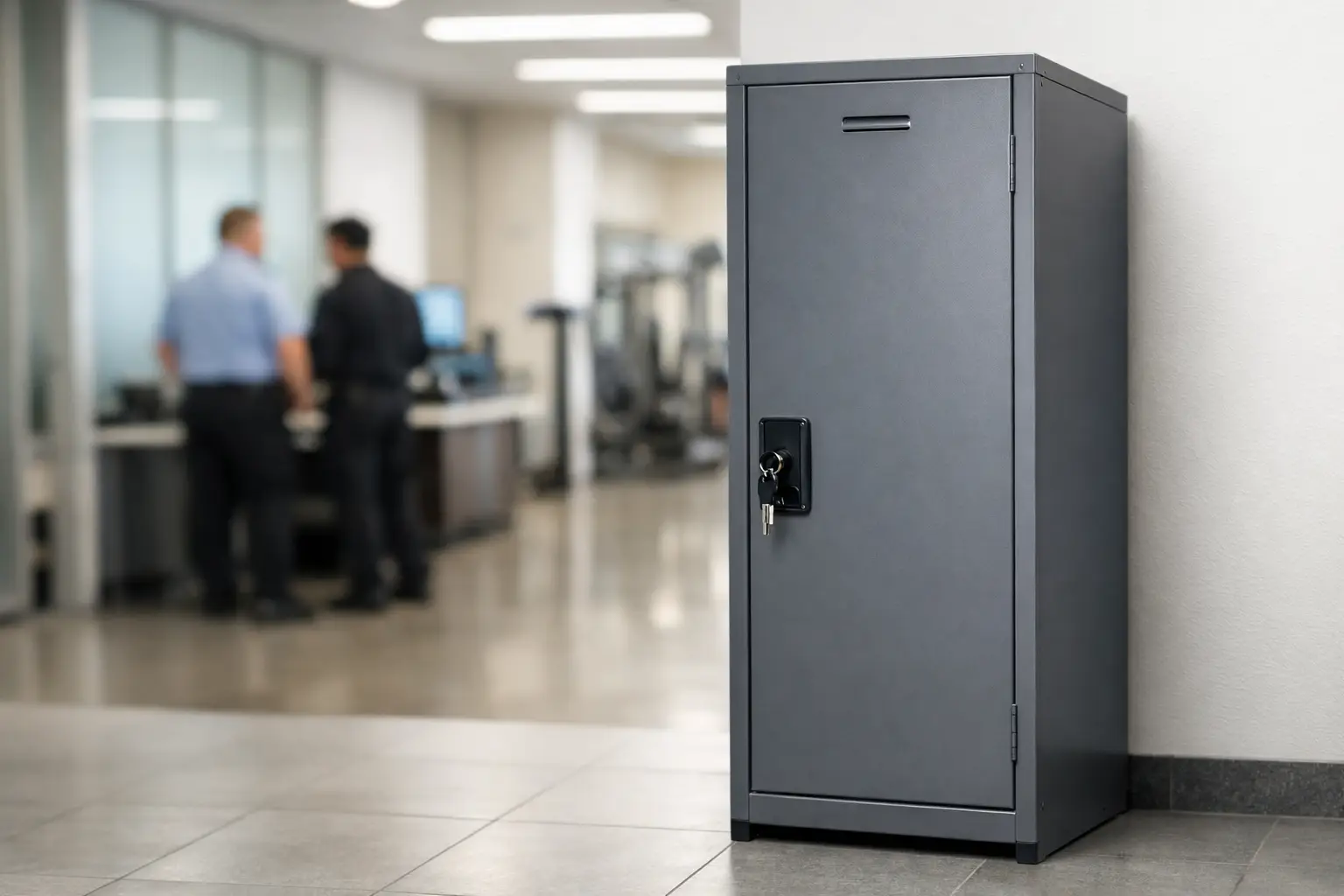
A 1 door locker is often the right answer when each user needs full-height, private storage rather than a small compartment. For procurement teams and facility managers, that simple layout can reduce clutter, protect personal items and workwear, and make locker rooms easier to manage over the long term. The key is specifying the cabinet for the real operating environment, not simply choosing the lowest-priced unit.
Single-door steel lockers are used across industrial sites, offices, schools, gyms, healthcare facilities, and staff changing areas. Their apparent simplicity is an advantage: one compartment, one user, clear accountability. Yet door construction, ventilation, lock type, dimensions, finish, and installation method all affect whether the locker will perform reliably under daily use.
When a 1 Door Locker Is the Best Choice
A single full-height compartment gives one person enough room for coats, uniforms, bags, helmets, boots, and personal belongings. In industrial workplaces, it can also separate clean clothing from items employees carry during a shift. In fitness and education settings, the extra vertical space is useful for outerwear and larger personal bags.
This format works best where the number of users is known and each person is assigned a dedicated locker. It supports clear locker allocation, reduces disputes over shared storage, and makes it easier for supervisors or facility teams to identify unused units.
A 1 door locker is not always the most space-efficient option. If users only need to store wallets, phones, or small bags for a few hours, multi-compartment lockers can provide more capacity within the same wall area. The single-door format earns its footprint when full-size personal storage, daily use, or workwear management is the priority.
Start With the Use Case, Not the Catalog
The right specification begins with how the lockers will be used. A staff locker room in a production plant has different requirements from a school hallway or a corporate changing area. Buyers should establish whether the locker is for personal possessions, PPE, uniforms, mobile devices, or a combination of these items.
For industrial and PPE applications, internal volume and ventilation deserve particular attention. Employees may need to store boots, high-visibility garments, helmets, gloves, or wet clothing. A ventilated door and body help support air movement and reduce odor buildup. Where hygiene procedures require separation between workwear and personal clothing, a divided or dual-compartment design may be more appropriate than a standard single open compartment.
For offices and public-facing facilities, appearance and lock management may carry more weight. A clean powder-coated finish, quiet door operation, and a lock system that can be administered by the facility team will improve the daily user experience without sacrificing durability.
Measure the available space realistically
Locker dimensions must work not only on a floor plan but also during daily use. Allow for door swing, benches, circulation routes, accessible pathways, and cleaning access. A row of lockers may fit against a wall on paper, but a narrow aisle becomes a recurring operational issue when several users change at once.
Ceiling height, uneven floors, and wall obstructions should also be verified before ordering. In larger projects, connecting lockers in stable banks and selecting suitable plinths, legs, or benches can produce a cleaner installation and simplify housekeeping.
Construction Details That Affect Service Life
Metal thickness alone does not define a heavy-duty locker. The complete construction matters: formed door edges, reinforced door panels, weld quality, hinges, frame rigidity, and corrosion-resistant finishing all influence long-term performance.
Doors receive the highest level of daily impact. They are pulled, pushed, sometimes overloaded with hanging items, and occasionally subjected to rough treatment. A stiffened door panel resists flexing and helps the locking point remain aligned. Recessed or protected handles can also reduce snagging and damage in busy changing areas.
Hinges should be selected for frequent operation and should not create an easy point of attack. The cabinet body must remain square under load, because a distorted frame can lead to misaligned doors and unreliable locking. This is where industrial manufacturing standards make a practical difference: the locker should continue to close correctly after years of repeated use, not only when it leaves the factory.
Powder coating provides a durable, consistent finish for most indoor environments. Color can support zone identification, departmental allocation, or a facility’s interior scheme. However, buyers should consider exposure conditions before choosing a finish. Humid locker rooms, coastal locations, and environments where cleaning chemicals are used may require additional attention to corrosion resistance and cleaning procedures.
Choose a Locking System That Your Team Can Manage
The lock should fit the facility’s management model. A simple keyed cam lock is familiar, economical, and suitable for permanent locker assignment. It is often a practical choice for staff areas where each user retains a key and management has access to controlled spare keys.
Hasp-and-staple arrangements give users the option to supply their own padlock. This approach can work well for short-term or changing user groups, but it shifts part of the responsibility to the individual. Facility managers should expect occasional lost padlocks and should have a clear procedure for opening abandoned lockers.
Combination locks eliminate physical keys, while electronic or RFID locking systems can improve control in larger facilities with rotating users. These systems may be appropriate for gyms, visitor areas, educational campuses, and high-turnover workplaces. The trade-off is higher initial cost and, depending on the system, a need for programming, battery replacement, user administration, or integration support.
For any lock type, consider emergency access. Authorized personnel may need to open a locker after a key is lost, a user leaves, or a safety issue arises. A well-defined master access method protects operations while preserving user privacy and site procedures.
Ventilation, Hygiene, and Cleaning Requirements
Ventilation is a functional specification, not a decorative feature. Perforations or louvered openings support airflow where clothing, footwear, or protective equipment is stored. They are particularly useful in industrial, sports, healthcare support, and shift-work settings.
More ventilation can mean less visual privacy and greater exposure to dust in certain environments. For clean office storage or document-related use, a more enclosed door may be preferable. The correct balance depends on what enters the locker at the end of a shift.
Cleaning access should be considered from the start. Raised legs allow floors beneath the lockers to be cleaned more easily, while a plinth can create a more built-in appearance and prevent items from being pushed underneath. Neither option is universally better. Facilities with frequent wet cleaning often prefer accessible floor space; others may prioritize a closed base for a more orderly finish.
Plan for Capacity Changes and Future Expansion
Locker projects rarely remain static. Headcount changes, shift patterns change, and departments move. Modular metal locker banks allow buyers to add capacity in a consistent format instead of replacing an entire installation.
Standard products can support faster delivery when specifications are straightforward. Custom fabrication becomes valuable when a project requires nonstandard widths, special colors, specific lock preparation, integrated benches, sloping tops, or configurations that must fit an unusual room layout. The objective is not customization for its own sake. It is to avoid creating installation compromises that cost time and usable space later.
For distributors and commercial fit-out professionals, a supplier with a broad metal storage range can also simplify project coordination. Lockers, office cabinets, shelving, benches, and specialized storage may need to work together across one site. Coordinating compatible products through one manufacturing partner can reduce specification gaps and make delivery planning more predictable.
Questions to Confirm Before Ordering
Before finalizing a 1 door locker project, confirm the number of users, whether lockers are assigned or shared, the largest items to be stored, and the available installation footprint. Define the lock type and who will administer it. Review ventilation needs, cleaning routines, color requirements, and whether the lockers must connect in banks or integrate with seating.
Also ask what level of use the product will receive. A locker used once a day in a small office faces very different demands from one used across multiple shifts in a factory. Matching the cabinet construction to the use cycle is one of the clearest ways to protect the purchasing budget.
Loxmet supplies heavy-duty metal storage solutions for projects that require durable construction, flexible specifications, and dependable production support. For a single-door locker installation, the most useful next step is a clear brief: users, room dimensions, storage needs, lock preference, and operating conditions. That information turns a standard locker purchase into a storage system that continues to work as the facility grows.