


Highlights
Metal Office Lockers Built for Working Teams

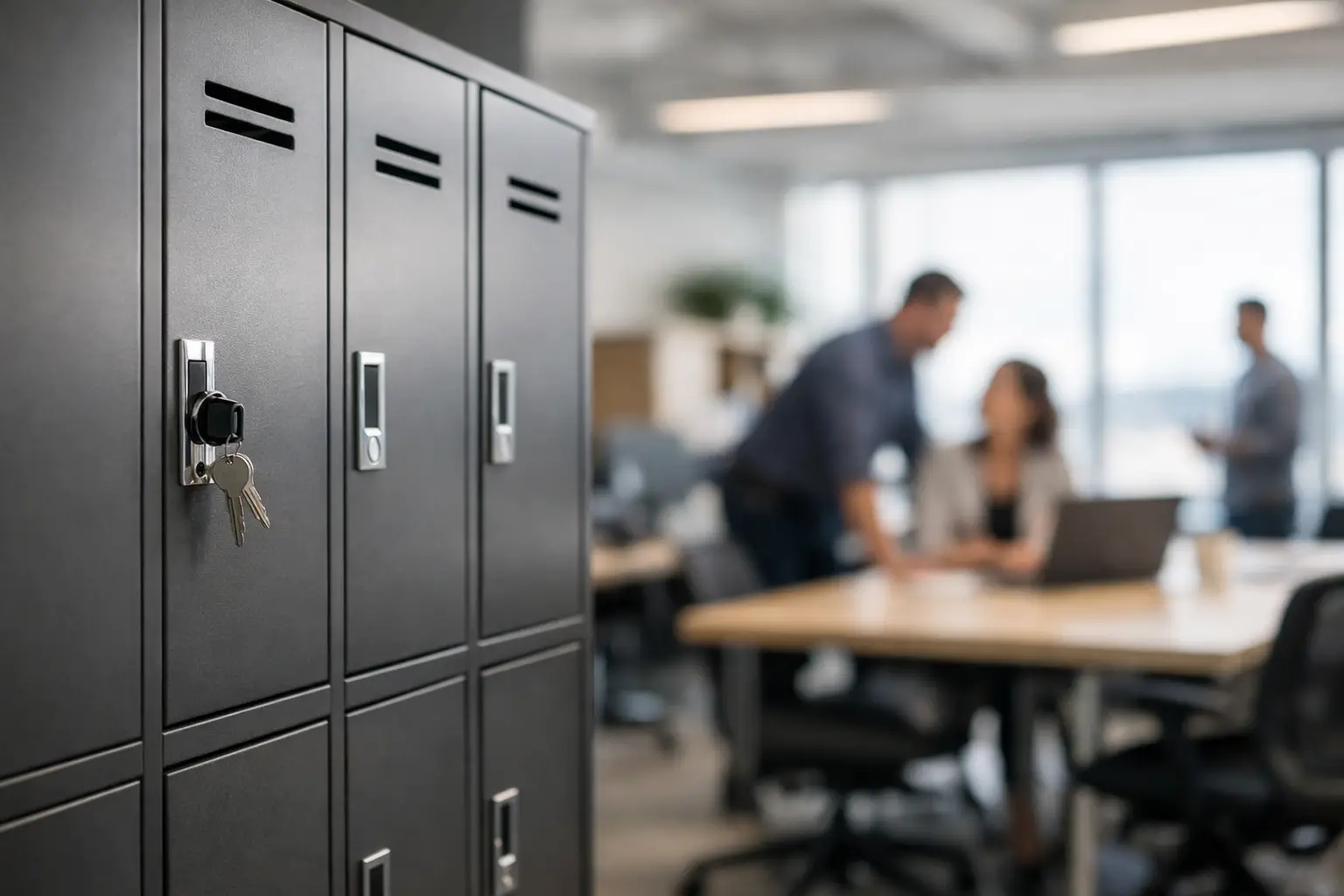
A workplace can invest in polished meeting rooms and efficient workstations, then lose order at the point where employees need to store a bag, coat, helmet, laptop, or personal equipment. Metal office lockers solve that daily problem with secure, assigned storage that holds up to regular use and keeps shared areas clear.
For procurement and facility teams, lockers are not a minor furnishing decision. The right system affects floor space, employee experience, security, cleaning routines, and future expansion. The wrong system creates congestion, damaged doors, key-management issues, and replacement costs that arrive much sooner than expected.
Why Office Storage Needs Industrial Thinking
Office environments have changed. Hybrid schedules can mean fewer fixed desks but greater demand for personal storage on the days employees are on site. Operational workplaces may need storage for uniforms, PPE, tools, handheld devices, or documents alongside personal belongings. A standard cabinet is rarely designed to handle all of those needs.
Metal lockers are suited to this pressure because their purpose is clear: provide individual compartments, controlled access, and repeatable use over years. They can be configured for compact personal storage, full-height garment storage, or mixed-use layouts that serve different roles in the same facility.
Durability matters most where lockers are opened frequently. Door alignment, hinge quality, lock operation, ventilation, and coating performance determine whether a locker bank remains functional after thousands of cycles. Thin materials and poorly supported doors may look acceptable at installation, but heavy daily use quickly exposes weak construction.
A metal storage system also offers a practical advantage for facility managers: it is easier to standardize. When locker sizes, lock types, colors, and numbering are specified consistently, moves, additions, maintenance, and replacement become simpler across departments or multiple sites.
Choosing Metal Office Lockers for the Actual Use Case
The most useful specification begins with users, not appearance. Ask what people need to store, how long they will store it, how often compartments will be accessed, and whether one locker must serve more than one shift. These answers guide the dimensions, door configuration, and locking method.
Match compartment size to stored items
Small-door configurations work well for phones, wallets, keys, and compact bags. They increase capacity where floor space is limited, but they will not accommodate a coat, safety shoes, or a large backpack. Full-height lockers support changing areas and employee uniforms, while two-door and three-door models provide a balanced option for general office use.
For workplaces with varied teams, a mixed locker layout can be more efficient than using one format everywhere. Administrative staff may need compact personal compartments, while warehouse or technical teams need taller units with hanging space. Combining locker formats in one project allows the storage plan to reflect real working conditions.
Consider the access pattern
A locker used by one named employee has different requirements than a compartment shared across shifts. Assigned lockers may use key locks, padlock hasps, combination locks, or digital access systems. Shared-use lockers often benefit from managed electronic locks that can reset after use or be controlled by an administrator.
There is no single best lock. Key locks are familiar and cost-effective, but lost keys create administrative work. Padlock systems allow users to manage their own locks, although consistency and lock quality can vary. Digital locks can reduce key handling and support flexible workplace policies, but they require a clear plan for power, user setup, and access recovery.
Plan the locker bank, not just the unit
A single locker may meet a short-term need, but a locker bank should be planned as part of the workplace layout. Measure wall length, ceiling clearance, corridor width, door swing, and cleaning access. Consider where employees naturally arrive, change, and collect their belongings.
A crowded row placed in a narrow circulation route creates frustration and can interfere with safety. In contrast, a well-positioned locker area keeps personal items out of work zones while giving users enough room to open doors comfortably. Benches can improve changing areas, especially where employees need to put on uniforms or protective footwear.
Construction Details That Affect Service Life
Commercial buyers should look beyond a product image and request clear construction information. Steel thickness, reinforcement, welding quality, hinges, door profile, and finish all influence long-term performance.
A stiff door with a formed edge or internal reinforcement is less likely to flex or lose alignment. Reliable hinges reduce sagging and keep lock engagement consistent. A powder-coated finish helps protect the surface from scratches and routine cleaning, while a smooth interior and well-finished edges improve everyday usability.
Ventilation is another specification that depends on use. For standard personal storage, ventilation helps manage moisture and odor in regularly used lockers. It becomes more important for uniforms, footwear, workwear, and PPE. However, ventilation should support the storage purpose without compromising the level of security or separation required in the facility.
For projects in demanding environments, it is sensible to assess cleaning chemicals, humidity, temperature changes, and potential impact damage. A locker room beside a production area does not face the same conditions as a corporate office floor. The product should be selected for the environment it will serve, not merely the room it will occupy.
Security, Administration, and User Experience
A secure locker system is not only about preventing unauthorized access. It should also be easy for the organization to manage. Numbering each compartment, maintaining a lock record, and defining procedures for lost keys or forgotten codes prevent small issues from turning into daily disruptions.
Privacy should be considered alongside security. Employees are more likely to use lockers properly when compartments are clean, functional, and sized for their belongings. That reduces bags under desks, personal items in shared corridors, and clutter around workstations.
For offices handling laptops, tablets, scanners, or other powered equipment, charging lockers may be a better fit than conventional storage. These units need appropriate electrical design, cable management, ventilation, and capacity planning. Device charging introduces additional operational considerations, so the selected unit should be designed for that function rather than adapted from a basic personal locker.
Specify for Growth and Consistency
Locker projects often expand after an initial installation. New hires, revised shift patterns, office moves, and additional sites can all create a need for more capacity. Selecting a product family with compatible sizes and finishes makes future additions easier to integrate.
Before requesting a quotation, prepare a concise requirement set that includes:
- Required number of users and expected growth
- Items to be stored in each compartment
- Preferred locker height, width, depth, and door count
- Lock type and access management method
- Installation environment and cleaning conditions
- Color, numbering, bench, plinth, or sloping-top requirements
This information allows a manufacturer to recommend a configuration based on operational needs rather than assumptions. It also reduces revisions during procurement and helps compare quotations on a like-for-like basis.
Customization can be especially valuable for projects with unusual dimensions, branding requirements, specialized locking, or mixed storage needs. A manufacturer with both standard products and custom metal fabrication capability can provide faster solutions for common layouts while adapting details where the site demands it. Loxmet supports this approach with heavy-duty storage products designed for commercial and institutional applications.
Work With a Supplier That Understands the Project
The lowest unit price is not always the lowest project cost. Consider delivery reliability, packaging, spare-part availability, warranty terms, production capacity, and the supplier’s ability to maintain consistent specifications. These factors matter when lockers are ordered in stages or supplied across several locations.
For distributors and fit-out professionals, product breadth can also simplify purchasing. Sourcing lockers, office cabinets, shelving, benches, PPE storage, and charging solutions from one manufacturing partner can reduce coordination while creating a more consistent finished environment.
Metal office lockers perform best when they are treated as working equipment, not decoration. Specify them around the people, items, and access patterns in your facility, and they will provide organized, dependable storage long after the installation date.